
6 in 10 births in Maharashtra’s private hospitals are C-sections. Why?
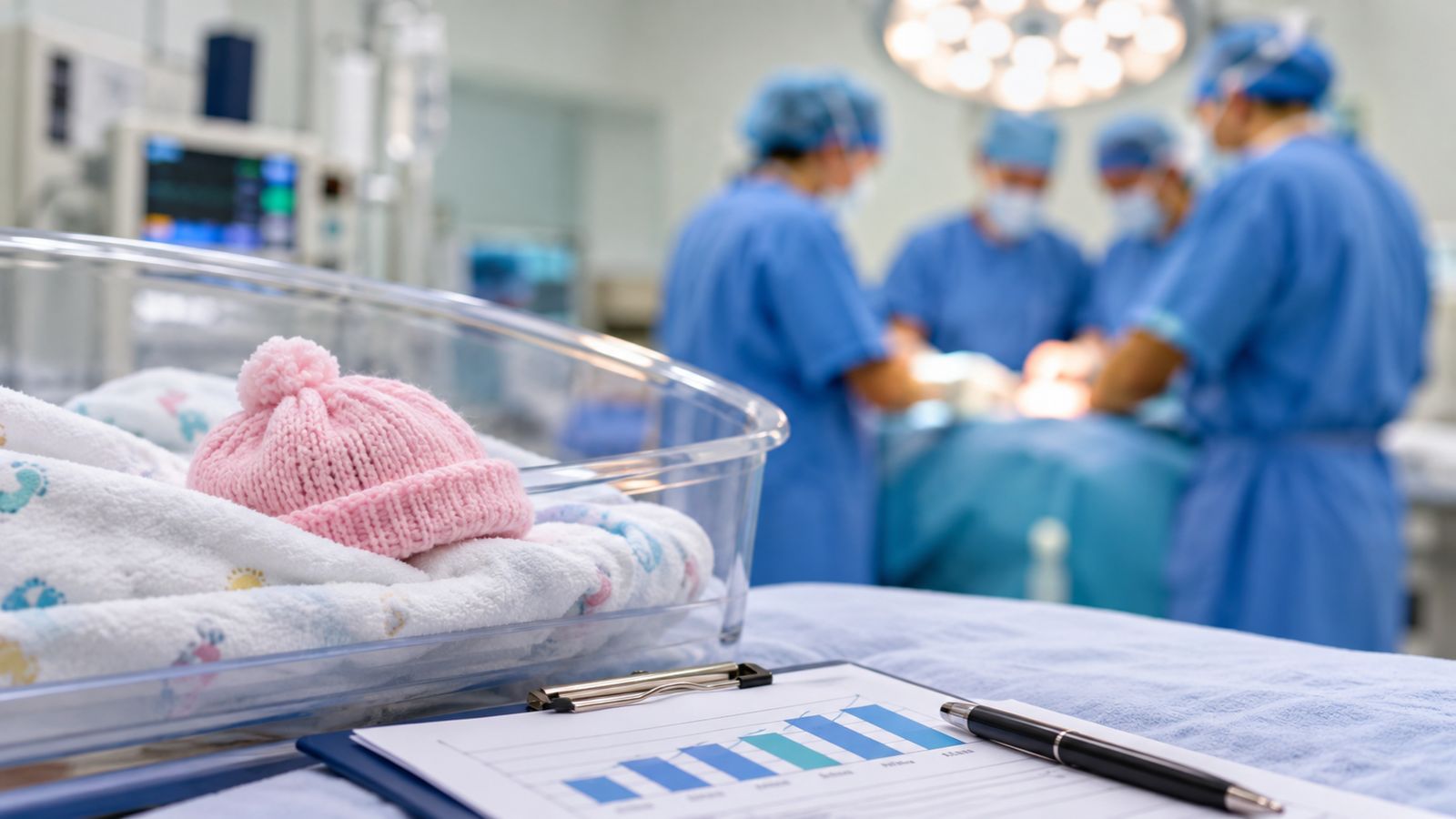
10964620 newborn
- ✓10964620 newborn
- ✓In private facilities, 1,89,152 of 3,18,683 deliveries were caesarean sections, taking the proportion to 59 per cent.
- ✓In private facilities, it increased from 39.1 per cent in NFHS-5 to 48.5 per cent in NFHS-6.
- ✓In Mumbai, 12,654 (51%) of 25,002 institutional deliveries in public facilities were performed through C-section.
Maharashtra has ordered an audit after recording a stark gap in the number of caesarean or C-section deliveries at public and private hospitals, with nearly six out of every 10 women who deliver babies at private facilities undergoing C-section, compared with 37 per cent in public hospitals.
The state health department has directed public health institutions to conduct regular audits to ensure that surgical interventions are performed only when they are medically necessary. According to the Health Management Information System (HMIS) data for 2026-27, up to September 2026, Maharashtra recorded 1,18,036 (37%) C-section deliveries out of 3,23,245 institutional deliveries at public hospitals.
In private facilities, 1,89,152 of 3,18,683 deliveries were caesarean sections, taking the proportion to 59 per cent. The figures follow a sharp rise, documented in successive rounds of the National Family Health Survey (NFHS).
According to a November 3 communication issued by the Additional Director of Health Services, the number of C-section deliveries in government facilities rose from 18.3 per cent in NFHS-4 (2015-16) to 23.8 per cent in NFHS-6 (2023-24).
In private facilities, it increased from 39.1 per cent in NFHS-5 to 48.5 per cent in NFHS-6. In Mumbai, 12,654 (51%) of 25,002 institutional deliveries in public facilities were performed through C-section. In private hospitals, the figure was 14,606 (59%) out of 24,740 deliveries.
Across municipal corporations in Maharashtra, the C-sections stood at 50 per cent in public facilities and 64 per cent in private hospitals. At 86 per cent, Bhandara, among the districts, recorded the highest number of such deliveries in private facilities, followed by Gondia at 84 per cent and Amravati at 77 per cent.
In public facilities, Bhandara recorded 64 per cent and Sindhudurg 58 per cent. Dr Tushar Palve, Medical Superintendent of Cama and Albless Hospital, Mumbai, said, “Delayed pregnancies, and the growing prevalence of diabetes, hypertension, thyroid disorders and polycystic ovary syndrome (PCOS) are factors that could complicate pregnancies and influence the mode of delivery.
IVF pregnancies, concerns about the baby’s weight, breech presentation, low amniotic fluid and a previous C-section could also contribute to decisions to opt for surgical delivery.” Hospital practices, staffing and patient preferences could also play a role, Dr Palve said.
A normal delivery may take 12-18 hours, while a C-section generally takes 30-45 minutes, making the latter easier to schedule. Fear of labour pain, family pressure, choosing an auspicious date or muhurat, and anxiety fuelled by information on Google and social media could further influence decisions.
Sedentary lifestyle, lack of exercise, weight gain, stress and inadequate sleep were also some of the factors he cited. Dr Palve said while C-sections can be life-saving in cases of medical complications, they are major abdominal surgeries and carry risks of infection, excessive bleeding, longer recovery and complications in subsequent pregnancies.
Unnecessary procedures can expose both mother and baby to avoidable risks, apart from increasing healthcare costs. In a November 3 communication, Dr Sandeep Sangale, Additional Director of Health Services, Pune, directed district surgeons, municipal health officers, the BMC executive health officer and government medical college deans to conduct C-section audits in all public health institutions.
The audit, part of the LaQshya programme, aims to ensure caesarean deliveries are performed only when medically necessary. Findings will be reviewed at monthly LaQshya Quality Assurance Committee meetings, with professional bodies such as FOGSI and AMOGS participating as required.
Institutions must submit monthly reports to district authorities, and districts must forward consolidated reports to the state. The State Maternal Health Department will then submit quarterly reports to the Union Health Ministry.
- •Aspirants and citizens are advised to monitor official notices and circulars issued by Maharashtra State Bureau (Mumbai).
- •Verify all prescribed eligibility criteria, cutoff dates, and authenticated document requirements prior to formal submissions.
- •Track connected examination timetables, vacancy advisories, and administrative gazettes on SuchnaSetu.
| Issuing Authority | Maharashtra State Bureau (Mumbai) |
|---|---|
| Topic Category | HEALTH |
| Jurisdiction | MH State |
| Publication Date | 16 November 2026 |