
8-year deadlock ends as six states sign Kishau pact; Amit Shah says 10th water dispute resolved
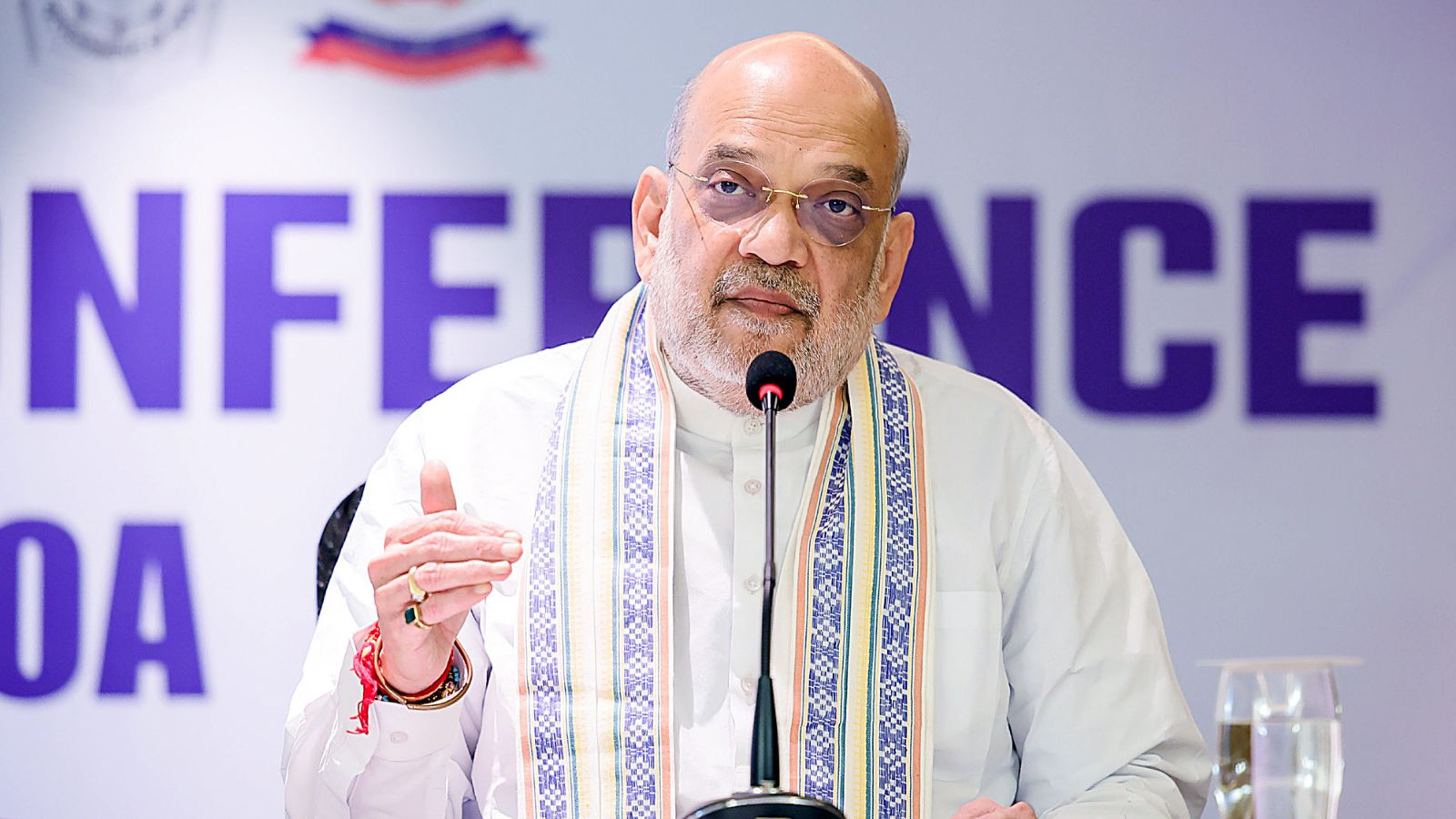
10879416 Amit-Shah_20260915163026.jpg
- ✓10879416 Amit-Shah_20260915163026.jpg
- ✓The Centre and the Yamuna basin states are committed to completing at the earliest the 422-MW project, which had remained stalled for more than eight years.
- ✓He said the period from 2018 to 2026 would be remembered for resolving almost all major water disputes, from Kashmir to Uttar Pradesh.
- ✓The Kishau project envisages a 232.6-metre-high concrete gravity dam on the Tons river along the Uttarakhand-Himachal Pradesh border.
The long-pending Kishau Multipurpose Project moved closer to implementation on Tuesday with six Yamuna basin states signing an agreement, which Union Home Minister Amit Shah termed “historic” and claimed that it was 10th water dispute to be resolved since Narendra Modi became Prime Minister.
The agreement, signed in New Delhi in the presence of Shah and Union Jal Shakti Minister C R Patil, involves Himachal Pradesh, Haryana, Uttarakhand, Uttar Pradesh, Delhi and Rajasthan. The chief ministers of respective states — Sukhvinder Singh Sukhu, Nayab Singh Saini, Pushkar Singh Dhami, Yogi Adityanath, Rekha Gupta and Bhajanlal Sharma — signed the pact.
Shah said the agreement would benefit all six states. The Centre and the Yamuna basin states are committed to completing at the earliest the 422-MW project, which had remained stalled for more than eight years. He said a formal agreement had been reached on June 16 after the Ministry of Jal Shakti secured the consent of all states and examined the technical and economic aspects of the project.
Shah said that since Modi became prime minister, initiatives had been undertaken to resolve serious disputes that had continued for decades and this project will be the "tenth water dispute that is now set to be resolved." He cited agreements relating to the Lakhwar Multipurpose Project, Shahpur Kandi Dam Project, Renukaji Multipurpose Dam Project, Ken-Betwa Link Project and other water-related disputes.
He said the period from 2018 to 2026 would be remembered for resolving almost all major water disputes, from Kashmir to Uttar Pradesh. The Kishau project envisages a 232.6-metre-high concrete gravity dam on the Tons river along the Uttarakhand-Himachal Pradesh border.
It will have a storage capacity of 1,562 million cubic metres, irrigate about 97,000 hectares and generate 1,476 million units of hydropower, according to Shah. Delhi, he said, would be the biggest beneficiary. The project is estimated to cost Rs 15,624 crore.
Under the agreement, the Centre will bear around 90 per cent of the financial burden for the water component, with the remaining 10 per cent to be shared by the participating states in accordance with the 1994 Yamuna water agreement.
The project’s financial implications for Himachal Pradesh, however, became a key issue, with Chief Minister Sukhvinder Singh Sukhu claiming that his government had secured a major concession for the state by refusing to accept the arrangement agreed to by the previous government.
Sukhu said the Centre had, in principle, agreed that the estimated Rs 2,000-crore power component falling on Himachal Pradesh would be borne by the beneficiary states of Delhi, Rajasthan and Haryana. “The previous government had agreed to give Rs 800 crore of the state's share, which the present government refused in the interest of Himachal,” Sukhu said, describing the agreement as a major victory in the state’s fight to secure its legitimate share from hydropower projects.
He said Himachal had argued that while the Centre was providing a 90 per cent grant for the water component, it was unfair to impose a financial burden on the state for the power component, particularly when people in Himachal would face displacement and the state would bear the environmental and social costs of the project.
Sukhu said Himachal would receive about 1,000 million units of power annually from the project, which, according to current estimates, could translate into around Rs 1,200 crore in annual revenue for the state. Earlier calculations had put the annual income at around Rs 600 crore, he said.
“This is yet another addition to the state's financial resources,” Sukhu said, adding that the government had prioritised the interests of Himachal Pradesh and its people. The chief minister said comparatively fewer villages in Himachal would be affected than in Uttarakhand and assured that affected families would be adequately compensated under applicable land acquisition provisions.
Meanwhile, Shah said the Kishau agreement would also have an environmental dimension. He said the Yamuna’s environmental flow had not been accounted for when its waters were originally allocated among states, leaving little water for the river itself.
He said 25 per cent of the water would become available through the Kishau agreement, benefiting both Delhi and the Yamuna and helping environmental conservation. Shah said work to clean the Yamuna was continuing and expressed confidence that the goal of a clean Yamuna would be achieved by 2029, stressing that cleaning the Yamuna was essential to fulfilling the objective of a clean Ganga as the two rivers meet at Prayagraj.
Delhi CM Rekha Gupta said the national capital will receive around 110 million cubic metres (MCM) of water from the project, boosting supply in the city and improving environmental flow in the Yamuna. She said that the project will provide long-term support for Delhi's water needs.
- •Aspirants and citizens are advised to monitor official notices and circulars issued by Punjab & Haryana Regional Bureau (Chandigarh).
- •Verify all prescribed eligibility criteria, cutoff dates, and authenticated document requirements prior to formal submissions.
- •Track connected examination timetables, vacancy advisories, and administrative gazettes on SuchnaSetu.
| Issuing Authority | Punjab & Haryana Regional Bureau (Chandigarh) |
|---|---|
| Topic Category | STATES |
| Jurisdiction | PB State |
| Publication Date | 15 September 2026 |