
‘Delhi adopting clean energy’: Government passes halfway mark for solar rooftop project
10964690 Solar-Panels_20260329224312_20261116030358.jpg
- ✓10964690 Solar-Panels_20260329224312_20261116030358.jpg
- ✓Chief Minister Rekha Gupta launched a portal to register such power consumers on September 22.
- ✓Delhi Power Minister Ashish Sood said the response to the initiative had been encouraging, adding that the government was working towards its March 2027 target.
- ✓As of today, we have crossed 1,23,991 registrations across Delhi.
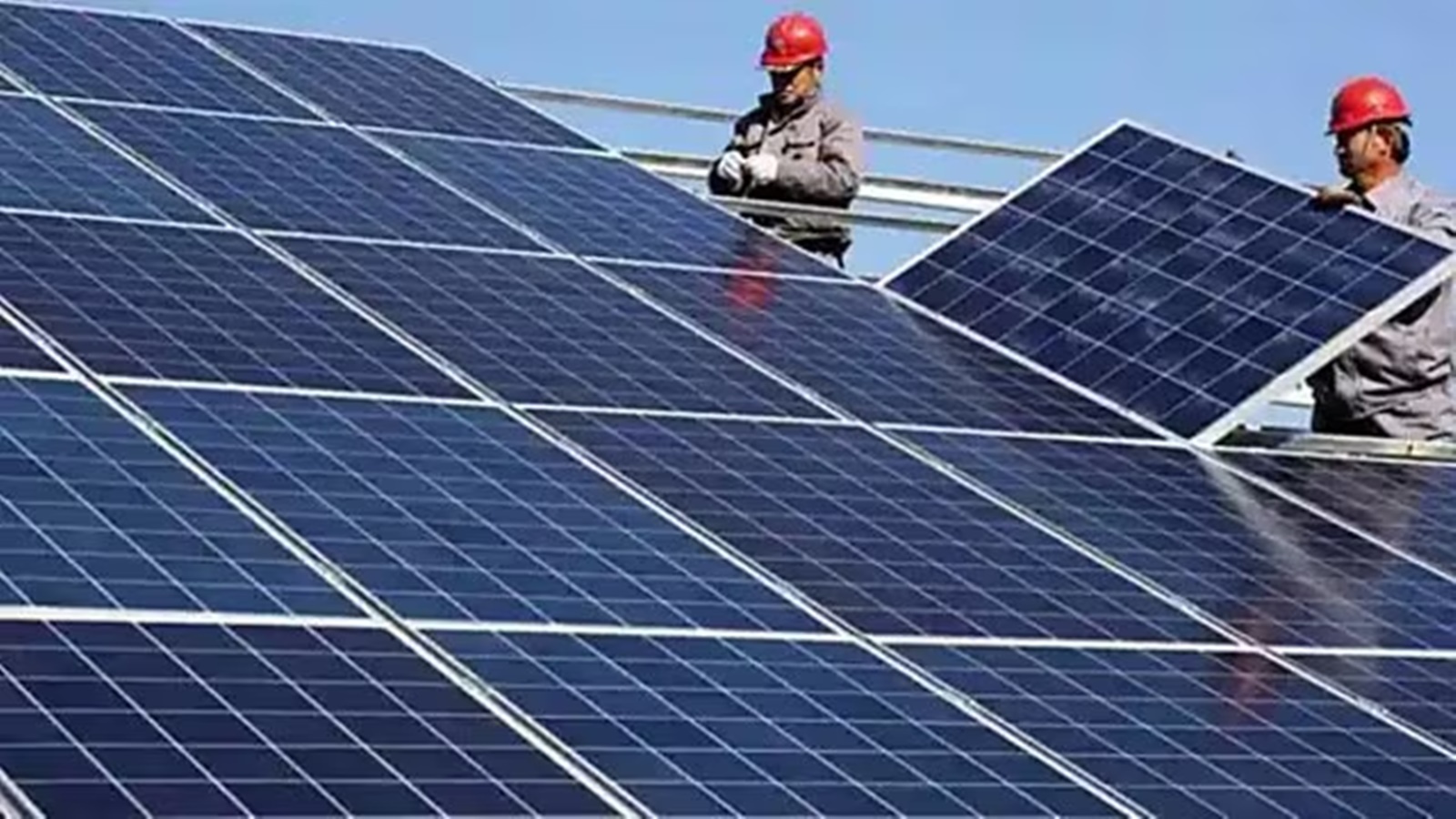
Delhi has recorded over 1.24 lakh registrations under its rooftop solar initiative — ‘Pradhan Mantri Surya Ghar: Muft Bijli Yojana’ — in the first two months since its launch. South and West Delhi accounted for the highest number of applications, followed by East and Central Delhi, according to the figures accessed by The Indian Express.
The Delhi government has set a target to provide free rooftop solar panels to more than 2.30 lakh families in the Capital in the first phase of the initiative by March 2027. Chief Minister Rekha Gupta launched a portal to register such power consumers on September 22.
For an average household, the rooftop solar panels, according to officials, can reduce the electricity consumption to less than 200 units and result in a zero electricity bill. It also reduces the dependence on fossil-fuel based electricity.
According to officials, the adoption trends show robust numbers coming from industrial hubs and large residential sectors with adequate rooftop space. Delhi Power Minister Ashish Sood said the response to the initiative had been encouraging, adding that the government was working towards its March 2027 target.
“The response to our rooftop solar drive has been remarkable. As of today, we have crossed 1,23,991 registrations across Delhi. People are eagerly adopting clean energy," said the Minister. He added that the process of finalising the tender for the vendor was underway and that Indraprastha Power Generation Company Limited (IPGCL) was working on the document, which would be finalised soon.
Sood attributed the response to the Centre's PM Surya Ghar initiative, saying it was encouraging households to adopt solar energy and move towards greater energy self-reliance. The portal for the initiative was launched on September 22 in the Capital for applications on a “first-come, first-served” basis, as part of ‘Seva Sankalp Abhiyan’ being undertaken to mark Prime Minister Narendra Modi’s 76th birthday.
Under the scheme, the Centre provides a subsidy of up to Rs 78,000 for rooftop solar systems of up to 3 kW. The Delhi government has also decided to provide a state subsidy of Rs. 78,000 along similar lines. This means a total subsidy of up to Rs 1.56 lakh is available for power consumers opting to install rooftop solar panels, according to government officials.
- •Aspirants and citizens are advised to monitor official notices and circulars issued by Delhi NCR Civic & Governance.
- •Verify all prescribed eligibility criteria, cutoff dates, and authenticated document requirements prior to formal submissions.
- •Track connected examination timetables, vacancy advisories, and administrative gazettes on SuchnaSetu.
| Issuing Authority | Delhi NCR Civic & Governance |
|---|---|
| Topic Category | GOVERNANCE |
| Jurisdiction | DL State |
| Publication Date | 16 November 2026 |