
AIIMS Delhi urges schools to support students with diabetes, suggests 5 ways to help
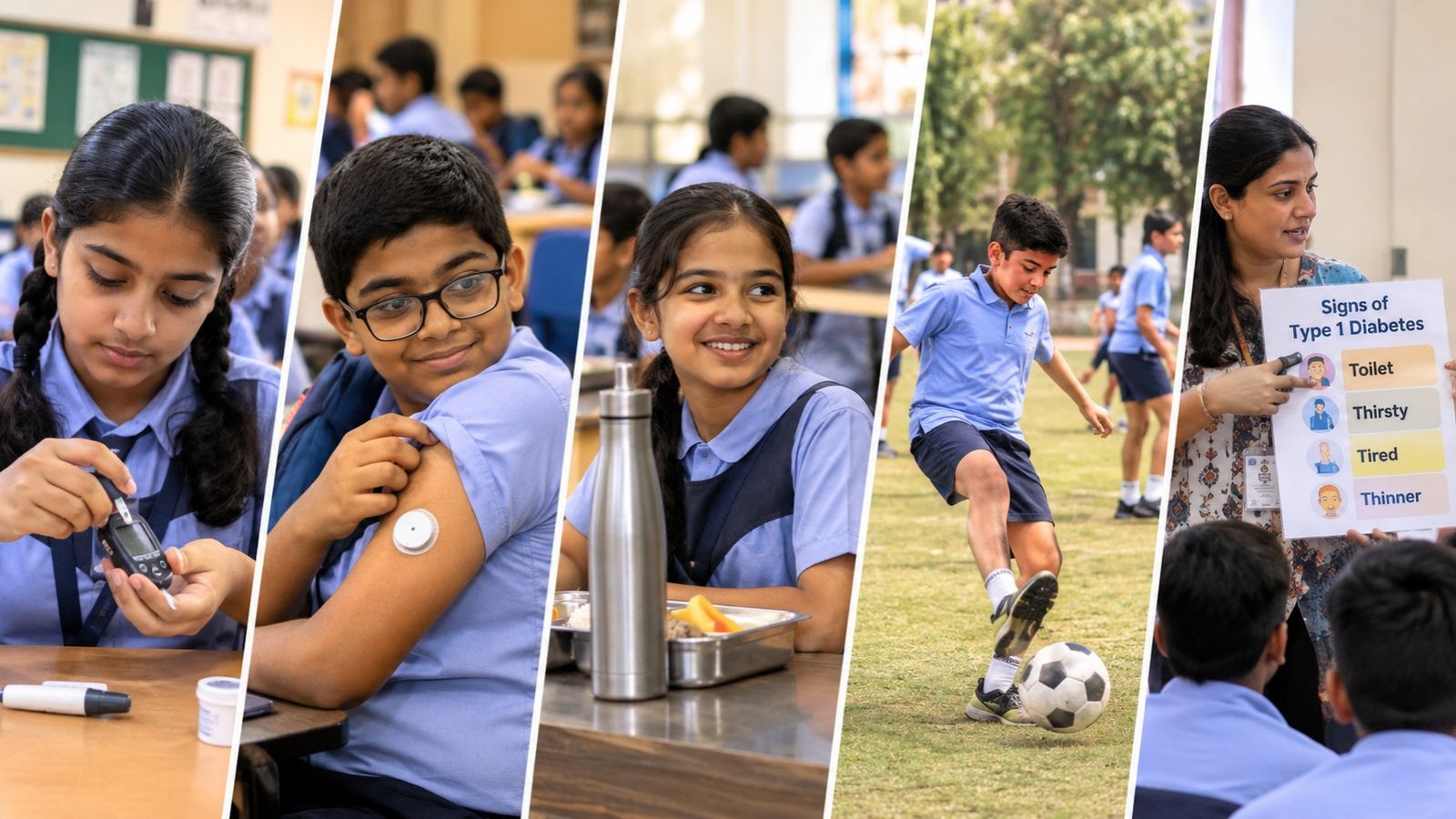
10976071 aiims suggests way outs diabetic students
- ✓10976071 aiims suggests way outs diabetic students
- ✓–Provide access to insulin: children should be allowed to administer insulin during school hours.
- ✓–Allow timely meals and snacks: students with Type 1 diabetes may need to eat at specific intervals to manage their blood glucose levels.
- ✓Keralam has also announced additional examination-related concessions for students with Type 1 diabetes.
The All India Institute of Medical Sciences (AIIMS) Delhi has called on schools to provide better support to children living with Type 1 diabetes, including allowing them to monitor their blood glucose levels, administer insulin, and participate in sports and other school activities without discrimination.
The recommendations were discussed at a national engagement organised by the Health Related Information Dissemination Amongst Youth (HRIDAY) in collaboration with AIIMS Delhi on November 23, focusing on the everyday challenges faced by children with Type 1 diabetes at home, in schools and in their communities.
AIIMS Delhi Director Dr Nikhil Tandon said children with Type 1 diabetes need support beyond diagnosis and should be equipped to manage their condition confidently. He said insulin management, regular blood glucose monitoring, healthy nutrition and physical activity were essential to everyday care.
The discussions also highlighted the need for families, teachers and healthcare professionals to understand the condition and help children manage it without stigma. The recommendations emerging from the AIIMS-HRIDAY engagement focus on making routine diabetes management possible during school hours, rather than treating the condition as something that can be managed only at home or in hospitals: –Allow regular blood glucose monitoring: students should be allowed to check their blood glucose levels during school hours whenever required.
Schools should also permit the use of glucose monitoring devices, including continuous glucose monitoring systems (CGMS). –Provide access to insulin: children should be allowed to administer insulin during school hours.
Schools should make arrangements for the safe storage of insulin, including access to refrigeration where required, so that students do not have to interrupt their treatment routine. –Allow timely meals and snacks: students with Type 1 diabetes may need to eat at specific intervals to manage their blood glucose levels.
Schools should accommodate their meal schedules and allow them to consume food or glucose when required. –Ensure participation in sports and physical activities: those with Type 1 diabetes should not be excluded from physical education, sports or other school activities because of their condition.
Schools should provide the necessary support to help them participate safely. –Build awareness among teachers and classmates: teachers and school staff should understand the condition, recognise warning signs and know how to respond if a student experiences a sudden change in blood glucose levels.
Children should also be supported without stigma or discrimination. Keralam has also announced additional examination-related concessions for students with Type 1 diabetes. For the Kerala Engineering Architecture Medical (KEAM) 2027 entrance examination, the state government has approved 20 minutes of additional time for every hour of the examination.
Candidates will have to submit a medical certificate issued by a doctor to avail themselves of the concession. The state has also allowed candidates to carry insulin pens, insulin pumps, glucose tablets, water, continuous glucose monitoring systems, snacks and fruits into the examination hall after security checks.
Higher Education Minister Roji M John announced the decision on November 13 following a representation from the Type-One Diabetes Foundation and a report from the Commissioner for Entrance Examinations. The proposal also received approval from the Finance Department and the Chief Minister.
The additional time provision had earlier been extended to examinations conducted by higher education institutions and professional colleges in the state. It will now also apply to KEAM 2027. The measure recognises that fluctuations in blood glucose levels, including hypoglycaemia and hyperglycaemia, may require candidates to pause and manage their condition during an examination.
The AIIMS-HRIDAY engagement also highlighted the importance of extending such support beyond examinations, so that children with Type 1 diabetes can manage their condition during regular school activities and continue their education without avoidable restrictions.
- •Aspirants and citizens are advised to monitor official notices and circulars issued by Indian Express Education.
- •Verify all prescribed eligibility criteria, cutoff dates, and authenticated document requirements prior to formal submissions.
- •Track connected examination timetables, vacancy advisories, and administrative gazettes on SuchnaSetu.
| Issuing Authority | Indian Express Education |
|---|---|
| Topic Category | EDUCATION |
| Jurisdiction | All India / National |
| Publication Date | 25 November 2026 |