
Air India fires pilot who failed dope test after it is flagged by accidents bureau
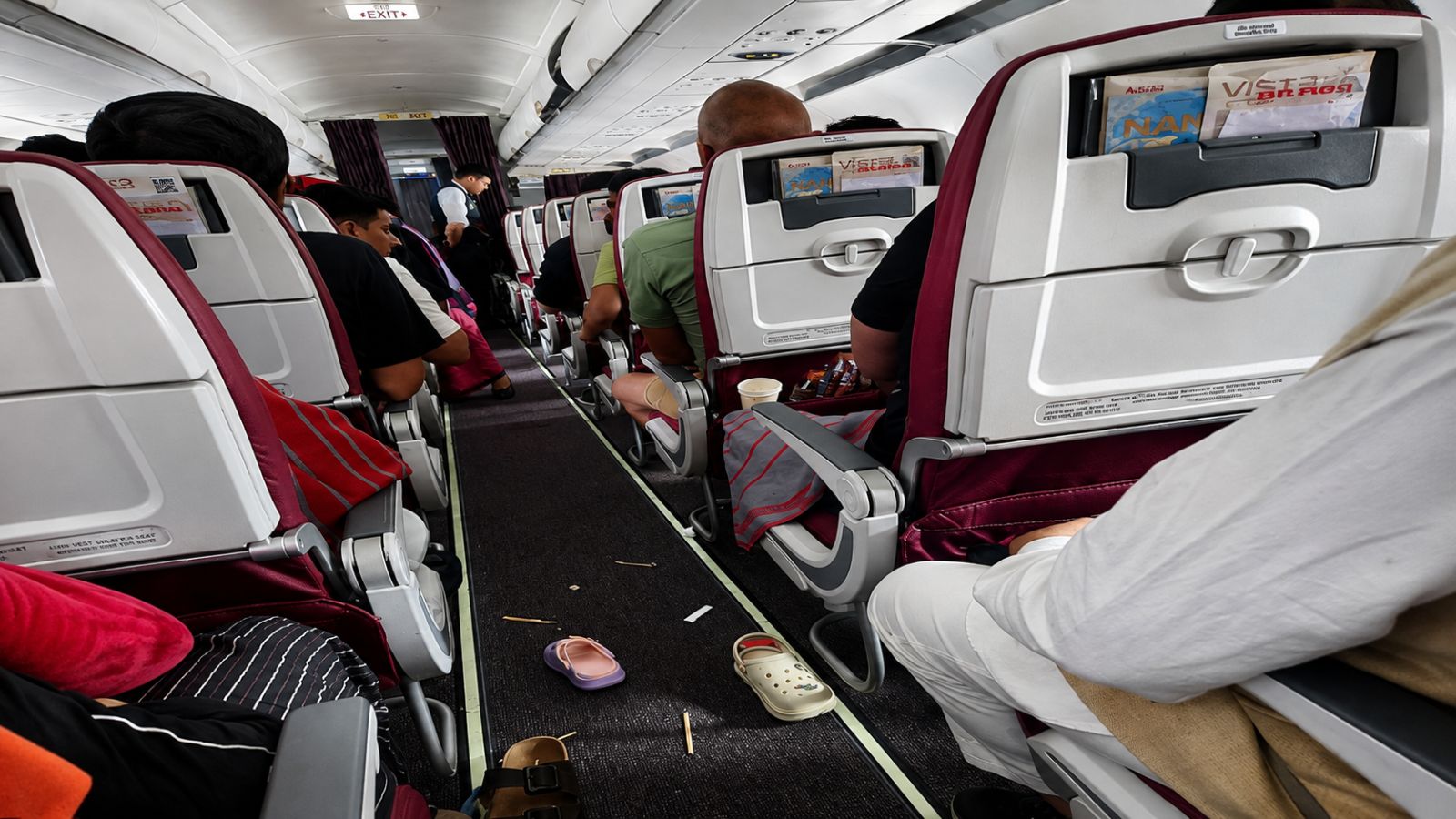
10863521 Air India Phuket turbulence (1)
- ✓10863521 Air India Phuket turbulence (1)
- ✓The aircraft had 137 passengers, six cabin crew members, and two pilots on board.
- ✓Initially, it gained 372 ft and fell by 292 ft from its assigned FL360 during the event,” it stated.
- ✓At 05:30 UTC aircraft landed safely on runway 11 L at IGI airport, Delhi,” the report stated.
Shortly after the Aircraft Accident Investigation Bureau (AAIB) flagged the positive drug test of the pilot-in-command (PIC) of the Air India aircraft that was involved in a sudden altitude loss incident on August 4, the airline announced the termination of the pilot’s employment with immediate effect on Friday.
“Safety remains Air India's highest priority. The Pilot-in-Command of the Phuket-Delhi flight tested positive for a psychoactive substance. In line with Air India's zero-tolerance approach to violation of safety, fitness or regulatory requirements, the pilot's employment has been terminated with immediate effect,” an Air India spokesperson said Friday evening.
According to sources, the PIC had tested positive for marijuana. “Detailed investigation regarding technical and other aspects are underway. In this case, it has been observed that the PIC was found non-negative for psycho-active substance in the confirmatory test.
The confirmation of use of psycho-active substance is a serious concern and AAIB recommends appropriate actions by DGCA on priority. The preliminary report is published as per ICAO (International Civil Aviation Organization) guidelines.
The investigation is under progress. The final report will be published in due course,” the preliminary report said. But it did not say whether or not the purported use of drugs by the pilot-in-command was directly linked to the incident.
The DGCA is already in the process of holding stakeholder consultations to expand the scope of random testing of pilots for drug abuse. The Ministry of Civil Aviation (MoCA) has mooted a once-a-year random drug test of all pilots, up from the current norm of 10% pilots being tested per year, according to Civil Aviation Minister K Rammohan Naidu.
On August 14, The Indian Express had reported that an initial assessment of the digital flight data recorder (DFDR) data by Airbus had indicated that the aircraft experienced a temporary loss of all three hydraulic systems, which led to loss of key aircraft control surfaces for a few seconds.
The AAIB preliminary report has not identified any underlying cause for the rarest-of-rare triple hydraulic failure, and clarity on this count is now expected only when the final investigation report is released. Conduct of the pilots has also been under scanner, particularly in view of the PIC’s positive drug test report, which has now been confirmed by the AAIB.
A key question in the investigation will be whether the hydraulic systems actually failed – and if yes, why – or was it a case of spurious signals. Airbus and French aircraft accident investigation body BEA are assisting the AAIB probe.
On August 4, the aircraft encountered a sudden altitude drop at cruising altitude over Odisha, resulting in injuries to 20 passengers and four cabin crew members. The aircraft had 137 passengers, six cabin crew members, and two pilots on board.
The incident also damaged the aircraft cabin including ceiling panels, overhead bins, and handrails, among others. A series of snags involving the aircraft’s hydraulic systems and flight control surfaces have emerged as a key focus area for investigators.
According to the preliminary report, some hydraulic components and samples of VT-EXO have been collected for further analysis following the aircraft’s inspection by Airbus technical experts. Its maintenance records have also been collected by the AAIB from Air India for further scrutiny, and investigators also have the data from the plane’s DFDR and cockpit voice recorder.
Other pieces of evidence and records collected from the airline, airport authorities, and ATC are also being evaluated. The Airbus A320 aircraft has three independent hydraulic systems – coded green, blue, and yellow – built as a redundancy so that the loss of one such system doesn’t result in total loss of hydraulic control.
According to the preliminary report, the incident occurred while the aircraft was cruising at 36,000 feet at 09:32:43 am India time, when the aircraft’s flight control system detected loss of green hydraulic system. About four seconds later, loss of blue and yellow hydraulic systems were detected, followed by the autopilot getting disengaged.
Shortly thereafter, the stall warning triggered for two seconds. “The Co-Pilot, who was the Pilot Flying (PF) responded and tried to control the prevailing situation. Subsequently, PIC took over the controls. Meanwhile, the aircraft encountered altitude upset.
Initially, it gained 372 ft and fell by 292 ft from its assigned FL360 during the event,” it stated. “At around 04:02:52 UTC (09:32:52 India time), the Blue hydraulic system was recovered, and a few seconds later, the Yellow hydraulic and the Green hydraulic systems were also recovered.
Consequently, this led to the recovery of the Flight control (F/CTL) surfaces. Subsequently, the aircraft operation returned to its normal operating condition,” the report stated. The AAIB noted that since seatbelt signs were off at the time of the incident, some passengers and cabin crew members sustained injuries.
“The flight crew assessed the cabin situation and took the decision of continuing the flight to its planned destination i.e. Delhi airport and did not divert to the nearest enroute airport. Later, the flight crew contacted ATC Delhi and sought medical priority.
ATC responded accordingly and provided requisite assistance. At 05:30 UTC aircraft landed safely on runway 11 L at IGI airport, Delhi,” the report stated. Following the release of the preliminary report, Air India said it continues to extend full cooperation to the investigation, including providing access to all relevant operational, maintenance and technical records.
Friday morning, an Air India spokesperson said, “Our pilots undergo rigorous training, regular proficiency checks, medical examinations and other regulatory assessments in accordance with applicable national and international requirements.
Following the incident, Air India has...
- •Aspirants and citizens are advised to monitor official notices and circulars issued by Indian Express Economy & Markets.
- •Verify all prescribed eligibility criteria, cutoff dates, and authenticated document requirements prior to formal submissions.
- •Track connected examination timetables, vacancy advisories, and administrative gazettes on SuchnaSetu.
| Issuing Authority | Indian Express Economy & Markets |
|---|---|
| Topic Category | BUSINESS |
| Jurisdiction | All India / National |
| Publication Date | 4 September 2026 |