
At Delhi’s ‘free’ cancer hospital, patients ask: ‘How can I afford it?’
10856382 Delhi cancer Hospital
- ✓10856382 Delhi cancer Hospital
- ✓Sabra, 48, from Jaffrabad, came to Delhi State Cancer Institute (DSCI) expecting free treatment.
- ✓Her husband drives an e-rickshaw and earns about Rs 20,000 a month, making the Delhi government’s largest cancer facility, the family’s only realistic option.
- ✓In July, a PET-CT scan cost her Rs 12,000 at a private diagnostic centre.
The stack of medical files Sabra carried in her worn maroon jhola was thick enough to tell the story of the past five years of her life: four surgeries, chemotherapy, scans, prescriptions and bills. Sabra, 48, from Jaffrabad, came to Delhi State Cancer Institute (DSCI) expecting free treatment.
Her husband drives an e-rickshaw and earns about Rs 20,000 a month, making the Delhi government’s largest cancer facility, the family’s only realistic option. Instead, she says, she has spent over Rs 1.2 lakh over the past two years on trastuzumab, a cancer drug she now buys from outside for Rs 4,000 to Rs 5,000 a month.
Then there are the tests. In July, a PET-CT scan cost her Rs 12,000 at a private diagnostic centre. “The testing was also done here before; now, for most tests, they refer us outside,” she said. Before her diagnosis, Sabra worked as a tailor in Jaffrabad.
She first noticed a lump in her breast five years ago and has since undergone four surgeries, the latest in January 2025, and continues to receive chemotherapy. For her, the treatment has become a question of how long her family can afford to pay.
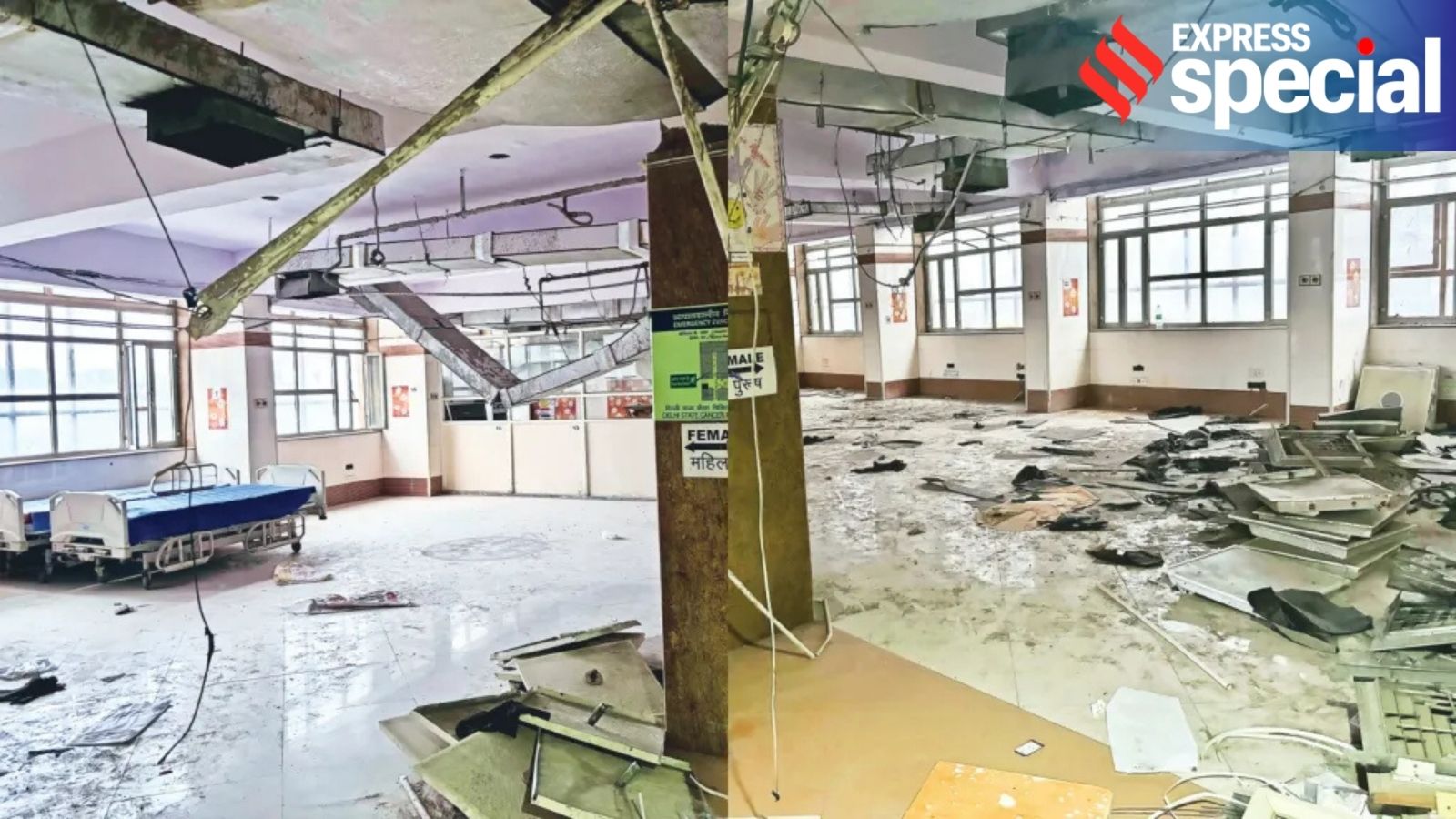
“Till my husband supports me,” she said, sitting in the hospital’s waiting area on the first floor, if he refuses to spend money on a dying woman, I’ll have nowhere to go.” A floor above, a 42-year-old corporate-sector employee moved between the hospital’s private wards and an unfinished section that had been intended to house more of them.
Construction had stopped, leaving part of the floor abandoned. His father had been in the intensive care unit for 12 days. The family had already spent more than Rs 4 lakh, he said. His father was diagnosed with multiple myeloma six years ago, and the expenses had included a PET-CT scan, dialysis and several blood tests.
“The PET-CT and dialysis alone cost us about Rs 60,000,” he said. What troubled him almost as much as the expense was having to pay for tests at private centres after coming to a government hospital expecting them to be covered.
“I wasn't aware that DSCI-referred patients get some discount at private testing centres,” he said. Sabra and the 42-year-old are not alone. Patients say they are increasingly sent outside DSCI for medicines, scans and tests, leaving them to pay costs they expected the government hospital to cover.
The hospital describes itself as having “ultra-modern diagnostic facilities.” Yet some of the equipment needed to provide those services lie unused on its premises. The problem extends beyond DSCI. A recent audit of 26 city government hospitals, ordered by the Delhi High Court, found medical equipment lying unused across the Capital’s public health system.
Nothing illustrates the findings more starkly than DSCI, where the consequences are being felt in patient care — and in the bills patients are left to pay. The waiting area at DSCI sits at the centre of the hospital — a large hall with a transparent plastic roof.
Patients and attendants crowd the hall, with some lying on the floor, while open pipes from a nearby bathroom fills the area with foul smell. In the waiting area, Sarita, 62, from Murshidabad, moves slowly behind her son.
Her body has grown visibly frail; a feeding tube trails from her nose. Sarita has lymphoma, a cancer of the immune system. For the past two months, she has been coming to DSCI for treatment. Now doctors have asked her to undergo a PET-CT scan to assess her response to treatment.
But the scan is not available at the hospital. “When I went to the radiology department, I was told the test was not available,” said her son, Mohan. A PET-CT at a private centre can cost between Rs 8,000 and Rs 30,000. Mohan is a daily-wage labourer.
A Rs 12,000 scan, he said, would eat up nearly three-quarters of his monthly income.
- •Aspirants and citizens are advised to monitor official notices and circulars issued by Delhi NCR Civic & Governance.
- •Verify all prescribed eligibility criteria, cutoff dates, and authenticated document requirements prior to formal submissions.
- •Track connected examination timetables, vacancy advisories, and administrative gazettes on SuchnaSetu.
| Issuing Authority | Delhi NCR Civic & Governance |
|---|---|
| Topic Category | STATES |
| Jurisdiction | DL State |
| Publication Date | 31 August 2026 |