
BRICS unanimously condemns unilateral tariffs, pushes for WTO reform
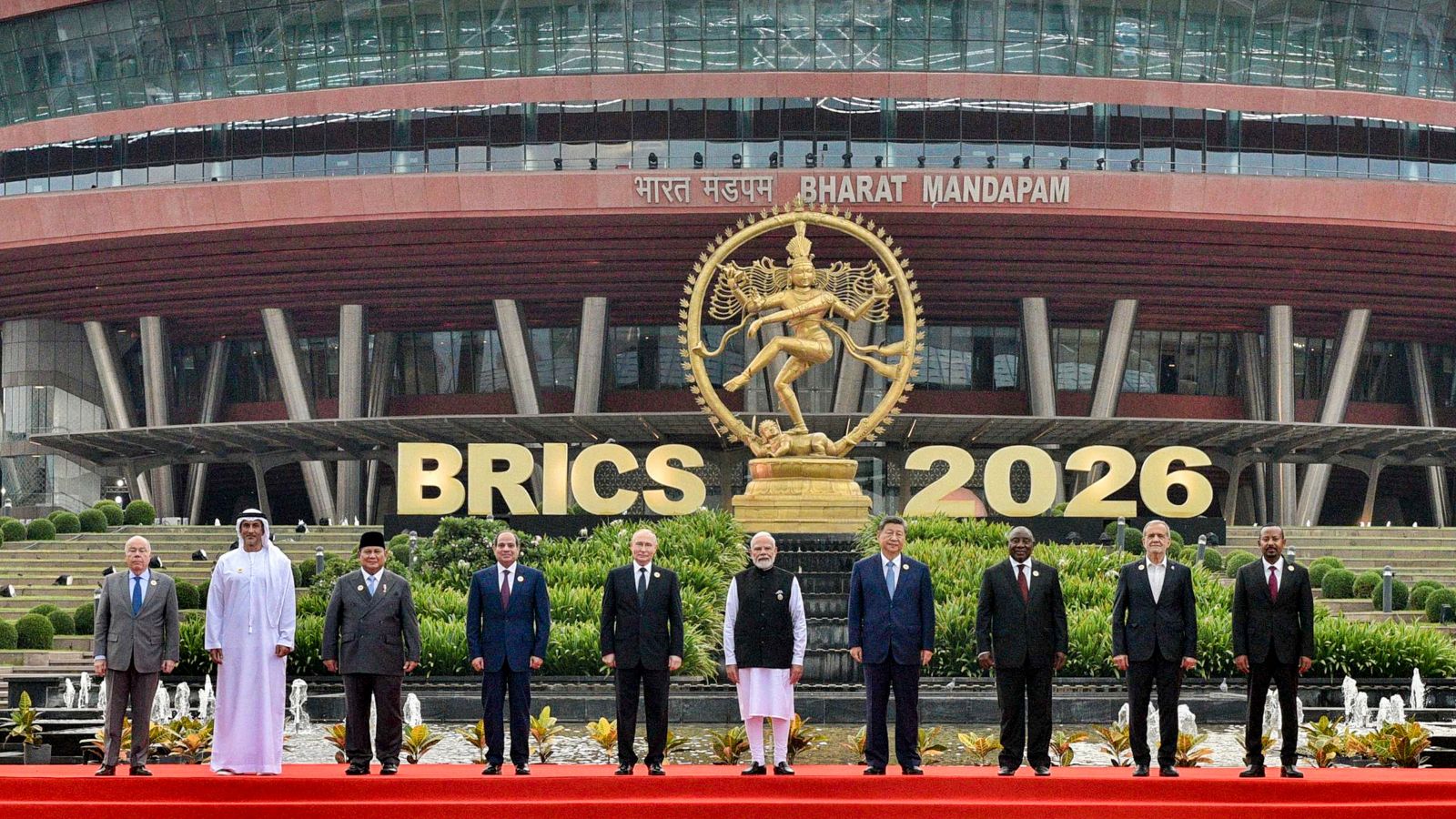
10875347 BRICS (2)
- ✓10875347 BRICS (2)
- ✓We acknowledge China for expanding its zero-tariff treatment to cover 53 African countries with which it has diplomatic ties,” the declaration said.
- ✓The appellate body of the WTO has been non-functional since December 2019 due to the blocking of the appointment of its members or judges by the US.
Members of BRICS on Saturday adopted ‘The New Delhi Declaration 2026’, raising serious concerns about the rise of unilateral tariff and non-tariff measures that they said were distorting trade and were inconsistent with the World Trade Organisation’s (WTO) norms.
The BRICS countries reached a consensus despite the ongoing war in West Asia, which has divided them. “We voice serious concerns about the rise of unilateral tariff and non-tariff measures which distort trade and are inconsistent with the World Trade Organisation’s (WTO) rules.
We will work together to enhance the WTO’s responsiveness to trade disruptions and the needs and priorities of emerging markets and developing economies (EMDEs), as well as advance discussions on outstanding issues, and support balanced, inclusive and concrete outcomes that strengthen the multilateral trading system and enable it to better address evolving global challenges,” the New Delhi Declaration 2026 said.
BRICS members said that the proliferation of trade-restrictive actions is inconsistent with WTO rules, whether in the form of “indiscriminate raising of tariffs and non-tariff measures”, or protectionism under the “guise of environmental objectives”.
Such measures threaten to further reduce global trade, disrupt global supply chains, and introduce uncertainty into international economic and trade activities, potentially exacerbating existing economic disparities and negatively affecting prospects for global economic development.
This comes in the backdrop of sweeping tariffs imposed by the US for over a year under various US trade provisions, which have targeted exports from across the world. While the US has relied on tariffs to limit exports, the EU has imposed carbon tariffs on carbon-intensive products, ignoring the Special and Differential Treatment (S&DT) provisions of WTO agreements that advocate giving a longer window to developing nations to address the climate change issue.
“We condemn the imposition of unilateral coercive measures that are contrary to international law, and reiterate that such measures, inter alia in the form of unilateral economic sanctions and secondary sanctions, have far-reaching negative implications for the human rights, including the rights to development, health and food security, of the general population of targeted states, disproportionally affecting the poor and people in vulnerable situations, deepening the digital divide and exacerbating environmental challenges,” the declaration read.
Former Reserve Bank of India governor Urjit R Patel called the US, in his working paper titled ‘Asphyxiation by Sanctions: Harm, Fear and Smog’ released last year, the “hegemonic sanctioner”. Patel’s paper said that out of 1,325 global sanctions since 1949, 486 have been imposed by the US, which currently administers over 30 sanctions programmes — making it responsible for “three times as many sanctions as any other country or international body”.
The US has “pioneered secondary sanctions on an industrial scale”, often in coordination with allies such as the G7 grouping and the EU, forming a “posse”. These extraterritorial sanctions are enforced to impede economic and commercial activity by third countries that would not otherwise violate a primary sanctioner’s rules, Patel said.
The BRICS declaration said that the members support reform of the WTO and to strengthen a non-discriminatory, open, equitable, transparent, fair, inclusive, predictable and rules-based multilateral trading system, with the WTO at its core.
Amid a deep divide within developed and developing nations, BRICS backed foundational principles, such as Most-Favoured-Nation Treatment and Special and Differential Treatment for developing members, particularly LDCs. “We will ensure the implementation of the MC14 outcomes and continue to engage constructively towards the resolution of outstanding issues.
We will engage constructively in the WTO reform to enhance the WTO’s authority, effectiveness, inclusiveness, and relevance, and build an open world economy. In this regard, we recognise that it is important to identify appropriate pathways for plurilateral initiatives into the WTO legal framework, including on development-oriented issues, and to explore the formulation of forward-looking rules in the WTO,” the declaration said.
This comes amid a push for radical reforms by the US, such as a rethink on the Most Favoured Nation (MFN) principle that ensures non-discriminatory trade practices, incorporating a plurilateral agreement in WTO architecture, which is seen as a contrast to long-established consensus-based decision-making.
New Delhi is primarily pursuing policy space due to its relatively low share in global trade but large scope for future growth. BRICS members advocated for the immediate restoration of an accessible, effective, fully functioning, two-tier binding WTO dispute settlement mechanism as a foundation for trust and predictability for all WTO members, and the appointment of new Appellate Body members without further delay.
“We look forward to working towards strengthening the organisation through the necessary reform while upholding the foundational principles of the WTO and facilitating the negotiation process within the WTO framework, and to restoring the credibility of the multilateral trading system.
Echoing the aspirations of the Global South to fully integrate into the multilateral trading system, we strongly support Ethiopia and Iran’s bid for accession to the WTO. We acknowledge China for expanding its zero-tariff treatment to cover 53 African countries with which it has diplomatic ties,” the declaration said.
The appellate body of the WTO has been non-functional since December 2019 due to the blocking of the appointment of its members or judges by the US.
- •Aspirants and citizens are advised to monitor official notices and circulars issued by Indian Express Economy & Markets.
- •Verify all prescribed eligibility criteria, cutoff dates, and authenticated document requirements prior to formal submissions.
- •Track connected examination timetables, vacancy advisories, and administrative gazettes on SuchnaSetu.
| Issuing Authority | Indian Express Economy & Markets |
|---|---|
| Topic Category | BUSINESS |
| Jurisdiction | All India / National |
| Publication Date | 12 September 2026 |