
‘Can’t leave to doctors’: Calls for support system for children with Type 1 diabetes
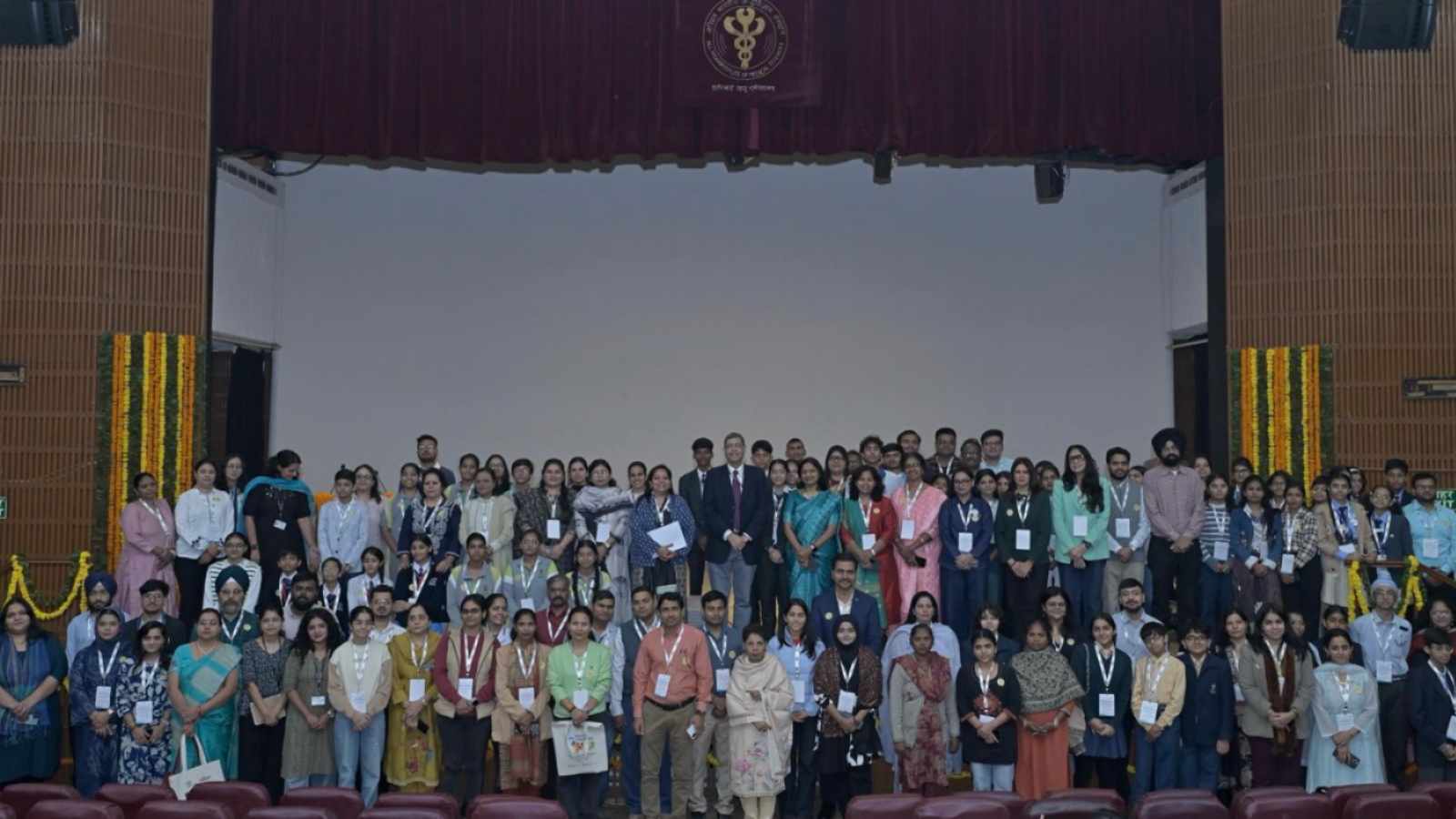
10975805 diabetes event
- ✓10975805 diabetes event
- ✓Sam Gulati, who has Type 1 diabetes, was a teenager when he was diagnosed with the condition.
- ✓An Executive Director at Tata Technologies, he is now 36, married, and has a daughter.
- ✓“It was a shock to my parents and me when I was diagnosed in 2006, and the initial years were tough and lonely,” he said.
From spotting early signs to access to Insulin and awareness in schools — experts called for a wider societal support system for children with Type 1 diabetes on Monday as HRIDAY, a civil society organisation, organised an event titled ‘Beyond Diagnosis: Living Well with Type 1 Diabetes at Home, in Schools and Communities’ at All India Institute of Medical Sciences (AIIMS) in Delhi.
The event brought together endocrinologists, government representatives, people suffering from the condition, caregivers, teachers and civil society groups. Sam Gulati, who has Type 1 diabetes, was a teenager when he was diagnosed with the condition.
An Executive Director at Tata Technologies, he is now 36, married, and has a daughter. “It was a shock to my parents and me when I was diagnosed in 2006, and the initial years were tough and lonely,” he said. He takes four doses of Insulin a day.
The cost of the treatment was another challenge. “But we somehow sailed through the initial years.” The awareness sessions, he added, made the difference. “They helped my parents and me understand the condition and manage its impact.” His was one of the many heartening accounts of struggles shared at the event.
Experts pointed out that the recently revised Rashtriya Bal Swasthya Karyakram (RBSK) 2.0 Operational Guidelines, 2026 by the Ministry of Health and Family Welfare (MoHFW) bring symptom-based screening for Type 1 diabetes in children up to 18 years in focus.
Known as the ‘4Ts’, four warning signs — ‘Toilet, Thirsty, Tired and Thinner’ — were flagged. These refer to passing urine more often, constant feeling thirsty, unusual tiredness and unexplained weight loss. Under the guidelines, suspected cases get a random blood glucose test and a referral to the non-communicable disease clinic at the district hospital.
The guidelines also provide for risk-based screening for Type 2 diabetes among adolescents. Stressing on early diagnosis and recognition, Dr Nikhil Tandon, Department of Endocrinology and Metabolism at AIIMS, said, “Early diagnosis and recognition matters because Type 1 diabetes can turn life-threatening if missed.
It is an autoimmune disease, simply, the body makes little or no Insulin. Unlike Type 2, it is not mainly tied to lifestyle. He further added, “The approach has to be different from Type 2. Type 1 diabetes happens in children.
It can be managed with proper treatment, and that treatment is Insulin. And the condition needs testing and constant monitoring.” He urged civil society to help build awareness among parents, teachers and schools. “As a society, there needs to be greater awareness and understanding of Type 1 diabetes.
Teachers and parents need to spot the warning signs and know what to do, because children spend most of their day away from hospitals. “ “It cannot be left to doctors and healthcare professionals alone,” he said. He also stressed the need for policy action at national and international levels, and for better implementation of national guidelines.
RBSK 2.0, he said, is a chance to improve early identification and referral. For a child with Type 1 diabetes, treatment is not limited to hospitals. Insulin management , glucose level monitoring , proper and timely meals and an active lifestyle.
“Insulin management, regular blood glucose monitoring, healthy nutrition and physical activity are essential components of everyday care,” Tandon said. That means families who know how to help. It means schools where a child can check glucose, or simply keep Insulin in the school fridge, take Insulin, and join class and sport without stigma.
Prof. Monika Arora, Executive Director, HRIDAY, said, "Children need an enabling environment in which healthy routines and diabetes care become part of everyday life. Schools, families, health systems and communities all have a role in building awareness and reducing stigma.” The event also showcased 'The Grassroots to Global India Initiative', led by HRIDAY with partner organisations, which works to raise awareness, connect people to care and build community support.
Its first phase reached more than 1.4 million people, said the organisers. The second phase has reached around two lakh so far. Tabshir Shams covers health for The Indian Express. He holds a Master's degree in International Rela...
Read More
- •Aspirants and citizens are advised to monitor official notices and circulars issued by Delhi NCR Civic & Governance.
- •Verify all prescribed eligibility criteria, cutoff dates, and authenticated document requirements prior to formal submissions.
- •Track connected examination timetables, vacancy advisories, and administrative gazettes on SuchnaSetu.
| Issuing Authority | Delhi NCR Civic & Governance |
|---|---|
| Topic Category | HEALTH |
| Jurisdiction | DL State |
| Publication Date | 24 November 2026 |