
Community rides, jazz: How two IIT researchers are encouraging public transport use
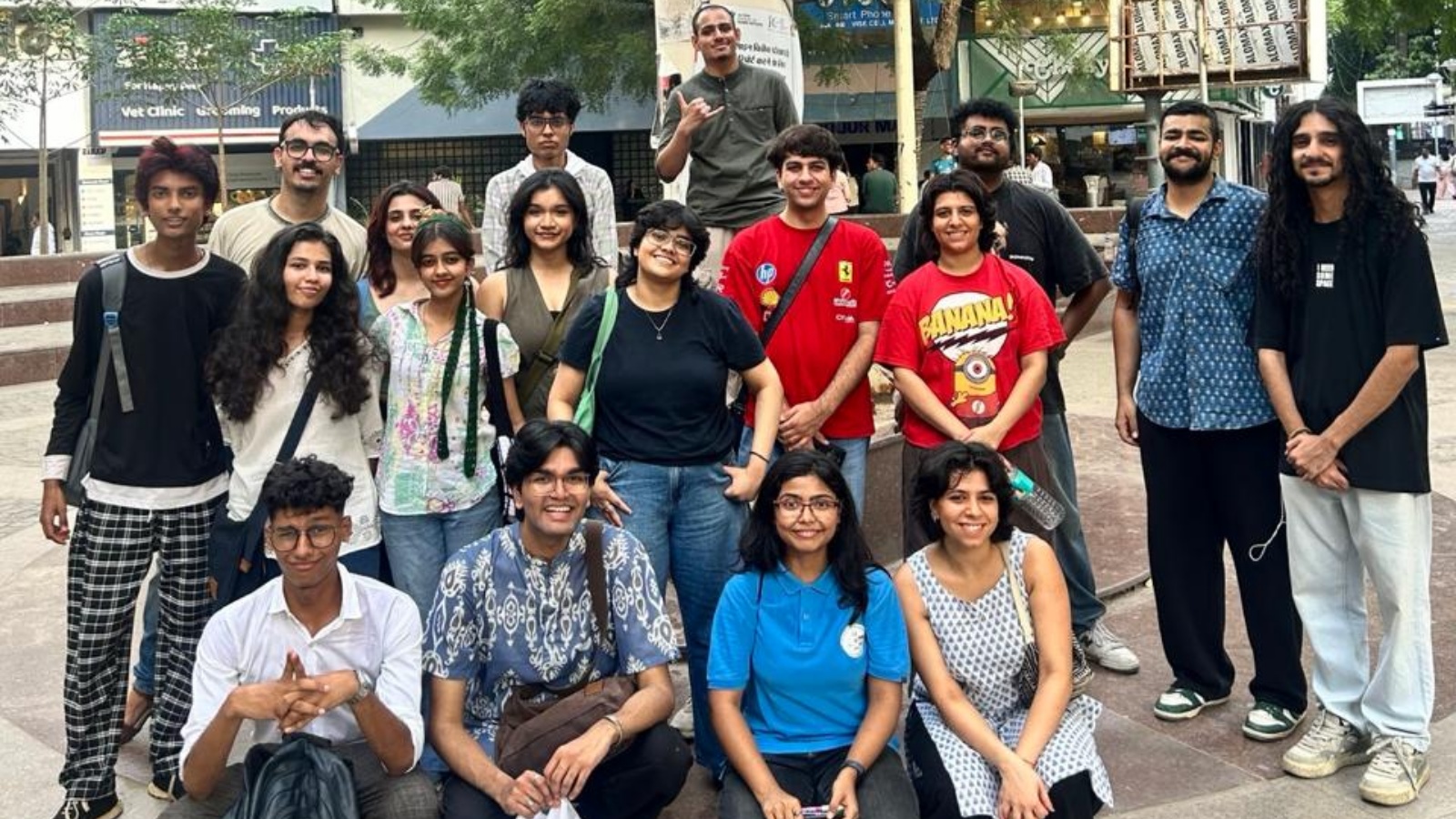
10859370 Atishay and Adwitiyaa organise 'Getting to know your public transit' walks
- ✓10859370 Atishay and Adwitiyaa organise 'Getting to know your public transit' walks
- ✓It started with the creation of an Instagram page – Ministry of All Public Transport Ever.
- ✓The latest trip that they organised with a group was on August 29.
- ✓For some participants like Suryaansh Chopra, a 21-year-old B Com graduate, these gatherings have been “full of zeal and warmth”.
Delhi does not have to be a city where owning a car is the preferred option for daily commute. This is the idea that drove Atishay Khanna, 27, and Adwitiyaa Pramanik, 23, researchers at the Transportation Research and Injury Prevention (TRIP) Centre at the Indian Institute of Technology (IIT) in Delhi to grow a community for encouraging the use of public transport.
A multifaceted approach has helped them bring their vision to life. It started with the creation of an Instagram page – Ministry of All Public Transport Ever. This platform then helped them get in touch with like-minded enthusiasts and organise weekend gatherings to go beyond conversations and create an experience during Metro and bus rides.
The latest trip that they organised with a group was on August 29. They called it the "RRTS Tour" on Namo Bharat, said to be India's fastest rapid transit and regional train system. “We did not want to just promote the idea that RRTS is a perfect solution,” Khanna says, and adds, “We just wanted to talk about who the system is actually accessible to, who benefits, and what happens to the people who still have to depend on cheaper, slower modes of transport while a faster alternative is out of reach.” Playing transit trivia is what many in these groups have bonded over during these community gatherings over the weeks.
For some participants like Suryaansh Chopra, a 21-year-old B Com graduate, these gatherings have been “full of zeal and warmth”. “I have this newfound passion for accessibility and affordability of public transport,” he shares, adding that friends now get “tired” of him narrating random bus routes he spots on the street.
For others, the experience holds a deeper meaning. No erasure — the promise that the duo made in one of the posts was what drew a 26-year-old participant to a Pride-themed ride in June. He was hesitant at first but then he met a non-binary rider who spoke about the anxiety of being frisked while commuting, leading to a conversation about how public transit intersects with identity in ways that rarely make it into policy conversations.
“Being bisexual, I have not been welcomed for pride events. Such gatherings helped bring my queerness and love of public transit together without friction,” he shares. Aindri Dasgupta, 22, another participant, who is pursuing Masters in Sociology, points to the Delhi Metro’s affordability and its provisions for disabled and elderly riders to ensure inclusivity.
She describes the women’s compartment, in particular, as a rare space where she can let her guards down. “It is hard to instantly change the patriarchal system… but spaces like these are safe spaces.” Last month, Khanna and Pramanik launched a website to spread awareness on Metro — delhimetrojazz.com.
Inspired by a similar New York-based project called trainjazz.com, which uses the concept of generative music and GPS data, their website turns Delhi’s nine Metro lines into a live jazz ensemble — each line mapped to an instrument, each passing train triggering a note.
The Delhi Metro Rail Corporation (DMRC), however, doesn’t publish real-time data for its nine lines. So Khanna and Pramanik built a simulation using what was publically available — line lengths, station counts, and typical headways.
“We weren’t trying to create technically perfect jazz, a friend helped us with the music,” Khanna says. “We were more interested in taking some of the ideas behind jazz, where different things are happening at the same time.” A Metro network, after all, is already something like an ensemble: multiple lines running independently, never quite synchronised, always in conversation.
What the website does, more than anything, is give people who would never read a transit policy thread a reason to think about the Metro. For Ashwin, the website became a “unique take on tracking public transit and having the infrastructure to not track it”.
He points out that projects like this showcase what’s technically possible with public data, and they pull more attention toward the state of that data and the systems it describes. Aindri Dasgupta, 22, meanwhile, connects the site’s mood directly to her own experience of the Metro — the “smoothness with which the train moves” and listening to jazz “might just make you forget tiredness from not getting a seat.” For Khanna, designing this website invokes personal memories.
His uncle worked on designing some of the system’s earliest stations, on the Yellow and Red lines, and as a child, Khanna was occasionally taken along to the construction sites, he says. “I obviously didn't understand the scale of what was being built,” he says, but remembers attending the inaugural opening of the Kashmere Gate – Central Secretariat underground corridor around Patel Chowk, at four or five years old, with Dr Manmohan Singh present.
“Seeing the Metro go from something that was being constructed around me to something that I now use almost every day is probably my strongest memory.” For Pramanik, the first memory of the Metro is her mother taking her from Karkardooma to Race Course (now Lok Kalyan Marg) as a child, watching the whole city unfold through the train window.
Once you click the ‘Enter the experience’ tab on the landing page against the website’s dark blue backdrop, the line’s colours glow. On the right is a signal board showing each note the passing line is playing. Press ‘Start Session’ and you hear the lines come alive: a simulation of Delhi’s Metro network, sped up by roughly 40x; each line is mapped to its own instrument, coinciding with the line’s colours.
Each has an instrument attached to it — yellow’s the piano, violet’s the saxophone, green the flugel, and so on. As virtual trains, in the form of dots, pass by each station, they trigger notes that are then woven together using jazz rhythms and chord structures.
The website is interactive: one can mute a line, thus an instrument, and make their own versions as well. The right side of the website,...
- •Aspirants and citizens are advised to monitor official notices and circulars issued by Delhi NCR Civic & Governance.
- •Verify all prescribed eligibility criteria, cutoff dates, and authenticated document requirements prior to formal submissions.
- •Track connected examination timetables, vacancy advisories, and administrative gazettes on SuchnaSetu.
| Issuing Authority | Delhi NCR Civic & Governance |
|---|---|
| Topic Category | STATES |
| Jurisdiction | DL State |
| Publication Date | 2 September 2026 |