
Delhi Chokes On ‘Very Poor’ Air For Fourth Straight Day, AQI Forecast Warns Of ‘Severe’ Levels Ahead Of Diwali
Delhi Chokes On ‘Very Poor’ Air For Fourth Straight Day, AQI Forecast Warns Of ‘Severe’ Levels Ahead Of Diwali
- ✓Delhi Chokes On ‘Very Poor’ Air For Fourth Straight Day, AQI Forecast Warns Of ‘Severe’ Levels Ahead Of Diwali
- ✓The reading had risen from 324 on Monday to 350 on Tuesday, reflecting the sustained deterioration in air quality.
- ✓Of the 59 active stations in Delhi, 22 recorded 'severe' air quality at 10 pm on Thursday.
- ✓Punjabi Bagh topped the list with an AQI of 459, followed by Jahangirpuri (457), Rohini (453), IIT Delhi (452) and DTU (443).
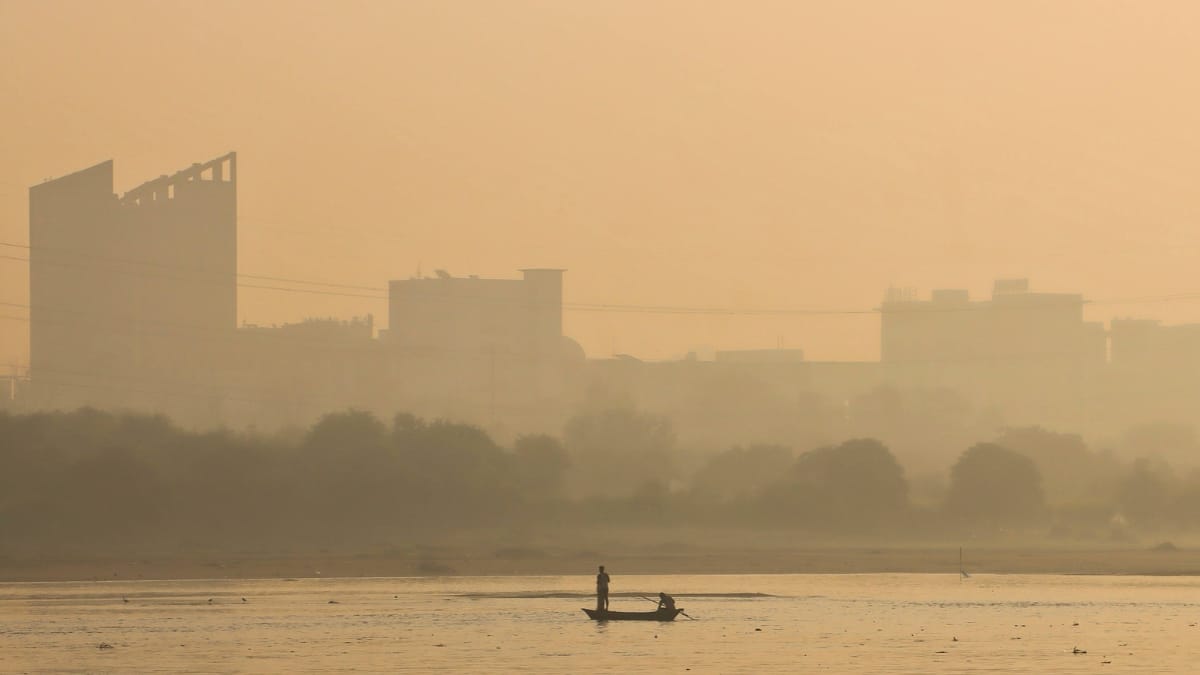
Delhi continued to experience poor air quality on Thursday as a thick haze engulfed the national capital, marking the fourth consecutive day of 'very poor' AQI levels. While the city's average Air Quality Index (AQI) recorded a marginal improvement, forecasts indicate a further deterioration from Friday, with pollution expected to enter the 'severe' category over the weekend, just ahead of Diwali.
According to the Central Pollution Control Board (CPCB), Delhi's 24-hour average AQI stood at 369 in its 4 pm bulletin on Thursday, compared to 377 on Wednesday. The reading had risen from 324 on Monday to 350 on Tuesday, reflecting the sustained deterioration in air quality.
The Air Quality Early Warning System (AQEWS) has predicted that Delhi's air quality will remain in the 'very poor' category on Thursday before slipping into the 'severe' zone from Friday to Sunday. Pollution levels are expected to fluctuate between the two categories over the following six days.
The CPCB classifies AQI readings of 0-50 as 'good', 51-100 as 'satisfactory', 101-200 as 'moderate', 201-300 as 'poor', 301-400 as 'very poor' and 401-500 as 'severe', as per reports. The situation was particularly concerning at individual monitoring stations.
Of the 59 active stations in Delhi, 22 recorded 'severe' air quality at 10 pm on Thursday. Punjabi Bagh topped the list with an AQI of 459, followed by Jahangirpuri (457), Rohini (453), IIT Delhi (452) and DTU (443). Unseasonal rainfall has disrupted the paddy harvesting schedule in Punjab, potentially leading to more stubble-burning incidents in the coming days, officials from the Punjab Pollution Control Board said.
The Indian Institute of Tropical Meteorology's (IITM) Decision Support System projects that the contribution of farm fires to Delhi's PM2.5 emissions will increase from 16% to around 19% by Friday. The Indian Agricultural Research Institute (IARI) detected 837 paddy residue-burning incidents across six states on Thursday.
Punjab reported 440 cases, followed by Madhya Pradesh (216), Rajasthan (90), Uttar Pradesh (64), Haryana (18) and Uttarakhand (9). The cumulative count since September 15 has reached 5,637. However, the actual number could be higher as Nasa's satellites pass over the region around 1.30 pm, while much of the burning reportedly takes place later in the day, as previously reported by HT.
The Centre for Research on Energy and Clean Air (CREA) attributed the recent rise in PM2.5 levels primarily to industrial emissions, pollution originating outside Delhi and secondary particulate matter formation. The Ministry of Earth Sciences' Decision Support System (DSS) estimated that stubble burning contributed 15.6% of Delhi's PM2.5 pollution on Thursday.
This share is expected to rise to 19.2% on Friday before dropping to 1.6% on Saturday. Meanwhile, transport emissions are projected to increase from 17.9% on Thursday to 18.3% on Friday and 21.1% on Saturday, indicating a growing contribution from vehicular pollution even as farm-fire emissions decline.
Delhi's average AQI was 369 ('very poor') on Thursday. It is forecasted to remain 'very poor' before deteriorating to 'severe' from Friday to Sunday, just before Diwali. The CPCB classifies AQI from 'good' (0-50) to 'severe' (401-500).
'Very poor' is 301-400, while 'poor' is 201-300. Key contributors include industrial emissions, pollution from outside Delhi, secondary particulate matter, and farm fires. Transport emissions are also a growing factor. Yes, farm fires contributed 15.6% of Delhi's PM2.5 pollution on Thursday, expected to rise to 19.2% by Friday.
Unseasonal rain may lead to more stubble burning incidents. Bharathi SP is a journalist and Associate Producer at ABP Live English, chasing breaking news and digging up untold stories, mostly from South India. With over 7 years of experience in the news industry, she's worked across both print and digital platforms, wearing many hats: sub-editor, senior reporter, and, now, producer.
An alumna of ACJ and IGNOU, Bharathi focuses on politics, inclusive development and stories that connect the states with the nation. She has a soft spot for long-form narratives, sharp angles and all things political. For any tips and queries, you can reach out to her at bharathi@abpnetwork.com.
- •Aspirants and citizens are advised to monitor official notices and circulars issued by ABP News.
- •Verify all prescribed eligibility criteria, cutoff dates, and authenticated document requirements prior to formal submissions.
- •Track connected examination timetables, vacancy advisories, and administrative gazettes on SuchnaSetu.
| Issuing Authority | ABP News |
|---|---|
| Topic Category | HEALTH |
| Jurisdiction | All India / National |
| Publication Date | 6 November 2026 |