
Delhi Records Cleanest November Air At AQI 204, But ‘Very Poor’ Category Likely Next
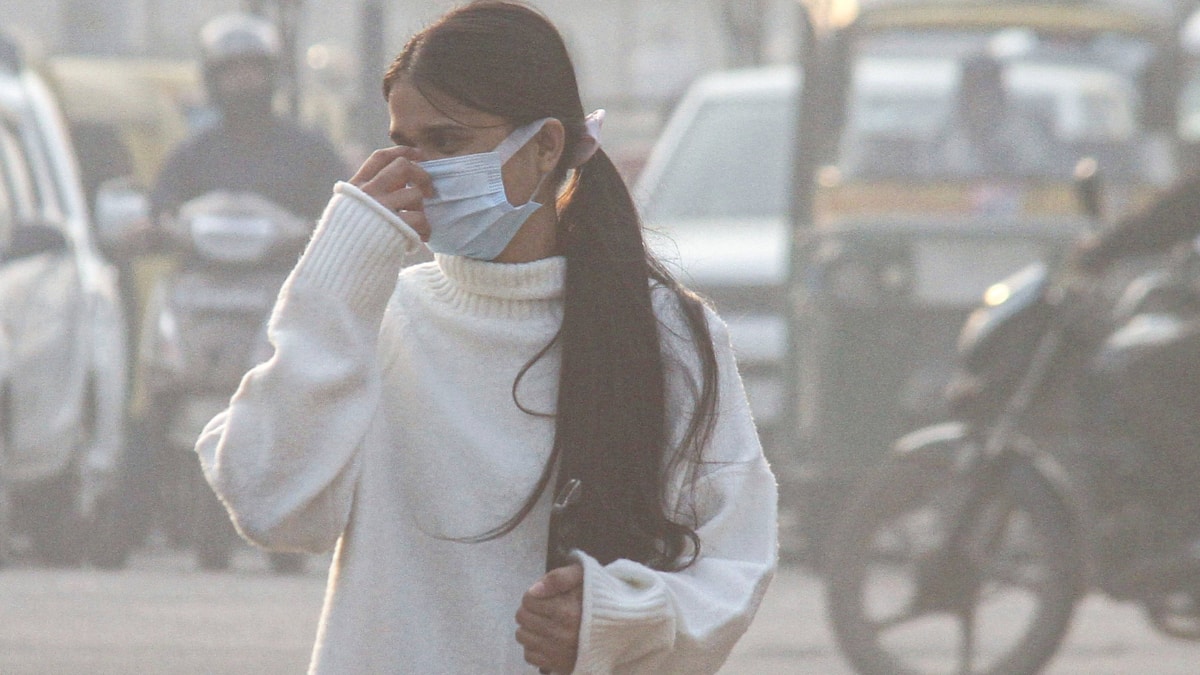
Delhi Records Cleanest November Air At AQI 204, But ‘Very Poor’ Category Likely Next
- ✓Delhi Records Cleanest November Air At AQI 204, But ‘Very Poor’ Category Likely Next
- ✓The AQI, at 204 in the 'poor' category, was the lowest recorded this month, offering some respite after days of deteriorating air quality.
- ✓The last time Delhi recorded a lower AQI was on October 31, when the index stood at 117 in the 'moderate' category.
- ✓Northwesterly winds reaching speeds of up to 15 kmph and a mixing depth of around 1,500 metres helped disperse pollutants.
New Delhi: Delhi recorded its cleanest air of November on Tuesday, with the Air Quality Index (AQI) settling at 204, even as the city witnessed the season's coldest morning so far, with a minimum temperature of 11.6 degrees Celsius at Safdarjung.
The AQI, at 204 in the 'poor' category, was the lowest recorded this month, offering some respite after days of deteriorating air quality. The last time Delhi recorded a lower AQI was on October 31, when the index stood at 117 in the 'moderate' category.
Northwesterly winds reaching speeds of up to 15 kmph and a mixing depth of around 1,500 metres helped disperse pollutants. Mixing depth refers to the height up to which pollutants can disperse and mix in the atmosphere. A lower mixing depth restricts the vertical movement of pollutants, leading to their accumulation closer to the ground and potentially worsening air quality.
Of the 58 air quality monitoring stations that recorded data, 31 were in the 'poor' category, 26 recorded 'moderate' air quality and one station, Sirifort, was in the 'very poor' category with an AQI of 303. The national capital has remained shrouded in haze and elevated pollution levels through much of November, with air quality deteriorating during both the pre- and post-Diwali period.
Tuesday's reading offered some respite from the prolonged spell of poor air quality. PM2.5 remained the dominant pollutant in the city. Particulate matter 2.5 refers to fine inhalable particles measuring 2.5 micrometres or less in diameter.
These particles can penetrate deep into the lungs and even enter the bloodstream, posing risks to human health. According to the Air Quality Early Warning System, secondary organic aerosols were the largest contributor to Delhi's real-time PM2.5 concentration on Tuesday, accounting for 32.2 per cent of the estimated pollution load.
Biomass burning, which includes stubble burning and the use of domestic solid biofuels such as wood and dung cakes, contributed 18 per cent, while waste burning accounted for 15.7 per cent and vehicular emissions for 14.5 per cent.
Secondary inorganic aerosols contributed 11.9 per cent, followed by coal combustion at 2.9 per cent, firecrackers at 2.3 per cent, industrial sources at 1.7 per cent and road dust and soil at 0.7 per cent, the system's estimates showed.
Meanwhile, the minimum temperature at Safdarjung, Delhi's base weather station, dropped to 11.6 degrees Celsius on Tuesday, 0.7 degrees below the season's normal. This was the lowest minimum temperature recorded this season so far.
Among other weather stations, Palam recorded a minimum temperature of 12.3 degrees Celsius, 0.6 degrees below normal, while Lodhi Road recorded 12 degrees Celsius, one degree above normal. The Ridge station recorded a minimum temperature of 14.6 degrees Celsius, 1.1 degrees above normal, while Ayanagar recorded 12.6 degrees Celsius, 0.1 degrees below normal.
The maximum temperature at Safdarjung settled at 28 degrees Celsius, 0.2 degrees above normal. Palam recorded a maximum of 25 degrees Celsius, 2.6 degrees below normal, while Lodhi Road registered 27.6 degrees Celsius, 0.6 degrees above normal.
The maximum temperature at the Ridge station was 27.7 degrees Celsius, 0.3 degrees above normal, while Ayanagar recorded 26.6 degrees Celsius, 0.9 degrees below normal, according to the India Meteorological Department (IMD).
The IMD has forecast a minimum temperature of 12 degrees Celsius and a maximum of 27 degrees Celsius for Wednesday, with moderate fog likely. However, the respite in air quality is likely to be temporary, with the Air Quality Early Warning System forecasting that Delhi's air quality may deteriorate to the 'very poor' category on Wednesday and remain in the category on Thursday.
The predicted maximum mixing depth over Delhi is around 1,500 metres on November 17 and 1,400 metres on November 18.
- •Aspirants and citizens are advised to monitor official notices and circulars issued by ABP News.
- •Verify all prescribed eligibility criteria, cutoff dates, and authenticated document requirements prior to formal submissions.
- •Track connected examination timetables, vacancy advisories, and administrative gazettes on SuchnaSetu.
| Issuing Authority | ABP News |
|---|---|
| Topic Category | HEALTH |
| Jurisdiction | All India / National |
| Publication Date | 17 November 2026 |