
Exports push GDP growth, but low-margin shipments struggle
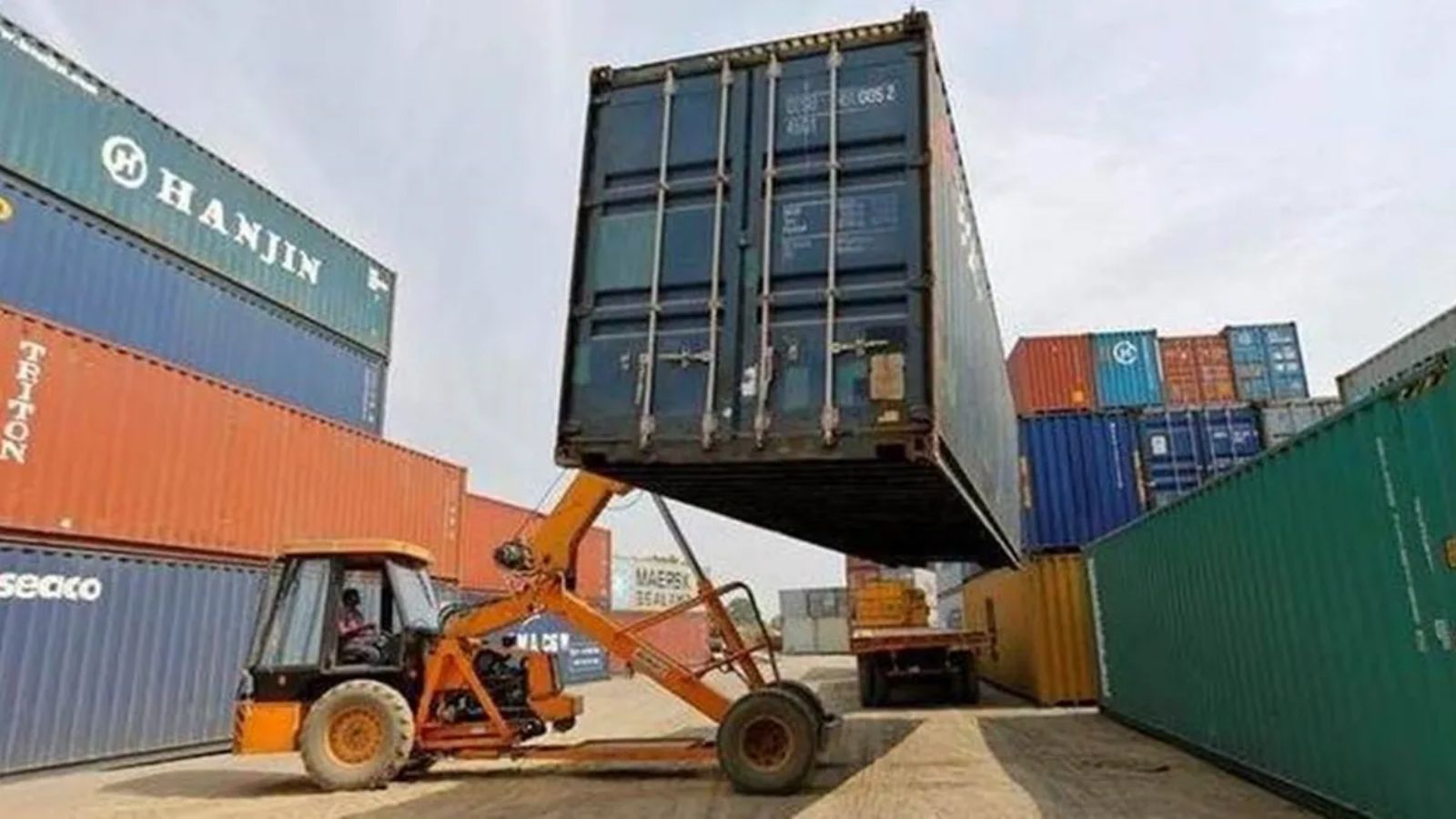
10862160 shipping cargo containers file photo express
- ✓10862160 shipping cargo containers file photo express
- ✓This performance helped drive GDP growth in April-June to an unexpectedly high 7.8%.
- ✓Textile exports slipped 12.4% while leather products declined 4.7%.
- ✓Exports of low-margin products such as fruits and vegetables, ceramics and glassware, and jute products fell 10.3%, 25%, and 13.4%, respectively.
India’s goods exports bucked expectations to record their best-ever June, with outbound shipments jumping to a record $44.24 billion at the peak of the disruption caused by the crisis in West Asia. This performance helped drive GDP growth in April-June to an unexpectedly high 7.8%.
But under the headline number, most labour-intensive and low-margin exports did not fare well. Overall goods exports in April-June rose 15% year-on-year to $129.32 billion while non-petroleum, non-gems and jewellery shipments were up 12% at $99.04 billion – well above the 6.5% growth exhibited over the previous two financial years.
On Monday, Chief Economic Adviser (CEA) V Anantha Nageswaran attributed the “brisk” growth in India’s core exports to the signing of free trade agreements (FTAs), export diversification efforts, and “possibly rising competitiveness”.
According to economists, net exports added 3 percentage points to GDP growth in April-June 2026 and this was driven by a decline in real imports as the conflict in West Asia weighed on import volumes. “Export growth accelerated to 12% in Q1; combined with the decline in imports, this meant net exports contributed positively to GDP,” Barclays economists said Monday.
The headline numbers, however, mask an uneven sectoral picture. While high-end products such as engineering goods, electronics and pharmaceuticals grew 18.1%, 22.6% and 6.8%, respectively, during the April-June quarter, several labour-intensive sectors registered a sharp decline.
Textile exports slipped 12.4% while leather products declined 4.7%. Exports of low-margin products such as fruits and vegetables, ceramics and glassware, and jute products fell 10.3%, 25%, and 13.4%, respectively. Tea exports were under particular pressure, falling 17.5%.
Of the 31 export sectors, 11 posted a year-on-year decline in April-June. According to economists and industry executives, the West Asia crisis is disrupting trade at various levels, with steep logistics costs hurting exporters’ profit margins.
While products which have a high margin, such as consumer electronics, allow their exporters to absorb the shock of more expensive logistics, exporters of low-margin products struggle and give up profits to protect market share.
According to Devendra Kumar Pant, Chief Economist at India Ratings, the problem for exporters would be the margins. “On higher margins, exporters would not be competitive, or the importers won’t give the price which will protect exporters’ margins.
So, they will be forced to lower margins. Export figures will not show the dip in profitability,” Pant said. Anshuman Kanoria, Chairman of the Indian Tea Exporters Association (ITEA), said the outlook for tea exports this year is very poor and the West Asia war could lead to a 25% fall in outbound shipment.
“There has been a 10-fold surge in freight rates in key markets including Iran, Iraq, the US and the EU. Payment has also become a major problem in trade with Iran, which is India’s largest export market for tea. Things have aggravated after the UAE cut trade ties with Iran,” Kanoria said.
Experts said a sharp depreciation in the rupee has aided competitiveness. The Indian rupee ended June at 94.7-per-dollar, down around 10% compared to 12 months ago. While this helped export-oriented sectors such as IT and pharmaceuticals, import-dependent sectors such as oil and gas, and companies that depend heavily on imported raw materials have been hurt as the weaker rupee made these inputs costly.
“As of now, the rupee at 94 is providing good support to exports,” Ajay Sahai, Director General & CEO of the Federation of Indian Export Organisations (FIEO), said. “Over a period of time, the rupee has depreciated by around 7% and the Chinese yuan has appreciated by 8%.
This is giving Indian exporters a 15% advantage over China. Besides, in the sunrise and knowledge- and technology-driven sectors, exports are doing well. But in labour-intensive sectors, it’s a mixed picture,” he said. Swift diversification and higher export absorption by countries with which India has signed FTAs also helped cushion the impact of the West Asia crisis.
When Indian exports came under pressure, particularly those going to UAE, exporters turned their attention to Singapore, another transhipment hub.
- •संबंधित उम्मीदवार अथवा नागरिक Indian Express Economy & Markets के आधिकारिक पोर्टल पर समय-समय पर जारी अतिरिक्त दिशानिर्देशों का अवलोकन करें।
- •अधिसूचना में उल्लिखित समय-सीमा, पात्रता शर्तों एवं आवश्यक दस्तावेजों की पूर्व जांच सुनिश्चित करें।
- •सूचना सेतु पर इस विषय से जुड़ी आगामी परीक्षा तिथियों, भर्ती विज्ञापनों और परिणाम अपडेट्स को ट्रैक करते रहें।
| जारीकर्ता प्राधिकरण | Indian Express Economy & Markets |
|---|---|
| विषय श्रेणी | BUSINESS |
| क्षेत्र / अधिकार क्षेत्र | अखिल भारतीय (राष्ट्रीय) |
| सार्वजनिक तिथि | 3 सितंबर 2026 |