
Fake cops had him trapped for 11 days. Then a real policeman called
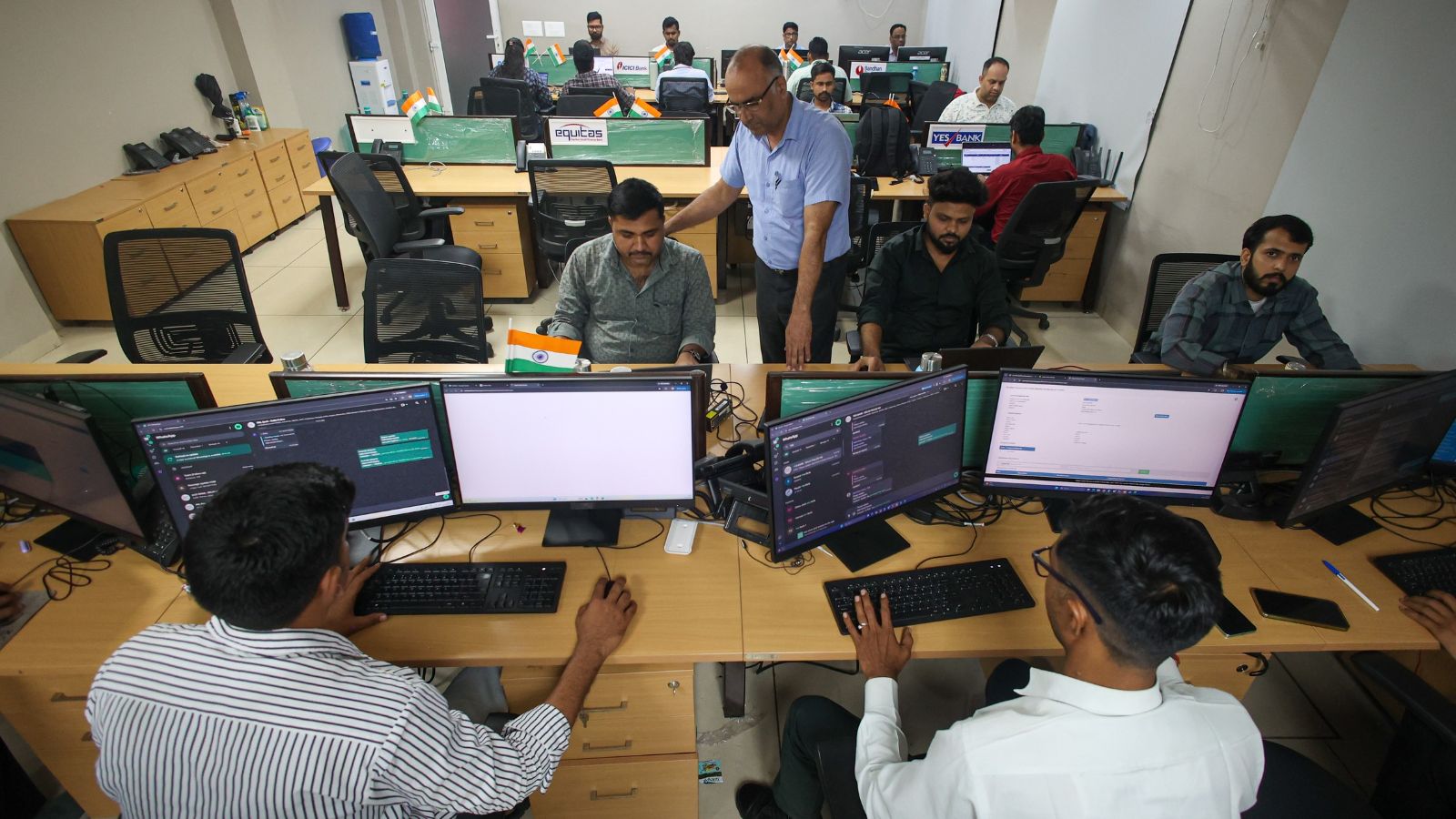
10974318 delhi digital arrest police
- ✓10974318 delhi digital arrest police
- ✓On October 1, Bhim Singh was about to liquidate his mutual funds, the last of his savings and the only cushion between a 73-year-old retiree and financial ruin.
- ✓He had already broken his fixed deposit and sent Rs 25 lakh to men he believed were officers of the law.
- ✓It was the first time in nearly 15 days that I had not been asked to pay money.” Singh was saved.
On October 1, Bhim Singh was about to liquidate his mutual funds, the last of his savings and the only cushion between a 73-year-old retiree and financial ruin. He had already broken his fixed deposit and sent Rs 25 lakh to men he believed were officers of the law.
Now they were scaring him into selling the rest, and he was planning to part with some of his wife’s jewellery. For 11 days, he and his 65-year-old wife had been under “digital arrest” in their modest house in Roshan Pura, a middle-class locality near the Delhi-Gurugram border, confined by people who were never in the room.
“Hello, this is Inspector Parveen Kumar, from Delhi Police. Have you transferred the money into this account? Aapke saath scam ho raha hai. Woh police nahi hai (You are being scammed. Those men are not the police),” said the voice on the other end.
Singh was in a bind. For days he had been shown an Enforcement Directorate notice, an FIR copy bearing the Supreme Court’s name, and a courtroom where a judge in a black robe presided. Now a stranger was telling him that all of it was false, and that the stranger was the real police.
Who was real and who was not had moved beyond his mental grasp. “I initially doubted him,” Singh says. The caller sent him videos of other digital-arrest victims, so that he could see what was happening to him. “I called him and asked if he also wanted to put me under digital arrest.
But when he said he did not need money, I was inclined to listen. It was the first time in nearly 15 days that I had not been asked to pay money.” Singh was saved. He did not send another Rs 3.44 lakh he was about to. His rescue was the work of a unit that did not exist in March: the Proactive Victim Identification & Protection Team of the Delhi Police.
It is tiny — one inspector and two head constables — and does something Indian policing has rarely tried. “It looks for people in the middle of a digital arrest, while the scam is still running, and tries to talk them out of it,” a senior police official said.
Delhi has become one of the country’s most vulnerable cities for digital arrests, and its elderly are the favoured targets. Many live alone while their children work punishing jobs or live abroad. “In digital arrest cases, policing has so far prioritised recovering the money and tracing the accused.
But in most cases, once the money moves, it’s gone. It hops across accounts and leaves the formal banking system, through crypto and hawala channels, often before the victim has finished explaining what happened,” says a senior police officer.
“Hence, we decided that we should trace the victims and not let the money leave. That’s how the unit was formed in March this year” If you dial 1930, the national cyber-fraud helpline, from Delhi, the person most likely to pick up is Inspector Kumar.
He oversees the helpline’s control room at the Intelligence Fusion and Strategic Operations (IFSO) unit of the Delhi Police. “As I was handling the 1930 helpline, I was the first point of contact for the victims,” he says.
“They usually called with such distress, with no idea of what had befallen them. So I had the practice of being extremely patient and sensitive to each caller.” When the police set up the new team in March, they gave it to Kumar to handle.
Senior officers say the choice came down to that patience, and to the fact that he already coordinated regularly with both IFSO and the Ministry of Home Affairs’ Indian Cyber Crime Coordination Centre, or I4C. Kumar works from IFSO’s Rohini branch.
His two deputies, the head constables, operate from the cyber agency’s offices at Connaught Place. The mandate, Kumar says, went beyond answering complaints. The team was asked to reach people while they were still being duped, in real time.
“We have to save the victim, and anyhow keep them engaged,” he says. “No matter what they say to us, or how difficult they are to convince.” The team’s main operation is to track suspected money transactions, and to find the next victim before the money moves again.
“Whenever we get a cyber fraud complaint, we first get the details of the account the victim transferred the money to,” Kumar says. “The head constables at Connaught Place get in touch with the bank, and also get details of the victim.
We then check if that (suspect’s) account is still receiving money. If yes, then someone somewhere is still being scammed.” The head constables then try to reach that second victim. But it is not as simple as picking up a phone, says Kumar.
Convincing is the hard part, because the police are competing with a well-produced show.
- •Aspirants and citizens are advised to monitor official notices and circulars issued by Delhi NCR Civic & Governance.
- •Verify all prescribed eligibility criteria, cutoff dates, and authenticated document requirements prior to formal submissions.
- •Track connected examination timetables, vacancy advisories, and administrative gazettes on SuchnaSetu.
| Issuing Authority | Delhi NCR Civic & Governance |
|---|---|
| Topic Category | TECHNOLOGY |
| Jurisdiction | DL State |
| Publication Date | 23 November 2026 |