
Farm fires season near end but traffic, local pollution set to worsen Delhi AQI
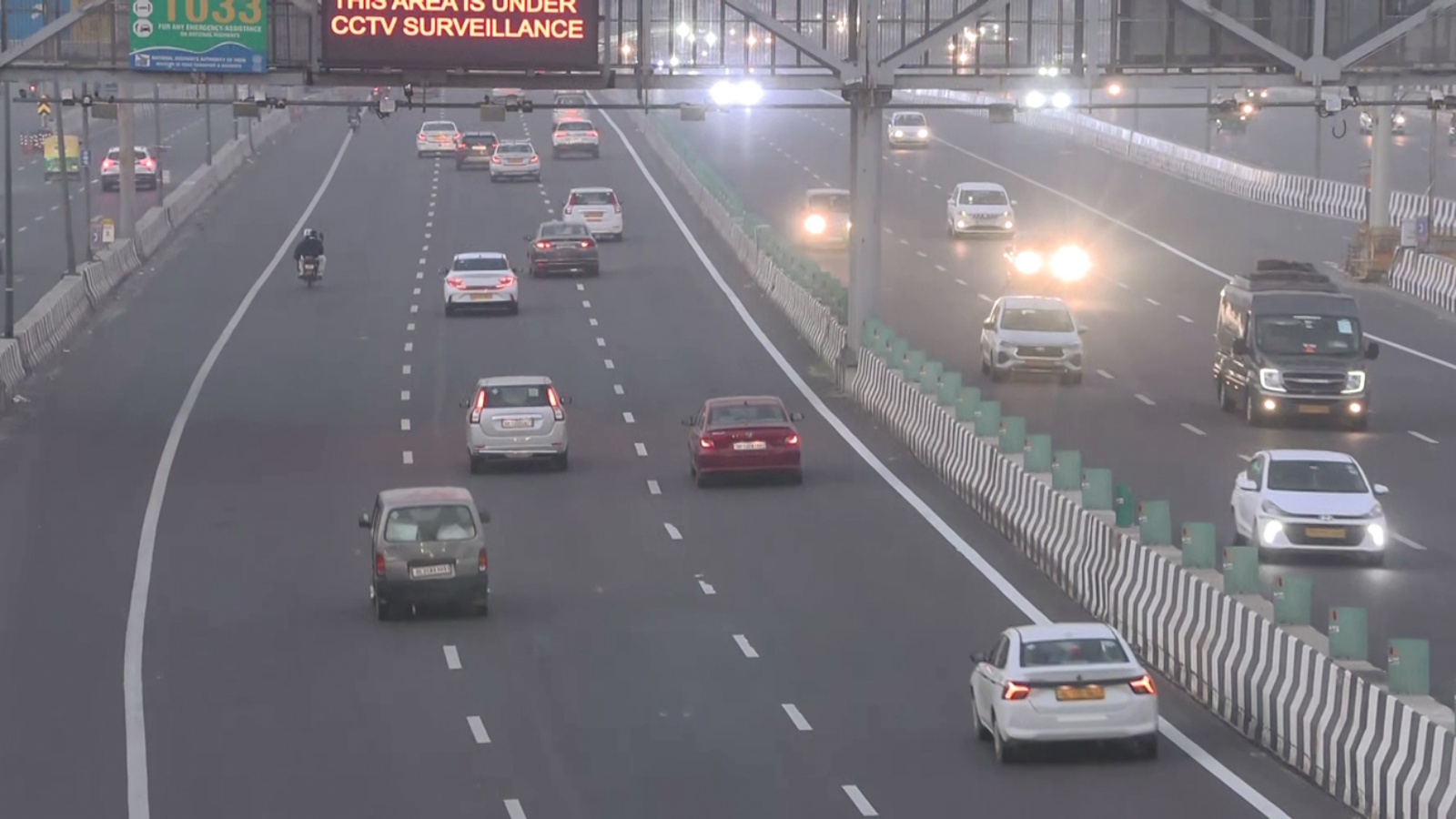
10982139 Poor Air Quality Near Akshardham Temple
- ✓10982139 Poor Air Quality Near Akshardham Temple
- ✓On Friday, satellites logged just 13 fires in Punjab and three in Haryana.
- ✓Gurugram recorded an AQI of 203, in the ‘Poor’ category, across all four reporting stations, and Noida logged an AQI of 245 across eight stations.
- ✓On Friday, Safdarjung, the Capital’s base weather station, recorded a minimum temperature of 9.3°C (one degree below normal), while Ayanagar dipped to 9.2°C.
With the Kharif paddy harvest season wrapping up across Northwest India, stubble burning in Punjab and Haryana has nearly drawn to a close. Yet Delhi’s air remains locked in the ‘Poor’ category, extending into a 13-day streak, as daily urban emissions, pollution across neighbouring cities in the NCR and stagnant winter meteorology have sustained the Capital’s particulate matter burden, which refers to microscopic solids or liquid droplets suspended in the air.
On Friday, satellites logged just 13 fires in Punjab and three in Haryana. The AQI is likely to worsen to the ‘Very Poor’ category by Sunday. On Friday, satellites logged just 13 fires in Punjab and three in Haryana. While 501 active fires were still detected across the broader region, 96% were concentrated in Uttar Pradesh (278) in mainly its eastern districts such as Maharajganj and Kushinagar, as well as in Madhya Pradesh (202), outside the immediate Northwestern wind corridor feeding into Delhi.
Despite the sharp drop in Northwestern India farm fires, the Capital recorded a 24-hour average AQI of 226 in the ‘Poor’ category at 4 pm on Friday, across 56 of 59 reporting stations, with PM10 and PM2.5 as the prominent pollutants, according to the Central Pollution Control Board (CPCB).
That marked a slight 2-point uptick from Thursday’s AQI of 224, and placed the Capital in the worst 10% of all 273 monitored cities nationwide, above the national average of 131, data by the CPCB showed. Air quality across the wider NCR remained worse than in the Capital, underscoring the regional scale of baseline emissions.
Gurugram recorded an AQI of 203, in the ‘Poor’ category, across all four reporting stations, and Noida logged an AQI of 245 across eight stations. Several neighbouring NCR towns registered even higher particulate loads led by Ballabgarh (349) and Meerut (317) in the ‘Very Poor’ zone, alongside Ghaziabad (259), Bhiwadi (252), Bulandshahr (251), Faridabad (245), Greater Noida (243), and Baghpat (227).
With farm-fire smoke receding, real-time source apportionment data from the Indian Institute of Tropical Meteorology (IITM) for Friday confirmed that Capital’s particulate load is being sustained by baseline urban and regional sources rather than agricultural burning.
Satellite data from the Consortium for Research on Agroecosystem Monitoring and Modeling from Space (CREAMS) Lab at the Indian Agricultural Research Institute (ICAR-IARI) shows that residue burning in the northwestern states upwind of Delhi has nearly ended.
Between September 15 and November 27, satellites detected 19,392 burning events across seven monitored states, which is a 39.3% drop compared to 31,948 events in the same window last year. Within this paddy stubble burning season, regional detections peaked during November 3 to 9 at 5,130 fires, driven by 3,045 incidents in Punjab (averaging 435 per day) and 148 in Haryana.
In the past three days (November 24-27) however, Punjab’s count dropped to 105 (roughly 26 per day), which is a 94% decline in daily fire intensity from its early-November peak. Overall, the 2026 Kharif season recorded the lowest total farm fire count since satellite monitoring began across the region in 2020, with 19,392 burning events detected between September 15 and November 27— a 39.3% drop from 31,948 in 2025 and an 82% decline from 1,07,693 in 2020.
While sharp year-on-year reductions in Madhya Pradesh (down 59.2% to 6,595), Uttar Pradesh (down 52.9% to 3,095), and Haryana (down 44.9% to a seven-year low of 359) drove the regional dip, Punjab bucked the downward trend with 7,191 fires up 40.8% from last year’s 5,106, though still 91.3% below its 2020 peak of 82,842.
According to IITM’s estimates, vehicular emissions were the single largest contributor to Delhi’s PM2.5 load on Friday at 32%, followed by biomass burning—comprising stubble burning and domestic solid biofuels such as dung-cake and wood—at 22.8%.
Secondary organic aerosols accounted for 14%, while secondary inorganic pollutants contributed 12.3%, broken down into nitrate (5.2%), ammonia (4.2%), and sulphate (2.9%). Municipal, plastic-rubber, and e-waste burning accounted for 10.7%, followed by industrial emissions at 4.2%, mineral dust and ash at 1.8%, coal combustion at 1.5%, and mixed combustion at 0.8%.
Calm winds and dropping nighttime temperatures can compound the impact of these baseline emissions. On Friday, Safdarjung, the Capital’s base weather station, recorded a minimum temperature of 9.3°C (one degree below normal), while Ayanagar dipped to 9.2°C.
According to the India Meteorological Department’s (IMD) Air Quality Early Warning System, Delhi’s ventilation index — a measure of how effectively the atmosphere disperses pollutants — stood at 1,300 square metres per second on Friday and is forecast at 1,500 square metres per second on Saturday, well below the 6,000 square metres per second threshold required for efficient dispersion.
With the maximum mixing depth hovering around 1,100–1,200 metres, emissions from traffic, waste burning, and regional industry remain trapped close to the surface, and air quality is forecast to slip back into the 'Very Poor' category by November 29, the IITM forecast noted.
- •Aspirants and citizens are advised to monitor official notices and circulars issued by Delhi NCR Civic & Governance.
- •Verify all prescribed eligibility criteria, cutoff dates, and authenticated document requirements prior to formal submissions.
- •Track connected examination timetables, vacancy advisories, and administrative gazettes on SuchnaSetu.
| Issuing Authority | Delhi NCR Civic & Governance |
|---|---|
| Topic Category | STATES |
| Jurisdiction | DL State |
| Publication Date | 28 November 2026 |