
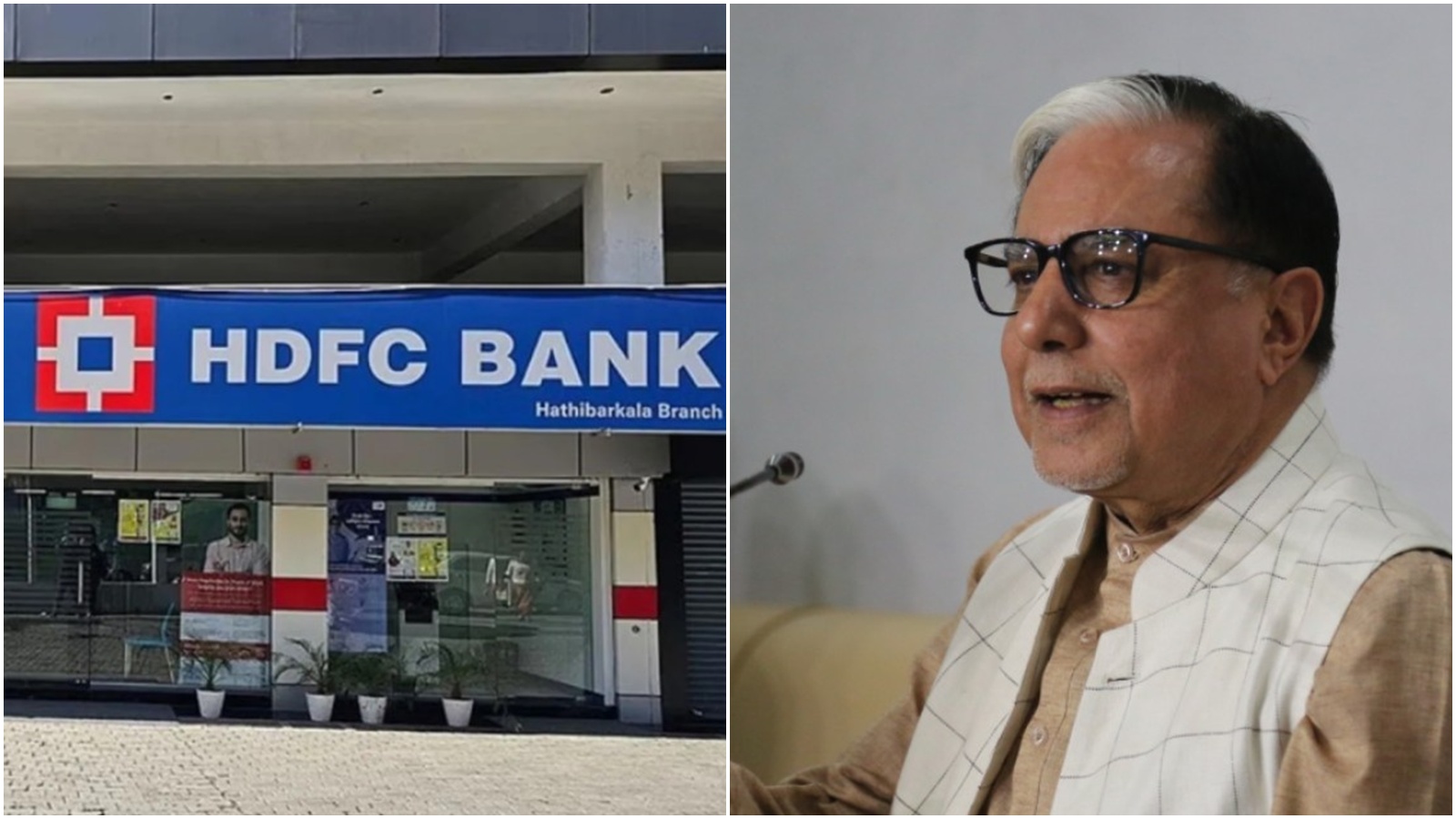
HDFC Bank weighs appeal over Subhash Chandra’s Rs 6.25-crore settlement
10852828 chandra hdfc
- ✓10852828 chandra hdfc
- ✓The NCLT has approved Chandra’s proposal to pay Rs 6.25 crore against total guarantees signed for Rs 22,000 crore.
- ✓“With regard to the referred NCLT matter, HDFC Bank’s admitted claim was only 3.2% of the total stated amount.
- ✓Chandra’s insolvency proceedings were initiated in 2024 following a petition by Indiabulls Housing Finance.
HDFC Bank is “exploring an appeal” against an National Company Law Tribunal (NCLT) order approving a repayment plan for Essel Group founder Subhash Chandra that entails a substantive haircut on creditors’ admitted claims.
The NCLT has approved Chandra’s proposal to pay Rs 6.25 crore against total guarantees signed for Rs 22,000 crore. HDFC Bank said its admitted claim accounted for 3.2% of the total claims and that it was inherited from erstwhile HDFC Ltd prior to the merger of the two entities.
“With regard to the referred NCLT matter, HDFC Bank’s admitted claim was only 3.2% of the total stated amount. The bank inherited this facility, which was previously provided by HDFC Limited. HDFC Bank had opposed this settlement and voted against the resolution, which was approved by the majority.
The bank is exploring an appeal at NCLAT,” the lender said in a statement Thursday. The NCLT verdict saved the case from going into bankruptcy. The proceedings concern personal guarantees given by Chandra for borrowings of Essel Group-linked companies.
When a promoter gives a personal guarantee for corporate loans, the lender can, subject to the applicable legal process, pursue the guarantor when the underlying borrower defaults. Chandra’s insolvency proceedings were initiated in 2024 following a petition by Indiabulls Housing Finance.
The case therefore goes beyond Zee Entertainment Enterprises. It concerns Chandra’s personal liability arising from guarantees linked to corporate debt. There is a separate corporate insolvency proceedings involving companies associated with the Essel Group, or with regulatory proceedings involving Zee Entertainment and its executives.
“Total claim against Subhash Chandra as a personal guarantor, in the personal insolvency proceedings is only Rs 3,992 crore by the objectors of the plan and not Rs 22,000 crore,” Subhash Chandra’s office said in a press statement issued on Thursday.
“Out of which, also a claim of Rs 620 crore settled and further Rs 1,063 crore offered to be paid by the borrower entities. The borrowing entities for whom Chandra has provided personal guarantees have till date repaid Rs 43,000 crore.
The borrowing entities have assured to settle any other amount which might have left,” it said. “He (Subhash Chandra) declared his total assets stood at Rs 39.08 crore which he declared in the Parliament of India in 2016, which is a public record.
How could a bank take/accept his net worth of Rs 45,888 crore in 2017?” the statement said. “His personal net worth came down to Rs 31.79 crore in 2024 from Rs 39.08 crore in 2016,” it said. The August 25 order was not the result of a straightforward unanimous decision.
A two-member NCLT bench had earlier delivered a split verdict on the repayment plan. With the members divided, Nilesh Sharma, judicial member of the NCLT, acted as the third member to resolve the disagreement. The third member ultimately sided with approval of the repayment plan.
Creditors had mounted strong objections, particularly over the extraordinarily low amount they were being offered. But the tribunal concluded that the objections did not provide sufficient legal grounds to reject the plan.
The tribunal reviewed the available financial information and concluded that the approved repayment plan could yield a better outcome than forcing the matter into bankruptcy. Put simply, the reasoning was pragmatic: recovering Rs 6.5 crore could be preferable to the potentially lower returns from liquidation or bankruptcy.
The creditors’ objections centred on the extraordinarily low recovery. Creditors also questioned whether the debtor’s assets and financial affairs had been examined deeply enough, including whether a forensic investigation should have been conducted.
The tribunal, however, did not accept the argument that a forensic investigation was an essential precondition for approving the repayment plan. The NCLT also emphasised the importance of the commercial decision of creditors.
Where creditors have voted on a plan in accordance with the IBC, the tribunal does not ordinarily substitute its own commercial assessment for that decision. The repayment plan had secured the requisite support from creditors, reportedly receiving approximately 80.81% of the voting share.
Individual dissenting creditors cannot simply withdraw from the process and demand a different settlement. The case exposes a reality of lending to promoters. A bank may have a claim running into thousands of crores and still recover virtually nothing if the underlying assets and enforceable guarantees do not support the debt.
A personal guarantee can strengthen a lender’s position, but it is not the same thing as cash sitting in a bank account. Its ultimate value depends on the guarantor’s legally available assets and the insolvency process.
- •Aspirants and citizens are advised to monitor official notices and circulars issued by Indian Express Economy & Markets.
- •Verify all prescribed eligibility criteria, cutoff dates, and authenticated document requirements prior to formal submissions.
- •Track connected examination timetables, vacancy advisories, and administrative gazettes on SuchnaSetu.
| Issuing Authority | Indian Express Economy & Markets |
|---|---|
| Topic Category | BUSINESS |
| Jurisdiction | All India / National |
| Publication Date | 28 August 2026 |