
In a first, Indian Railways to build 6 freight lines with private firms using highways’ hybrid funding model
10856210 train-l_20260830210645.jpg
- ✓10856210 train-l_20260830210645.jpg
- ✓The other two projects are the 207.80-km Manuguru-Ramagundam line in Telangana and the 126.52 km Pakur/Nagarnabi to Godda line in Jharkhand.
- ✓The project will now be sent to the Union Cabinet for final approval, before the bids are invited.
- ✓Later, based on market feedback, the ministry switched to HAM.
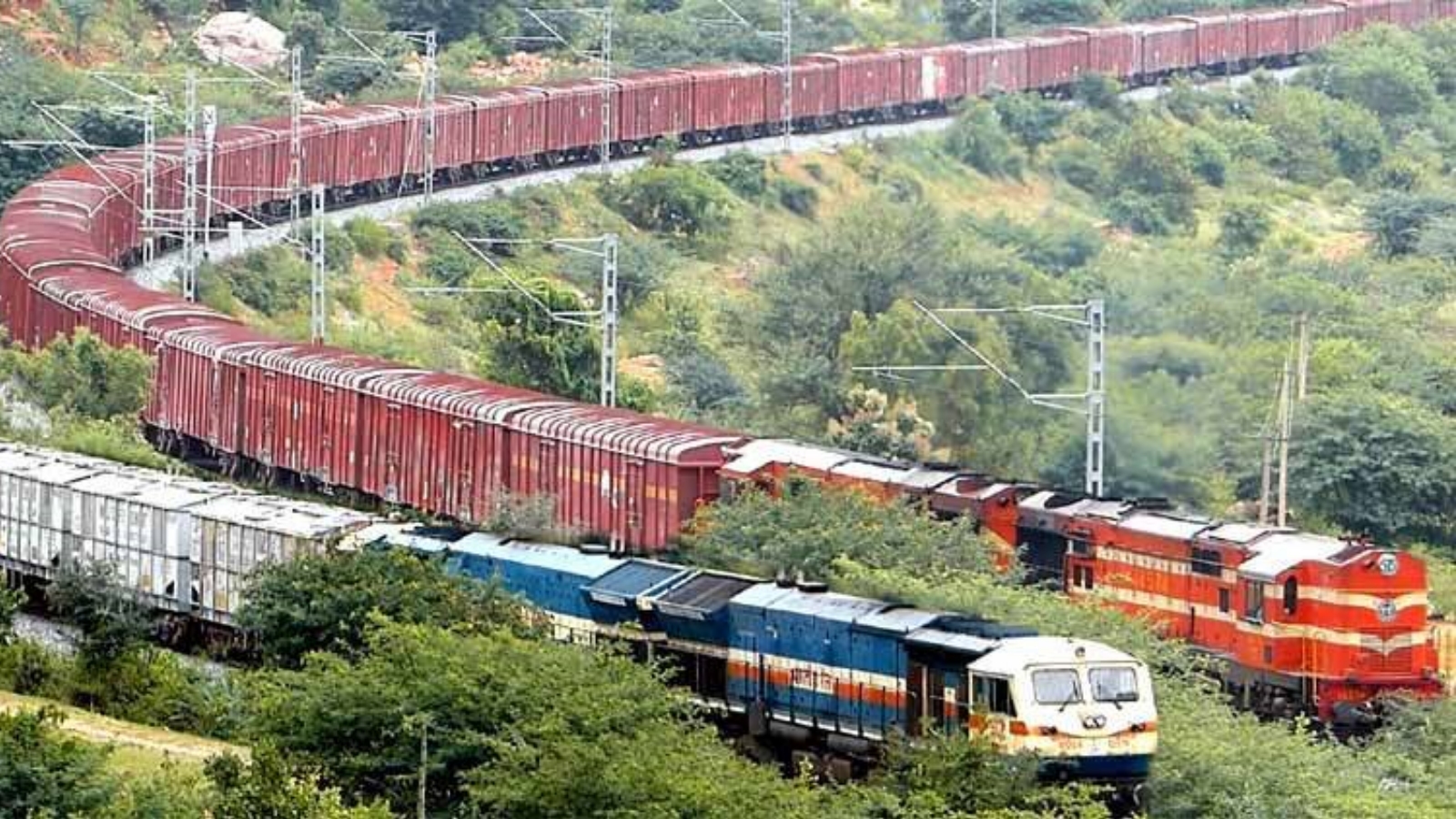
Giving a push to private investment in Indian Railways, the Public Private Partnership Appraisal Committee (PPPAC) under the Ministry of Finance, earlier in August, approved six railway lines spanning 647 km along freight corridors. These are to be developed under the Hybrid Annuity Model (HAM) — similar to the model used in the highways sector wherein the government and the private builder split the project costs and risks.
Of the six proposed railway projects, four are in Odisha: 49.58-km Balaram-Putgadia-Tentuloi (Inner Corridor), 112.56-km Budhapank-Tentuloi-Luburi (Outer Corridor), 101.26-km Jajpur-Keonjhar Road-Aradi-Dhamara Port and 48.96-km Tikiri Station to Waltair Bauxite Mines. The other two projects are the 207.80-km Manuguru-Ramagundam line in Telangana and the 126.52 km Pakur/Nagarnabi to Godda line in Jharkhand.
The project will now be sent to the Union Cabinet for final approval, before the bids are invited. This will be the first time the Indian Railways is implementing a project under HAM, a variant of Public Private Partnership (PPP).
The total bid project cost of six lines is Rs 15,976 crore and the total capital cost covering the entire concession period (which is 17-19 years) is Rs 40,866 crore. The key commodities on these routes are primarily coal, along with iron ore, bauxite, coke, chemical manure, cement and food grains.
The PPPAC had earlier accorded in-principle approval to these projects under the Design, Build, Finance, Operate, and Transfer (DBFOT) model. Later, based on market feedback, the ministry switched to HAM. Under this, Indian Railways will pay 40% of the bid project cost as grant during the construction period and the private party will finance the remaining 60% of the cost.
“Subsequently, based on market feedback, the Ministry of Railways (MoR) revisited the project structure and proposed their implementation under the HAM. Under the proposed HAM structure, MoR would bear the traffic and tariff risks and provide 40% of the bid project cost as grant during the construction period,” say the minutes of the meeting held on August 1.
The construction of all six projects is proposed to commence from April 2028.
Once the line becomes operational, Indian Railways will pay back the remaining 60% through annuity or instalments, plus interest on annuity. Apart from this, it will also make regular payments to the concessionaire for maintenance of stations, tracks and other assets. Railways will operate trains and collect all freight revenue. It will also bear traffic and tariff risks – which means that if freight-loading or revenue is lower than what's targeted, the private party will not be penalised.
A senior railway official said the bidding for the projects is likely to take place in the next financial year, 2027-28. Apart from these six projects, there are 49 other projects in the pipeline for execution under PPP mode. The total cost of these projects are around Rs 1.80 lakh crore.
The official added that a total of 18 projects worth Rs 16,686 crore have been completed through the PPP model in the Indian Railways and seven projects worth Rs 16,362 crore are under implementation, including coal and port connectivity projects.
The Indian Railways recently added HAM, along with Development Partner (DPM), in its participative policy. The transition to newer models like HAM is its attempt at overcoming financial bottlenecks and attracting long-term private sector capital in infrastructure development.
Dheeraj Mishra is a Principal Correspondent with the Business Bureau of The Indian Express. He plays a critical role in covering India's massive infrastructure sectors, providing in-depth reporting on the connectivity lifelines of the nation. Expertise & Focus Areas: Mishra’s journalism is focused on two of the country's most capital-intensive and public-facing ministries: Ministry of Railways: Tracking the operations, safety, and development of India's vast railway network. Ministry of Road Transport & Highways: Covering policy decisions, infrastructure projects, and highway development. What sets Mishra apart is his rigorous use of the Right to Information (RTI) Actas a primary tool for news gathering. By relying on official data and government records, he ensures a high degree of accuracy and trustworthiness in his reporting. This data-driven approach has resulted in numerous impactful reports that hold public institutions accountable and bring transparency to government operations. Find all stories by Dheeraj Mishra here ... Read More
Sukalp Sharma is a Deputy Associate Editor with The Indian Express and writes on a host of subjects and sectors, notably energy and aviation. He has over 16 years of experience in journalism with a body of work spanning areas like politics, development, equity markets, corporates, trade, and economic policy. He considers himself an above-average photographer, which goes well with his love for travel. ... Read More
- •Aspirants and citizens are advised to monitor official notices and circulars issued by Indian Express Economy & Markets.
- •Verify all prescribed eligibility criteria, cutoff dates, and authenticated document requirements prior to formal submissions.
- •Track connected examination timetables, vacancy advisories, and administrative gazettes on SuchnaSetu.
| Issuing Authority | Indian Express Economy & Markets |
|---|---|
| Topic Category | BUSINESS |
| Jurisdiction | All India / National |
| Publication Date | 30 August 2026 |