
Indian Railways plans to improve onboard waste management on trains – here’s how
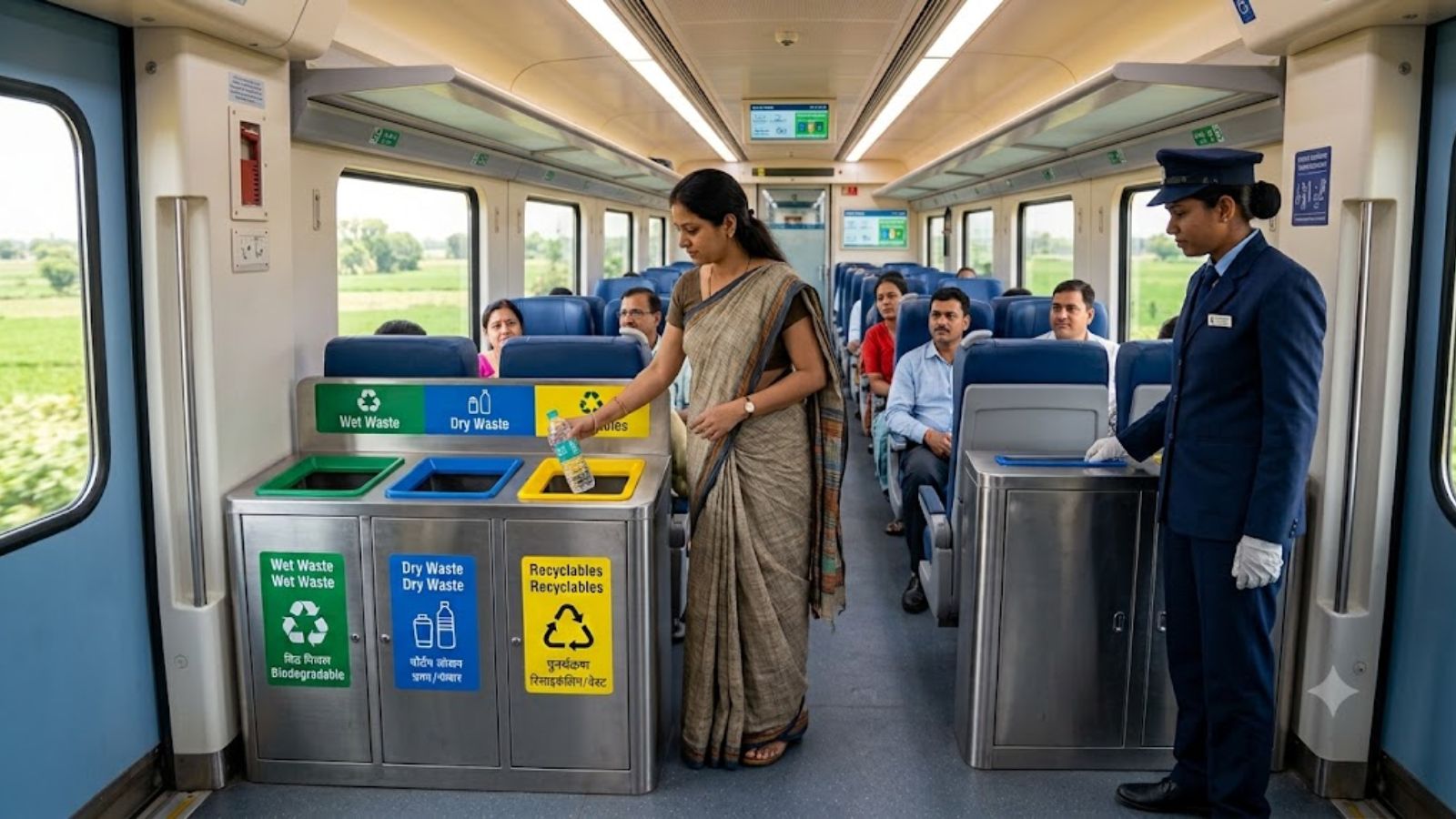
10863035 waste management
- ✓10863035 waste management
- ✓The existing garbage disposal arrangement in LHB coaches consists of two standard garbage bins, each with a capacity of around 15-20 litres.
- ✓This can result in overflowing bins and litter in passenger areas.
- ✓According to the workshop, the modified garbage collector has a capacity of 367.4 litres, compared with around 18 litres in the existing system.
Overflowing dustbins and waste piling up inside train coaches can be a common cleanliness challenge, particularly during long journeys when garbage keeps increasing. To address the issue, Indian Railways (IR) is working on a modified garbage disposal system that significantly increases waste-holding capacity and aims to reduce overflow inside the coaches.
The new system has been developed as a prototype by the Wagon Repair Workshop, Jhansi. According to the railway workshop, the innovation is designed to increase garbage-holding capacity and reduce the need for frequent handling of onboard dustbins.
It matters because limited garbage-bin capacity can lead to overflowing bins, litter inside coaches and waste being thrown onto railway tracks, especially during long journeys. The existing garbage disposal arrangement in LHB coaches consists of two standard garbage bins, each with a capacity of around 15-20 litres.
While the system can handle waste generated during limited journeys, the available capacity can be insufficient when waste continues to accumulate throughout a longer journey. This can result in overflowing bins and litter in passenger areas.
The modified system has been designed to address this limitation by shifting from conventional small-capacity bins to a larger collection arrangement. The proposed system consists of three main components: a garbage drop box, a connector and an undergear garbage collector.
The drop box will be installed on the coach floor, allowing passengers to dispose of waste in the usual manner. A connector positioned between the cabin floor and the undergear structure will then channel the waste downwards.
The waste will be transferred through the connector into a high-capacity collector mounted underneath the coach. The system uses a gravity-fed mechanism, meaning the waste moves downward from the passenger area into the undergear collector without requiring additional handling during the journey.
The collector will hold the waste until it can be emptied during maintenance. One of the key features of the proposed system is its significantly higher holding capacity. According to the workshop, the modified garbage collector has a capacity of 367.4 litres, compared with around 18 litres in the existing system.
Thus, this larger capacity is intended to allow the system to handle continuous waste generation during a journey and reduce instances of garbage overflowing from conventional bins. The arrangement is also designed to make use of available space underneath the coach without interfering with the existing undergear or structural components.
The proposed system uses stainless steel, which the workshop says will provide corrosion resistance, structural strength and a longer service life. The undergear collector has also been designed with a specialised 3:10 taper to facilitate its removal and emptying.
The garbage drop box and collector can be cleaned independently from both sides, which is intended to make sanitation and odour control easier. The increased storage capacity could also help address another cleanliness issue – passengers throwing waste outside coaches when onboard bins become full.
By providing a larger and accessible collection facility, the system is intended to reduce the chances of waste accumulating in passenger areas and being discarded onto railway tracks. The Jhansi workshop describes the system as a practical and economical approach to improving onboard waste management and maintaining cleaner coaches.
- •Aspirants and citizens are advised to monitor official notices and circulars issued by The Indian Express National.
- •Verify all prescribed eligibility criteria, cutoff dates, and authenticated document requirements prior to formal submissions.
- •Track connected examination timetables, vacancy advisories, and administrative gazettes on SuchnaSetu.
| Issuing Authority | The Indian Express National |
|---|---|
| Topic Category | INDIA |
| Jurisdiction | All India / National |
| Publication Date | 4 September 2026 |