
Infra, parents’ consent: How schools are running hybrid classes in Noida, Ghaziabad
10962493 delhi aqi
- ✓10962493 delhi aqi
- ✓“If there are 40 students in a class, and out of them, 20 wish to attend class online, teachers get divided.
- ✓“The parents are at work for almost 10-12 hours a day and do not have a spare phone to give to their children.
- ✓Out of 60 in class, only around five must be having an extra phone at home,” the teacher said.
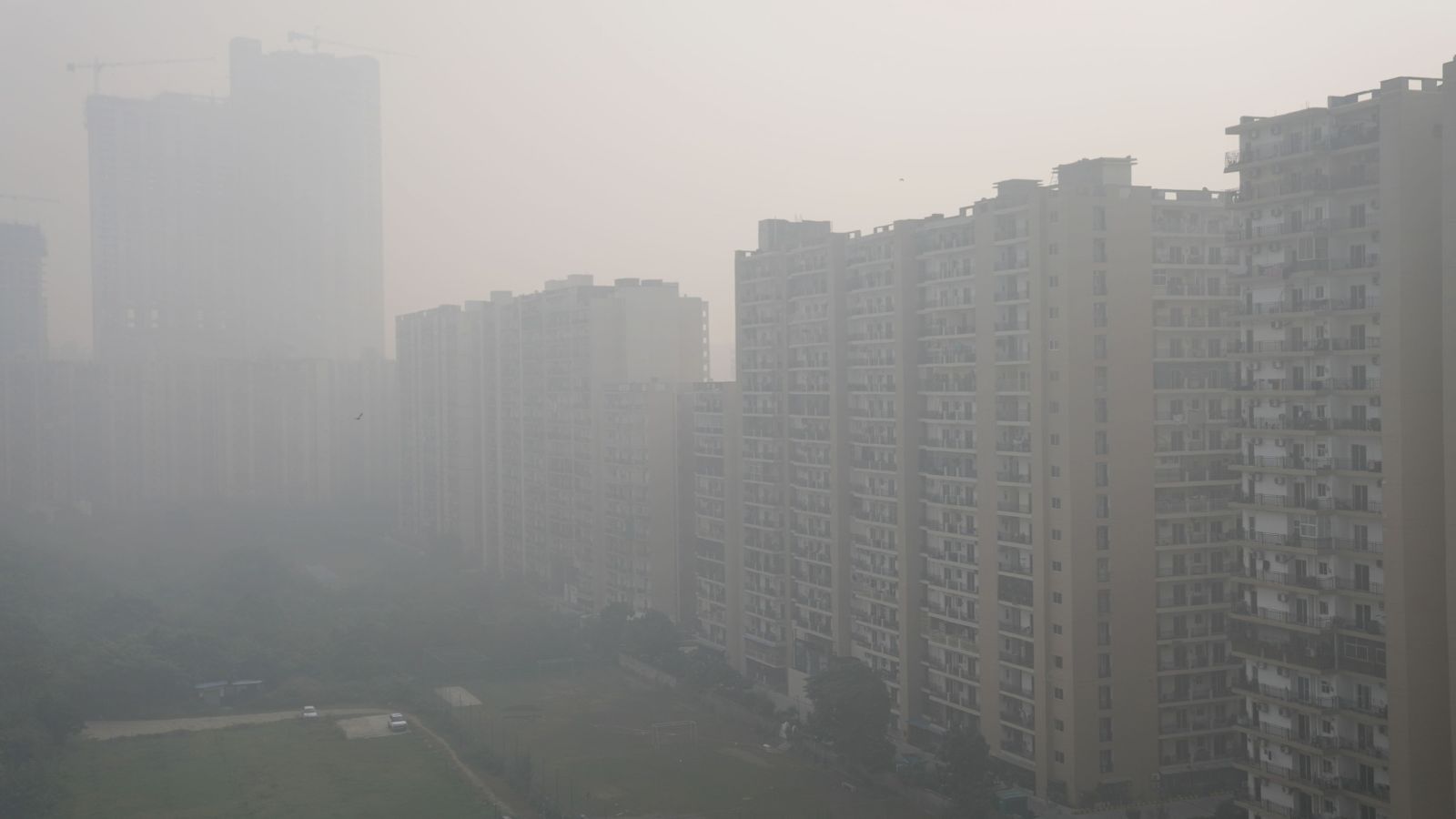
As air pollution continues to choke Delhi-NCR, with Noida and Ghaziabad among the worst-hit cities in the region, schools have switched to hybrid mode for students up to Class V Thursday onwards. While there is no single framework to be followed, the implementation of the government order has been left to schools, depending on the availability of resources, a senior Education department official from Gautam Buddha Nagar district said.
The teachers are required to seek consent from the parents whether they wish to continue their child’s classes online or offline. “If there are 40 students in a class, and out of them, 20 wish to attend class online, teachers get divided.
One is asked to teach to the online students and another teaches in the classroom,” the official explained, adding that the schools have been adopting such a transition since Covid-19. In an official notice signed on Friday, the Basic Education Officer stated that due to the Graded Response Action Plan (GRAP) implemented in Delhi-NCR, an order was issued by the Commission for Air Quality Management (CAQM) on November 6, making it “mandatory to conduct classes in schools for children up to Class V in a 'hybrid' mode in the territorial jurisdiction of NCT of Delhi and in the districts of Gurugram, Faridabad, Ghaziabad and Gautam Buddha Nagar- Clause 8(ii)”.
The clause allows for a hybrid mode of teaching, both in physical and online mode wherever online mode is feasible. “Strict compliance with the above instructions issued by the District Magistrate, Ghaziabad, should be ensured,” the order also stated adding that necessary action will be taken against the school concerned.
On the implementation of the order, a government school teacher from Gautam Buddha Nagar, who did not wish to be named, said that children from poor families — whose parents mostly work in garment factories across the city — come to attend classes as they don't have means to attend classes online.
“The parents are at work for almost 10-12 hours a day and do not have a spare phone to give to their children. Out of 60 in class, only around five must be having an extra phone at home,” the teacher said. Like Delhi and other neighbouring cities, Noida and Ghaziabad witnessed deterioration in air quality on Diwali, with AQI readings of 318 and 344, respectively.
In the days that followed, the AQI continued to hover in ‘Poor’ and ‘Very Poor’ categories, with readings recorded at 313 and 368, respectively, on Friday, according to Central Pollution Control Board (CPCB) data. Meanwhile, AQI in Greater Noida remained in the ‘Poor’ category between November 8 and 12, but entered the ‘Very Poor’ category with AQI reading 348 on Friday, according to the CPCB data.
- •Aspirants and citizens are advised to monitor official notices and circulars issued by Delhi NCR Civic & Governance.
- •Verify all prescribed eligibility criteria, cutoff dates, and authenticated document requirements prior to formal submissions.
- •Track connected examination timetables, vacancy advisories, and administrative gazettes on SuchnaSetu.
| Issuing Authority | Delhi NCR Civic & Governance |
|---|---|
| Topic Category | EDUCATION |
| Jurisdiction | DL State |
| Publication Date | 14 November 2026 |