
Interactive: 4 sea turtles nest on India’s shores. Meet them one by one
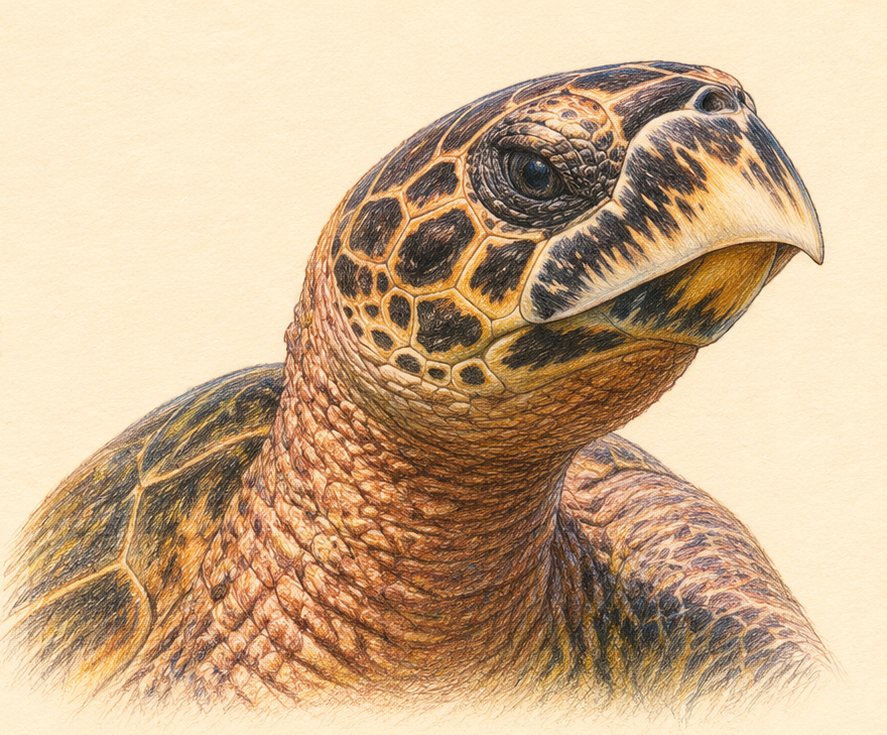
10978336 turtles_portrait_hawksbill
- ✓10978336 turtles_portrait_hawksbill
- ✓By one estimate, only about one hatchling in 1,000 survives to adulthood.
- ✓In October 2025, the IUCN moved the green turtle from Endangered to Least Concern.
- ✓An award-winning journalist with 14 years of experience, Nikhil Ghanekar is an Assistant Editor with...
Every year, under cover of darkness, something extraordinary happens on India’s beaches. A turtle about two feet long hauls herself out of the surf, digs a chamber in the sand, lays about a hundred eggs, covers them up and slips back into the sea.
She never meets her young. Four species nest on India’s shores: the olive ridley, one of the smallest sea turtles in the world; the green, the largest with a hard shell; the hawksbill, the rarest; and the leatherback, the largest turtle of all, which nests only in the Andaman and Nicobar Islands.
Opens a full-screen, scroll-driven story in a new tab. Works on mobile. Best with sound. The olive ridley is by far the most common. In 2024-25, a Wildlife Institute of India assessment recorded 18,713 solitary nests, laid by an estimated 7,500 to 8,000 mothers, each coming ashore two or three times a season.
That’s nearly two million eggs, before counting Odisha’s arribadas, when lakhs of females come ashore together over a few nights. This matters because India holds some of the world’s great nesting beaches, and what happens on them, and in the waters off them, is largely up to us.
By one estimate, only about one hatchling in 1,000 survives to adulthood. Feral dogs, jackals, crabs and storm tides take eggs. Streetlights lure hatchlings inland instead of towards the sea. Warming sand tips whole clutches towards females.
At sea, trawl nets drown adults: in January 2025, more than 1,000 dead olive ridleys washed up along Chennai’s coast, most of them suspected to have drowned in nets. And olive ridley nesting has all but stopped in Gujarat, where closed river mouths have damaged beaches.
Worse, on the Great Nicobar island, Galathea Bay, the leatherback’s busiest monitored nesting beach in India, is the proposed site of a transhipment port. In October 2025, the IUCN moved the green turtle from Endangered to Least Concern.
And the fixes are known: dark beaches, escape devices in trawl nets, and protecting eggs where laid. An award-winning journalist with 14 years of experience, Nikhil Ghanekar is an Assistant Editor with... Read More Chandrashekar Srinivasan is a senior editor with over 17 years of experience reporting, writing, edi...
Read More
- •Aspirants and citizens are advised to monitor official notices and circulars issued by The Indian Express National.
- •Verify all prescribed eligibility criteria, cutoff dates, and authenticated document requirements prior to formal submissions.
- •Track connected examination timetables, vacancy advisories, and administrative gazettes on SuchnaSetu.
| Issuing Authority | The Indian Express National |
|---|---|
| Topic Category | GOVERNANCE |
| Jurisdiction | All India / National |
| Publication Date | 25 November 2026 |