
Jaggery, urad dal, fruit: How Nagpur’s 133-year-old court is being saved using 1890s plaster
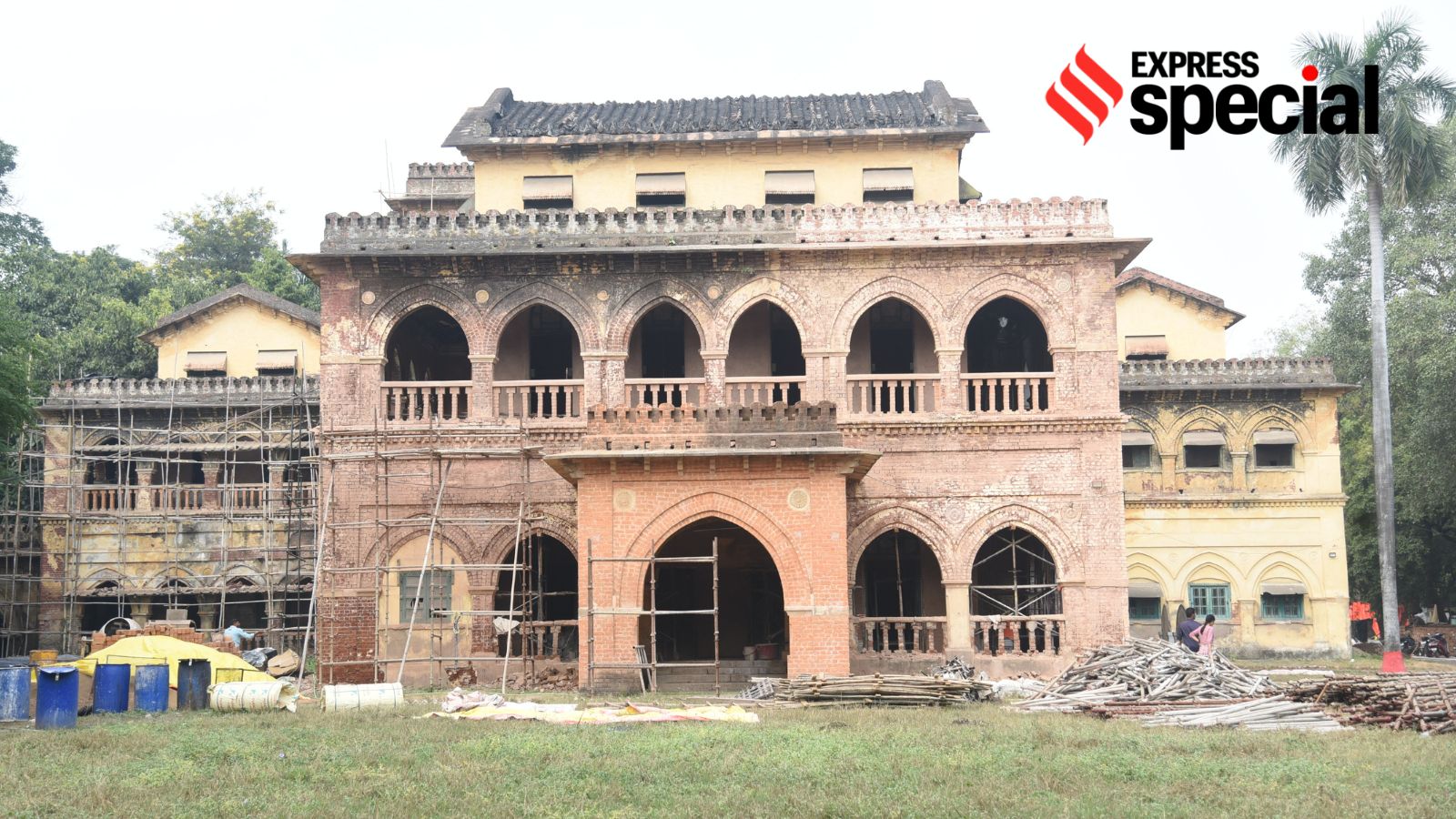
10969691 nagpur court
- ✓10969691 nagpur court
- ✓At Nagpur’s Old High Court building in Civil Lines, lime sits slaking in tanks for around 21 days before it can be used.
- ✓The Public Works Department (PWD) is trying to return the 133-year-old structure to what it once was.
- ✓On November 2, a portion at the rear caved in, in a section where work hadn’t yet begun.
At Nagpur’s Old High Court building in Civil Lines, lime sits slaking in tanks for around 21 days before it can be used. Bel fruit, jaggery and urad dal are fermented to bind it. A team from Jharkhand applies it to the walls in three coats, the way builders would have in the 1890s.
The Public Works Department (PWD) is trying to return the 133-year-old structure to what it once was. But the building may not wait. On November 2, a portion at the rear caved in, in a section where work hadn’t yet begun.
The Bombay High Court’s Nagpur Bench has since ordered a structural audit of the entire building. Its arcaded corridors, columns and arches were built of brick, stone, steel and timber. The roof used jack-arch construction, with brick vaults set between steel girders.
After the court moved out, central government offices took over. Corridors were enclosed, rooms altered and cement plaster laid over lime. Parts of the building were eventually declared unsafe. The High Court’s Nagpur Bench took suo motu cognisance of its condition in 2010.
The Archaeological Survey of India (ASI) began conservation work in 2016, and the building was declared a Monument of National Importance in 2018. But progress was slow and the work remained incomplete, PWD officials said.
Before the handover, the ASI had completed lime plastering on the first floor and parts of the flooring. On the court’s orders, the PWD took over on September 22, with a six-month deadline and a Rs 16.92-crore project approved by the ASI’s Director General.
“The building was originally very open. Several spaces were later filled in and altered. We are carefully removing these additions to bring it back to its original form,” said PWD deputy engineer Prashant Pustode. The work is conservation, not renovation, which means using the materials and methods of the original builders: brick, stone, steel girders, lime and teakwood.
“Work is currently underway in the corridors, where later additions are being dismantled. The department is also removing cement plaster from sections of the building and plans to replace it with lime plaster,” civil engineer Nilesh Khapekar said.
The mortar is a mix of natural lime, sand and surkhi, or crushed brick, with fermented organic binders. It goes on in three coats: a rough first layer, a finer second, and a final polished layer called lime punning. Lime lets the walls breathe, Khapekar said, while cement traps air inside them.
Samples go to an accredited laboratory before anything is applied. “We are not using artificial ingredients. We are trying to replicate the materials and methods used when the building was constructed,” Khapekar added. Roof tiles are being made in Balaghat from specially prepared moulds and will be tested before use.
During a visit to the site, The Indian Express found roof tiles filled with cement. The PWD plans to restore the jack-arch roofing, the stone flooring and staircases, and reopen arches to bring back the building’s original symmetry.
Teakwood fittings are being removed, cleaned, sanded, polished and put back. The restoration reaches into corners few have seen in decades. There’s an old jail, and a British-era record room that still holds its original racks for court files.
The racks will be dismantled and reinstalled. A narrow wooden spiral staircase leads to the tower. Archive plans and photographs are guiding the work. They show that a fountain once stood at the centre of the building. A water tank stands there now.
The portion that gave way on November 2 had its ceiling propped up with bamboo, PWD officials said. They blamed the decay on the cement plaster that had been applied over the original lime. The court has asked the PWD to audit the whole structure and submit a conservation methodology prepared in consultation with the ASI.
The assessment has begun, officials said. The collapsed portion will be rebuilt in its original form. The audit could add work, cost and time. The court has indicated it will consider an extension, officials said. Milind Angaitkar, in charge of the ASI’s Nagpur Sub-Circle, said the timeline is the court’s call.
“The High Court itself directed that the building be handed over to the PWD for conservation. Accordingly, we have done that. The PWD has to restore it within the stipulated period, as the court has already ordered that the work be completed within six months.
If that does not happen, the High Court will decide on the matter,” Angaitkar said.
- •Aspirants and citizens are advised to monitor official notices and circulars issued by Maharashtra State Bureau (Mumbai).
- •Verify all prescribed eligibility criteria, cutoff dates, and authenticated document requirements prior to formal submissions.
- •Track connected examination timetables, vacancy advisories, and administrative gazettes on SuchnaSetu.
| Issuing Authority | Maharashtra State Bureau (Mumbai) |
|---|---|
| Topic Category | GOVERNANCE |
| Jurisdiction | MH State |
| Publication Date | 19 November 2026 |