
कमाठीपुरा बदल रहा है. ऐसा ही इसका लाल बत्ती व्यापार है
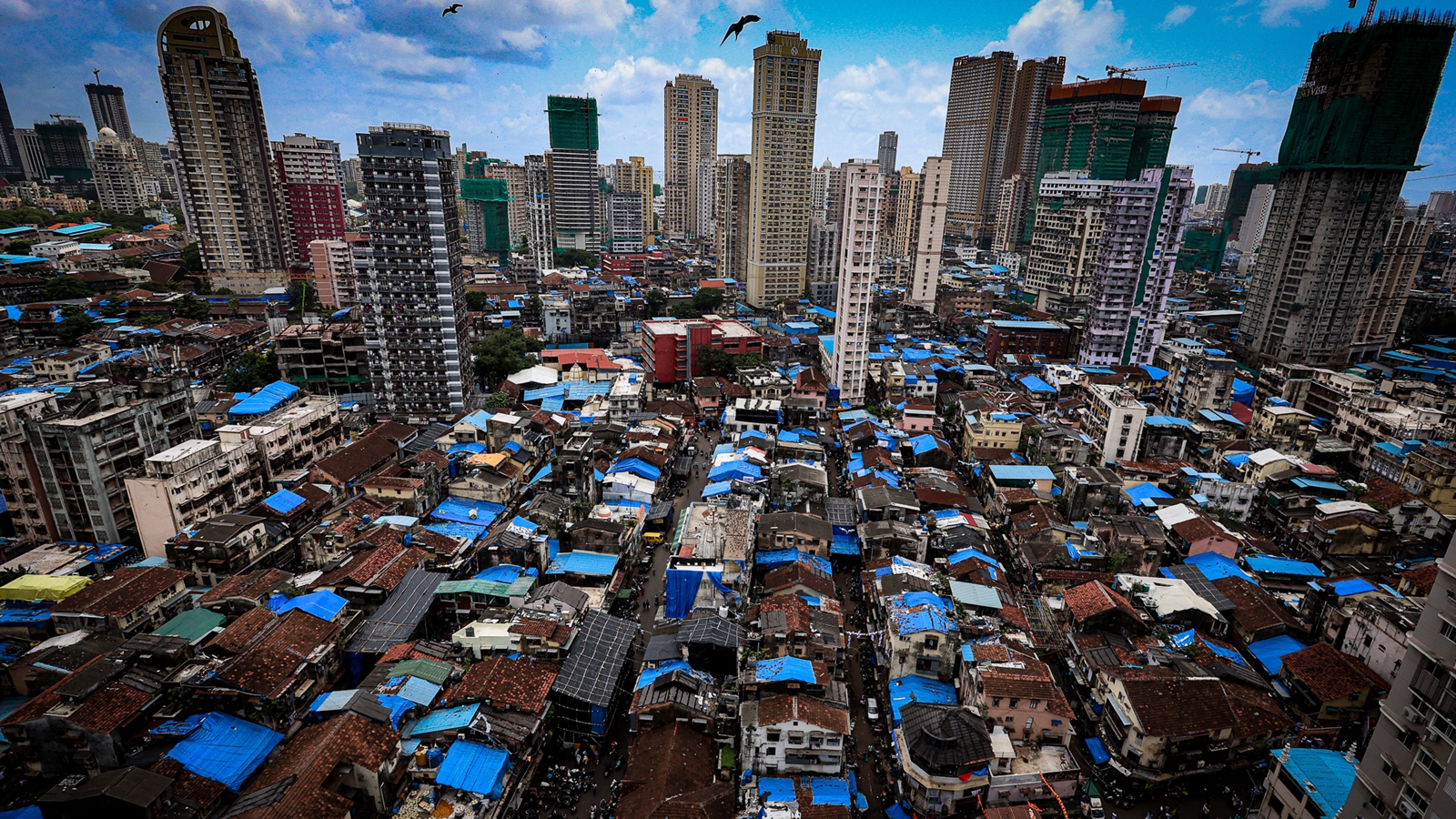
10876813 Top view of Kamathipura's lanes, spanning 34 acres of century-old buildings now cleared for MHADA's cluster redevelopment
- ✓10876813 Top view of Kamathipura's lanes, spanning 34 acres of century-old buildings now cleared for MHADA's cluster redevelopment
- ✓With the 34-acre redevelopment plan unveiled last week, Kamathipura is set to be remade with high rises, 500 sq ft homes and open spaces.
- ✓A 50-year-old sex worker who came from Kolkata two decades ago has spent most of her adult life in Kamathipura.
- ✓The Contagious Diseases Act of 1868 brought women engaged in sex work under official surveillance.
For decades, Mumbai knew its red light district. The narrow lanes of Kamathipura, its cramped rooms and brothels made sex work visible, concentrated and, for better or worse, impossible to ignore. Now that geography is disappearing.
With the 34-acre redevelopment plan unveiled last week, Kamathipura is set to be remade with high rises, 500 sq ft homes and open spaces. But as the buildings that housed the city’s oldest red light district prepare to give way to a new neighbourhood, the women associated with it are already being pushed beyond its boundaries into hotels, lodges and scattered locations across the city’s fringes.
A 50-year-old sex worker who came from Kolkata two decades ago has spent most of her adult life in Kamathipura. Her two children were born and raised here. Yet as the neighbourhood prepares for its biggest transformation in decades, she says she has nowhere to go.
“Now that there is a redevelopment plan, the government has not approached us and we have nowhere to go. There are no talks of shifts in occupation,” she said. Kamathipura was not always synonymous with sex work. The neighbourhood takes its name from the kamathis or Telugu speaking labourers from Hyderabad region who came to Bombay for construction work.
Its association with sex work developed during the colonial period, when the British administration sought to regulate prostitution, partly to control venereal diseases among soldiers. The Contagious Diseases Act of 1868 brought women engaged in sex work under official surveillance.
After Independence, the legal approach changed, with the Suppression of Immoral Traffic in Women and Girls Act of 1956, later amended as the Immoral Traffic (Prevention) Act, focusing on trafficking, brothel keeping and exploitation.
For decades, however, Kamathipura remained a concentrated ecosystem. Women, customers, middlemen and brothel keepers operated within a recognisable geography of narrow lanes and ageing buildings — a geography that is disappearing now.
Ganesh Kosuri Maharaj, who was born and brought up in Kamathipura and works with sex workers, said the 14 Lal Bazaars once popularly known as the area’s “sex streets” have shrunk to five or six. “I am 40 years old now, I have seen this place since my birth… I have seen police raids and pimps exploiting women to engage in sexual activities… but now the situation has drastically changed,” he said.
“The number of brothels have decreased. The women who continue to be exploited are now disintegrated into different places in Navi Mumbai, Thane and Palghar.” Priti Patkar, co-founder and director of Prerana, which has worked with women and children vulnerable to sexual exploitation and trafficking since 1986, said its research found 570 brothels in Kamathipura in 2011, while it was 404 in 2025.
Former brothel premises are increasingly becoming ordinary commercial spaces, tailoring units, and leather shoe, cap and bag manufacturing units. “While conducting the survey, we visited various buildings that once had brothels and found out that new commercial units have been established,” Patkar said.
The decline of the traditional red light district does not mean the disappearance of exploitation. A Mumbai Police officer said the need for a fixed red light area has diminished. “See, the dynamics of space have changed.
The number of sex workers, middlemen and customers is diminishing. Sex workers and customers no longer need a designated space; they can meet in hotel rooms.” That shift is particularly visible in Navi Mumbai, where police have been raiding hotels and lodges in Turbhe, Taloja, Kharghar, Panvel and surrounding areas.
In 2022, Navi Mumbai Police registered 11 cases and rescued 28 women and five minor girls. In 2025, it registered 24 cases and rescued 107 women. Till July this year, police said they had registered 22 cases and rescued 70 women and five minor girls.
For NGOs like Prerana, the fragmentation of Kamathipura’s sex work community has created a different challenge: finding the women. “We can contact those women who are in our contact and have told us that they are currently based out of the city,” Patkar said.
- •Aspirants and citizens are advised to monitor official notices and circulars issued by Maharashtra State Bureau (Mumbai).
- •Verify all prescribed eligibility criteria, cutoff dates, and authenticated document requirements prior to formal submissions.
- •Track connected examination timetables, vacancy advisories, and administrative gazettes on SuchnaSetu.
| Issuing Authority | Maharashtra State Bureau (Mumbai) |
|---|---|
| Topic Category | STATES |
| Jurisdiction | MH State |
| Publication Date | 14 September 2026 |