
Madras High Court dismisses Stalin’s challenge to Kolathur defeat, says remedy lies in election petition
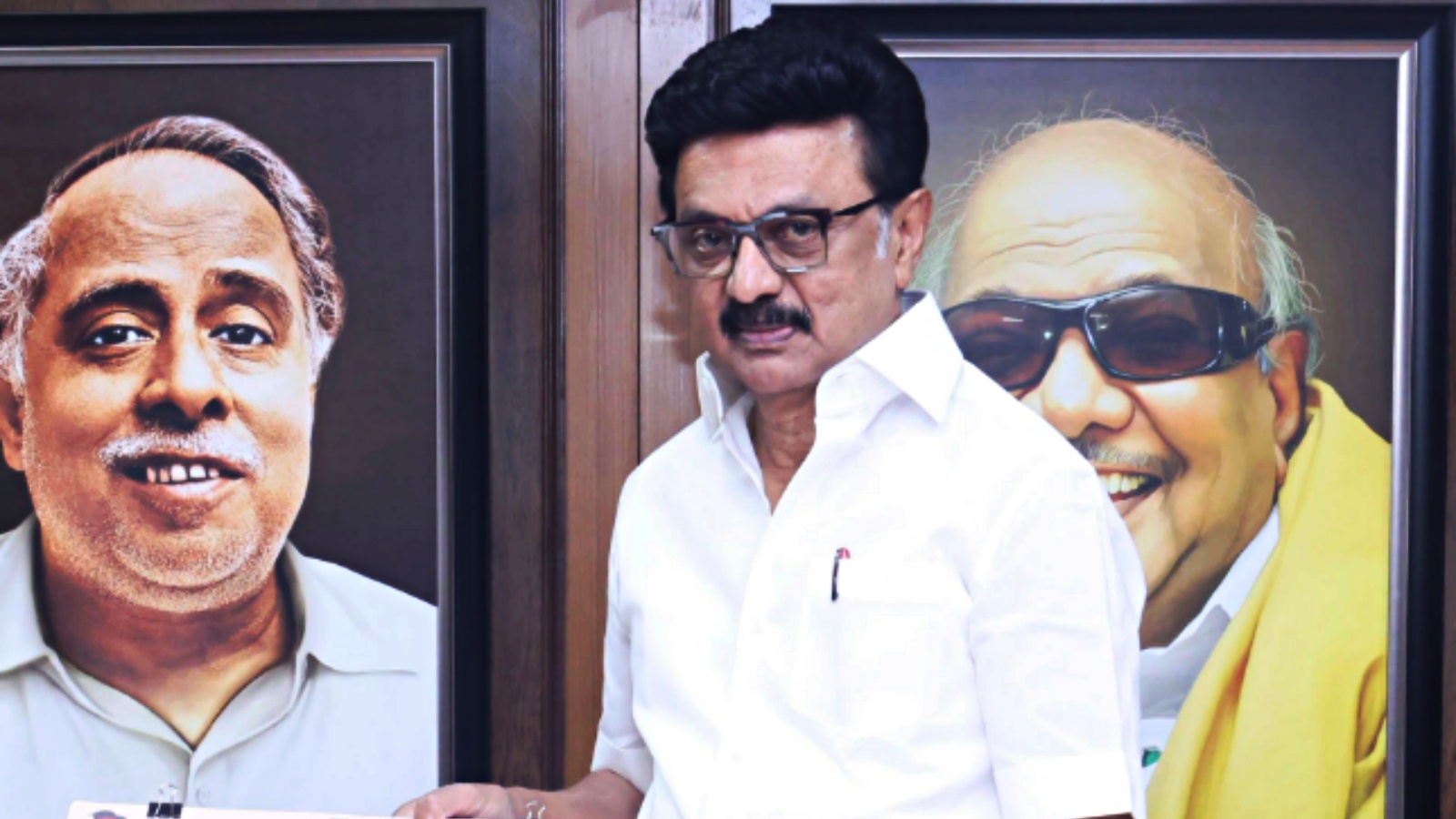
10861981 nodal-stalin-2cols_20260824110256_20260903124559.jpg
- ✓10861981 nodal-stalin-2cols_20260824110256_20260903124559.jpg
- ✓The judgment was reserved on August 31 and delivered on September 3.
- ✓They also contended that the 45-day deadline for an election petition had expired because of delays attributable to election authorities.
- ✓By asking the High Court to void Babu’s election and declare Stalin elected instead, the petition was challenging the election result itself, the Bench held.
The Madras High Court on Thursday dismissed former Chief Minister and DMK president M K Stalin’s challenge to his defeat in Kolathur, ruling that his attempt to seek a complete VVPAT count and verification of all electronic voting machines could not be entertained as a writ petition and must instead be pursued through the special legal mechanism for challenging an election.
A Bench of Chief Justice Sushrut Arvind Dharmadhikari and Justice G Arul Murugan dismissed Stalin’s petition as not maintainable, holding that it was barred by Article 329(b) of the Constitution read with Section 80 of the Representation of the People Act, 1951.
The judgment was reserved on August 31 and delivered on September 3. Stalin had finished second in Kolathur in the April Assembly election, losing to Vijay’s Tamilaga Vettri Kazhagam (TVK) candidate V S Babu — an extraordinary personal defeat for a politician who had entered the election as Chief Minister and DMK president.
While the DMK’s loss of power represented the familiar churn of Tamil Nadu’s intensely competitive politics, Stalin’s own defeat turned the verdict into something more unsettling for the former ruling party: its most recognisable leader had himself been unseated.
Three days after the result, on May 7, Stalin sought checking and verification of EVMs from 14 polling stations, constituting 5 per cent of the constituency’s 286 polling stations. The process began on July 29, nearly three months later, and concluded on August 5, when the District Election Officer certified that it had been successfully carried out.
Stalin’s affidavit challenged that conclusion through a catalogue of alleged problems uncovered during the exercise. It said VVPAT units at polling stations 28 and 75 malfunctioned during confirmatory mock polls; EVM carrying cases from polling station 157 had blank or irregularly sealed address tags; two ballot units at polling station 79 did not tally with recorded address tags; and, at polling station 208, a Control Unit failed to detect a Ballot Unit said to bear Stalin’s name.
His representative also complained that 18 technical clarifications and a request for video footage went unanswered and that signed technical failure reports were not supplied. On that basis, Stalin sought sweeping relief: quashing of the August 5 certification, a 100 per cent count of VVPAT slips across Kolathur, checking and verification of all 286 machines, preservation of CCTV footage and related records, and ultimately a declaration that Babu’s election was void and that Stalin himself was the duly elected candidate.
It was that final set of demands that proved fatal to the writ petition. Stalin’s senior counsel, Kapil Sibal and J Ravindran, argued that the challenge concerned not the election itself but a separate post-result administrative verification process created following Supreme Court directions.
They said the August 5 order suffered from non-application of mind and breach of natural justice and argued that evidence, including CCTV footage and custody records, could disappear unless preserved. They also contended that the 45-day deadline for an election petition had expired because of delays attributable to election authorities.
The court was unconvinced. Although Stalin’s affidavit had been structured around alleged defects in the verification exercise, the judges said the relief he ultimately sought went “far beyond” that process. By asking the High Court to void Babu’s election and declare Stalin elected instead, the petition was challenging the election result itself, the Bench held.
Such a dispute could not be converted into a writ proceeding by characterising it as a challenge to a subsequent administrative exercise. The Bench went further, saying the Election Commission’s contention that the petition bore the character of “artful drafting” was “not without force”.
Stalin’s own assertion that he was not calling the election into question was described by the court as a “self-serving characterisation” that could not determine the true nature of the case. The judges also rejected the argument that the delay in completing verification, and the consequent expiry of the 45-day period, could open the door to writ jurisdiction.
Whether that delay has any bearing on limitation — and whether Stalin can obtain relief from it — should be considered by the appropriate election forum if an election petition is presented, the court said, expressly declining to decide that question.
The court said allegations involving malfunctioning VVPATs, irregular seals and address tags and the failure of a Control Unit to detect a Ballot Unit would require a full trial, potentially including expert evidence, as well as proof that any non-compliance materially affected the election result.
Such an inquiry belongs before an election tribunal, not in writ proceedings based on affidavits, it held. Arun Janardhanan is an experienced and authoritative Tamil Nadu correspondent for The Indian Express. Based in the state, his reporting combines ground-level access with long-form clarity, offering readers a nuanced understanding of South India’s political, judicial, and cultural life - work that reflects both depth of expertise and sustained authority.
Expertise Geographic Focus: As Tamil Nadu Correspondent focused on politics, crime, faith and disputes, Janardhanan has been also reporting extensively on Sri Lanka, producing a decade-long body of work on its elections, governance, and the aftermath of the Easter Sunday bombings through detailed stories and interviews.
Key Coverage Areas: State Politics and Governance: Close reporting on the DMK and AIADMK, the emergence of new political actors such as actor Vijay’s TVK, internal party churn, Centre–State tensions, and the role of the Governor.
Legal and Judicial Affairs: Consistent coverage of the Madras High Court, including religion-linked disputes and cases involving state authority and civil liberties. Investigations:...
- •Aspirants and citizens are advised to monitor official notices and circulars issued by Tamil Nadu State Bureau (Chennai).
- •Verify all prescribed eligibility criteria, cutoff dates, and authenticated document requirements prior to formal submissions.
- •Track connected examination timetables, vacancy advisories, and administrative gazettes on SuchnaSetu.
| Issuing Authority | Tamil Nadu State Bureau (Chennai) |
|---|---|
| Topic Category | STATES |
| Jurisdiction | TN State |
| Publication Date | 4 September 2026 |