
Military Digest: How many Sikh soldiers died in 1984 riots? No one knows
10945972 Military Digest Sikh Riots Toll
- ✓10945972 Military Digest Sikh Riots Toll
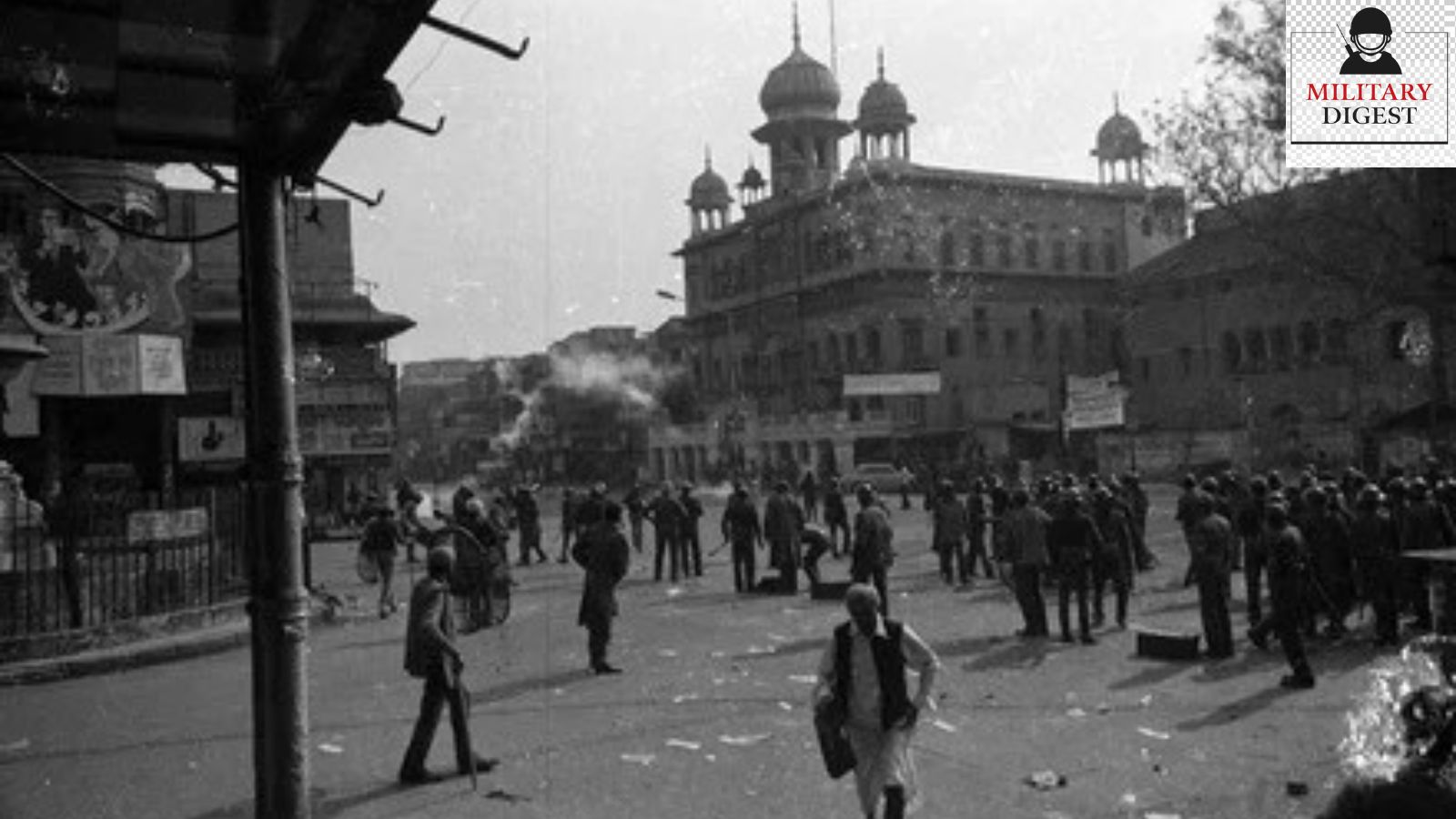
- ✓On November 1, 1984, mobs systematically stopped trains and attacked Sikh passengers at stations including Tughlakabad and Nangloi in Delhi.
- ✓Railway records later noted dozens of unauthorised stoppages and around 160 Sikh passengers killed on trains to and from Delhi on November 1 and 2.
- ✓At Tughlakabad alone, over 15 trains were stopped and many passengers killed, and additional killings occurred in the nearby railway colony.
In the three days of targeted violence that followed the assassination of Prime Minister Indira Gandhi on October 31, 1984, among the thousands of Sikh victims across India were serving members of the Indian Army and other armed forces.
For more than four decades now, the exact number of Sikh officers and jawans who were murdered solely because of their faith, often while travelling or off-duty, is still not known. In October 2008, The Indian Express reported that the Indian Army’s Ceremonial and Welfare Directorate in the Adjutant General’s Branch had formally admitted for the first time that 34 Army personnel, including one ex-serviceman, were killed in the 1984 anti-Sikh riots.
A note was circulated to the various Commands and Regiments seeking details of the victims and urging speedy processing of compensation cases under the central rehabilitation package announced in January 2006. On November 1, 1984, mobs systematically stopped trains and attacked Sikh passengers at stations including Tughlakabad and Nangloi in Delhi.
Railway records later noted dozens of unauthorised stoppages and around 160 Sikh passengers killed on trains to and from Delhi on November 1 and 2. At Tughlakabad alone, over 15 trains were stopped and many passengers killed, and additional killings occurred in the nearby railway colony.
Activists from the All India Sikh Students Federation (AISSF) and the All India Defence Brotherhood have released lists over the past many years claiming dozens of armed forces personnel were among those killed or burnt alive at Tughlakabad and Nangloi.
Names cited include Lieutenant Colonel A.S. Anand (74 Armoured Regiment), Major Sukhwinder Singh (150 Field Regiment), Captain I.P.S. Bindra (63 Cavalry), Captain U.P.S. Jassal (9 Assam), Captain Partap Singh (Army Ordnance Corps).
Lieutenant S.S. Gill (89 Armoured Regiment), and Flight Lieutenant Harinder Singh (Indian Air Force). Eyewitness accounts corroborate the horror on trains. Colonel Bhupinder Malhi (retd), then a young Armoured Corps officer travelling on the Jhelum Express toward a course at Ahmednagar, described mobs stopping the train near Nizamuddin and Okhla.
In his account, which was published by Rediff.com and NDTV many years ago, he witnessed Captain Gill of 89 Armoured Regiment being stabbed roughly a foot away from him. A plea that he was a serving soldier was dismissed with the reply that the Prime Minister’s assassins had also been soldiers.
Another officer, identified as Sahota of General Reserve Engineer Force (GREF), was killed with iron rods. Some officers intervened and saved a few, including by force or by helping a colleague shave and cut his hair to disguise his identity, and two even seized a rifle from a soldier on leave and fired to disperse a mob, later receiving awards for bravery.
Bodies were handed over to authorities at stations such as Mathura. Higher estimates from some defence brotherhoods and Sikh organisations put the number of serving defence personnel of the Army, Air Force, and Navy killed in the dozens, sometimes cited up to 55 in some activist claims.
These men were not on riot-control duty. They were passengers, on leave, or travelling. The targeting of uniformed or identifiable Sikhs underscored the communal nature of the violence. The 2006 central rehabilitation package, with an outlay of approximately Rs 714.76 crore, provided enhanced ex-gratia for deaths, injuries, and property damage, plus provisions for pensions in some cases.
In 2014, an additional Rs 5 lakh per next-of-kin was sanctioned. The Army’s 2008 note specifically pushed states to process claims for the 34 identified personnel under this framework. The SGPC separately offered Rs 1 lakh to families of Army men killed in the riots after verification.
Criminal accountability has remained limited overall. Multiple commissions, including Misra and Nanavati, and SITs have examined the events. Convictions for murder have been few relative to the scale. Specific cases involving railway station killings have seen limited progress.
Most military victims of the 1984 violence remain unnamed and unidentified in the public domain.
- •Aspirants and citizens are advised to monitor official notices and circulars issued by Punjab & Haryana Regional Bureau (Chandigarh).
- •Verify all prescribed eligibility criteria, cutoff dates, and authenticated document requirements prior to formal submissions.
- •Track connected examination timetables, vacancy advisories, and administrative gazettes on SuchnaSetu.
| Issuing Authority | Punjab & Haryana Regional Bureau (Chandigarh) |
|---|---|
| Topic Category | STATES |
| Jurisdiction | PB State |
| Publication Date | 1 November 2026 |