
Netanyahu may let rival Gadi Eisenkot become Israel PM first. Here’s why
10982093 israel-election_20261128060622.jpg
- ✓10982093 israel-election_20261128060622.jpg
- ✓He was tasked with forming the government after 67 members of the Knesset recommended him to President Isaac Herzog.
- ✓He has 28 days to secure a coalition and can request an extension of up to 14 days.
- ✓Importantly, a coalition agreement was signed on Tuesday between Yashar and Yisrael Beytenu, the party led by MK Avigdor Liberman, Channel 12 reported.
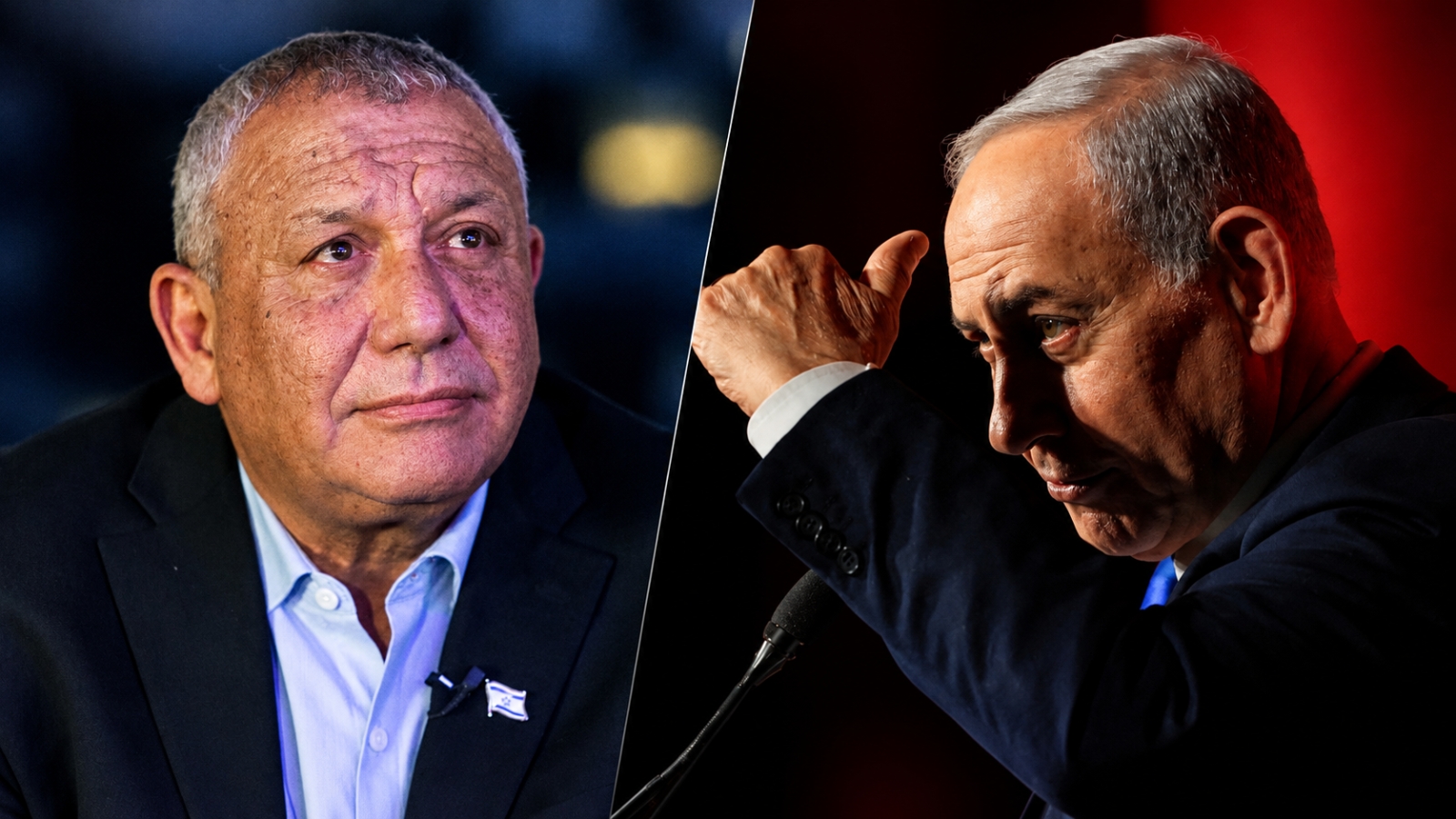
Israeli Prime Minister Benjamin Netanyahu is reportedly considering an offer to serve a second term in a rotating premiership with opposition leader Gadi Eisenkot, allowing the Yashar party chairman to become prime minister first.
The proposal, reported by Channel 13 and cited by The Times of Israel, is said to have been conveyed through unofficial channels, with divisions within Netanyahu's Likud party over the arrangement. Eisenkot remains sceptical of Netanyahu's overtures and is continuing efforts to form a government before his mandate expires on December 6, according to Channel 13.
He was tasked with forming the government after 67 members of the Knesset recommended him to President Isaac Herzog. He has 28 days to secure a coalition and can request an extension of up to 14 days. Importantly, a coalition agreement was signed on Tuesday between Yashar and Yisrael Beytenu, the party led by MK Avigdor Liberman, Channel 12 reported.
Under the deal, Yisrael Beytenu is likely to gain the Defence Ministry, along with the Immigration and Absorption Ministry. Liberman argued that Netanyahu wants a repeat election and will drag out unity talks until the last moment before finding a pretext to break them off.
Even if a unity government is formed, he said, Netanyahu would try to trigger a crisis within months and send Israel back to the polls. In a lengthy social media post on Friday, Eisenkot said he is prepared to compromise for a unity government with Likud, but accused the party of not negotiating seriously.
Yashar and Likud teams, he said, had met only five times in two weeks, with Likud rejecting requests for more frequent meetings. He accused Likud of refusing to agree to a state commission of inquiry into the failures around the 7 October 2023 Hamas attack, to remove what he called extremists from the government, or to discuss legislation requiring military or national service for all.
Likud, he said, had put "the worst" unity option on the table: "the same government, the same partners, no change, no conscription law." He added: "I do not intend to cooperate with such a charade." His bloc had been willing to compromise on the commission of inquiry and judicial changes, he said, but Likud failed to put "any concrete proposal on the table." His door remains open, he said, for "serious negotiations and partnership that includes compromise", Times of Israel reported.
Even with former Israeli Prime Minister Naftali Bennett's B'Yachad party, which is also involved in coalition talks with Yashar, Eisenkot's four-party bloc holds only 48 seats, well short of the 61 needed. To close the gap, he can rely on either the two Arab-led parties or the two ultra-Orthodox parties.
Eisenkot's preferred option reportedly involves bringing together the ultra-Orthodox United Torah Judaism party and Ra'am, the more moderate of Israel's two Arab-led parties. Such an arrangement would, however, require members of his bloc to reconsider campaign promises against partnering with these groups.
Eisenkot has reportedly promised signed partners Yair Golan (Democrats) and Liberman that he will not form a unity government with Netanyahu without their approval. Golan has pushed for a minority government backed by Arab-led parties, calling it the only realistic way to remove Netanyahu, while Liberman prefers a coalition with the ultra-Orthodox parties.
B'Yachad is the only bloc party yet to sign a coalition deal with Yashar. Senior bloc figures told Channel 13 that Bennett, who has publicly favoured a unity government with Likud, intends to vote against an Eisenkot-led government formed before talks with Netanyahu are exhausted.
Bennett said he is willing to pursue other "less desirable" alternatives if Likud talks fail, and has previously opposed a government with ultra-Orthodox or Arab parties. Eisenkot says he hopes to reach a deal with B'Yachad "soon." The two are due to meet Sunday after reportedly postponing a Thursday meeting over disagreements on military conscription, a central issue in last month's election as bloc parties campaigned to end ultra-Orthodox exemptions, The Times of Israel reported.
In June 2024, the High Court ruled the government must begin enlisting eligible ultra-Orthodox men after the blanket exemptions expired. The Express Global Desk at indianexpress.com which delivers authoritative, verified, and context-dri...
Read More
- •Aspirants and citizens are advised to monitor official notices and circulars issued by Indian Express World.
- •Verify all prescribed eligibility criteria, cutoff dates, and authenticated document requirements prior to formal submissions.
- •Track connected examination timetables, vacancy advisories, and administrative gazettes on SuchnaSetu.
| Issuing Authority | Indian Express World |
|---|---|
| Topic Category | WORLD |
| Jurisdiction | All India / National |
| Publication Date | 28 November 2026 |