
Nuclear scientist’s energy pitch: Why India needs transition to thorium-based fuel?
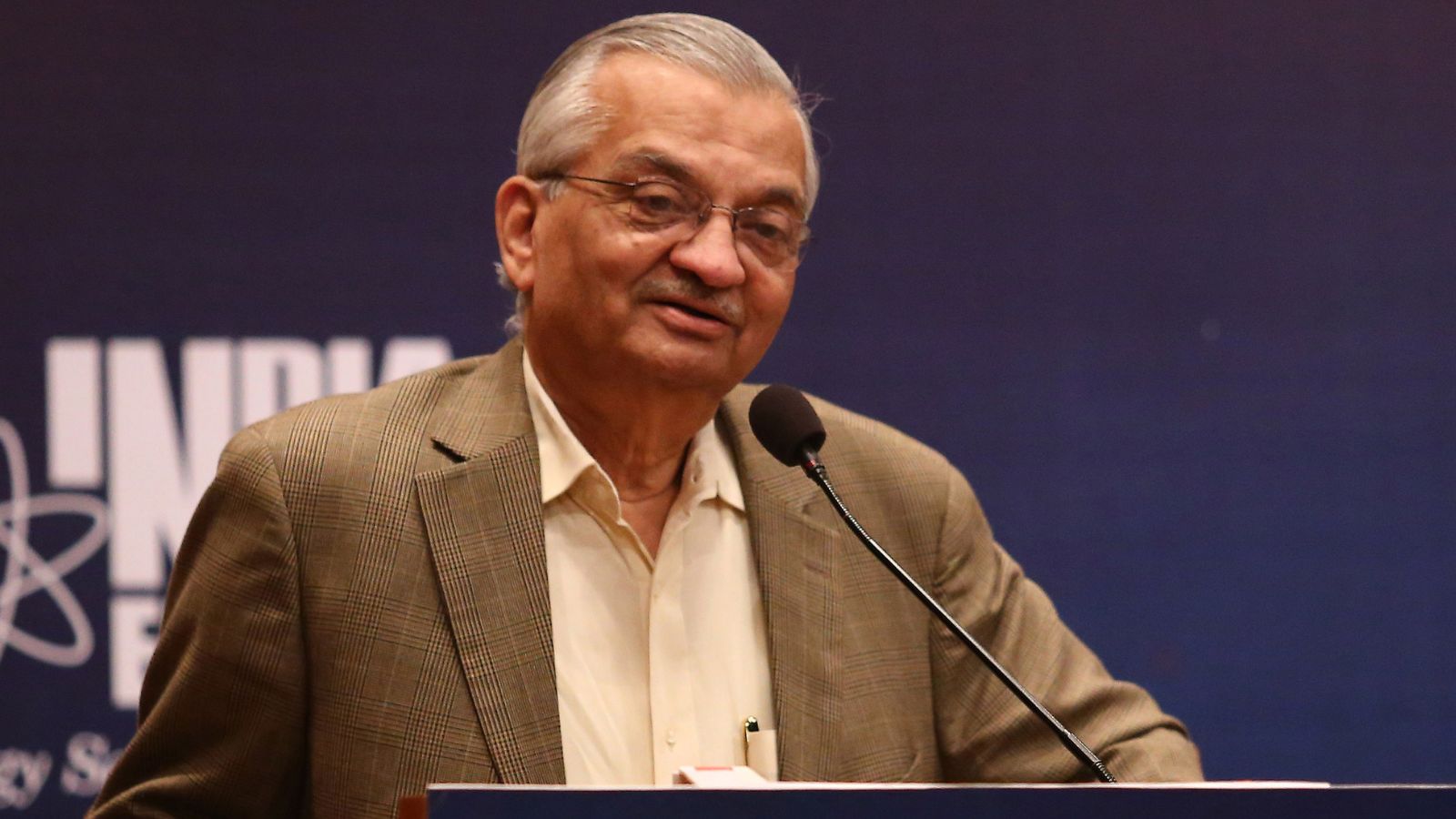
10861905 Anil Kakodkar
- ✓10861905 Anil Kakodkar
- ✓He is currently the Chancellor of the Homi Bhabha National Institute and also the Chairman of the Rajiv Gandhi Science & Technology Commission.
- ✓FBRs initially use plutonium plus depleted uranium to obtain Uranium-233 (U-233) from the Thorium-232 (Th-232), which is used as a blanket in such reactors.
- ✓In the third stage, it is Th-232 that will get converted into U-233, which would be fuel for the advanced reactors.
One of India’s top nuclear scientists, Anil Kakodkar, has advocated introducing thorium-based fuel into the country’s indigenous pressurised heavy water reactor (PHWR) fleet alongside the ongoing three-stage nuclear programme, arguing that this could accelerate the utilisation of India’s abundant thorium reserves and help the country become self-reliant in nuclear fuel.
The commercial acceptability of indigenous PHWRs and plans to deploy around half of India’s targeted 100 gigawatts-electric (GWe) of nuclear capacity through the technology create an opportunity to introduce thorium at an earlier stage, Kakodkar said at the 6th International Climate Summit on Wednesday.
He is currently the Chancellor of the Homi Bhabha National Institute and also the Chairman of the Rajiv Gandhi Science & Technology Commission. While India’s three-stage nuclear programme remains the preferred route for deploying thorium, the former chairman of Atomic Energy Commission said the key question was whether it could match the pace of the country’s rapidly growing energy requirements over the next 15-25 years.
India is following a three-stage nuclear power programme aimed at achieving long-term fuel self-reliance. The first stage is based on PHWRs using natural uranium as fuel. The plutonium generated in the spent fuel from these reactors is then used in the second stage, comprising fast breeder reactors (FBRs).
FBRs initially use plutonium plus depleted uranium to obtain Uranium-233 (U-233) from the Thorium-232 (Th-232), which is used as a blanket in such reactors. In the third stage, it is Th-232 that will get converted into U-233, which would be fuel for the advanced reactors.
FBRs represent a crucial intermediate step between the first and third stages of India’s nuclear programme, enabling the country to utilise its abundant thorium resources and move towards greater self-reliance in nuclear fuel.
In April, India’s first indigenous fast breeder reactor at Kalpakkam attained criticality, meaning the reactor fuel can now sustain a fission chain reaction. This marks a major milestone in the country’s civil nuclear programme as it is a step further towards the second stage.
Kakodkar said thorium was initially envisaged for use in fast breeder reactors because India’s thermal reactor capacity was too small and was not enough to convert enough quantities of uranium. The strategy therefore shifted towards fast breeder reactors, which could eventually scale to hundreds of gigawatts and provide a much larger platform for irradiating thorium and producing Uranium-233 and to get into large scale energy from thorium, he said.
“Now PHWRs are going up to 50, 60 gigawatts. So I think there is an opportunity to introduce thorium right here,” Kakodkar added. Kakodkar also addressed the question of cost involved in introducing thorium into PHWRs as thorium is a stronger neutron absorber than uranium.
“The question is, if we incur a cost, there must be a payback,” he said, adding that thorium should be irradiated in a manner that does not increase the cost of electricity from PHWRs or raise their uranium requirements.
According to Kakodkar, this could be achieved by using thorium-bearing fuel with a high burn-up. At lower burn-up, such fuel would require greater uranium consumption, but at higher burn-up it could potentially reduce uranium use.
“So I think through a win-win situation, you can get a fuel which can work with the same PHWR and give you more energy and kind of live with the same consumption of uranium,” he said. This could provide an opportunity to move towards thorium utilisation in existing PHWRs while India waits for sufficient quantities of Uranium-233 to be produced through its fast breeder reactor programme, he added.
During his speech, Kakodkar also maintained that supply of uranium is going to come under increasing pressure as countries across the world want to scale up their nuclear power capacity. He said global uranium resources can support around 550–750 GWe of power generation capacity through a once-through cycle.
Assuming that reactors typically operate for 50–70 years.
- •Aspirants and citizens are advised to monitor official notices and circulars issued by Indian Express Economy & Markets.
- •Verify all prescribed eligibility criteria, cutoff dates, and authenticated document requirements prior to formal submissions.
- •Track connected examination timetables, vacancy advisories, and administrative gazettes on SuchnaSetu.
| Issuing Authority | Indian Express Economy & Markets |
|---|---|
| Topic Category | BUSINESS |
| Jurisdiction | All India / National |
| Publication Date | 3 September 2026 |