
One machine, long queue, staff crunch: At LNJP, patient asked to wait till 2028-end for an MRI
10860902 newsline-MRI2-3col
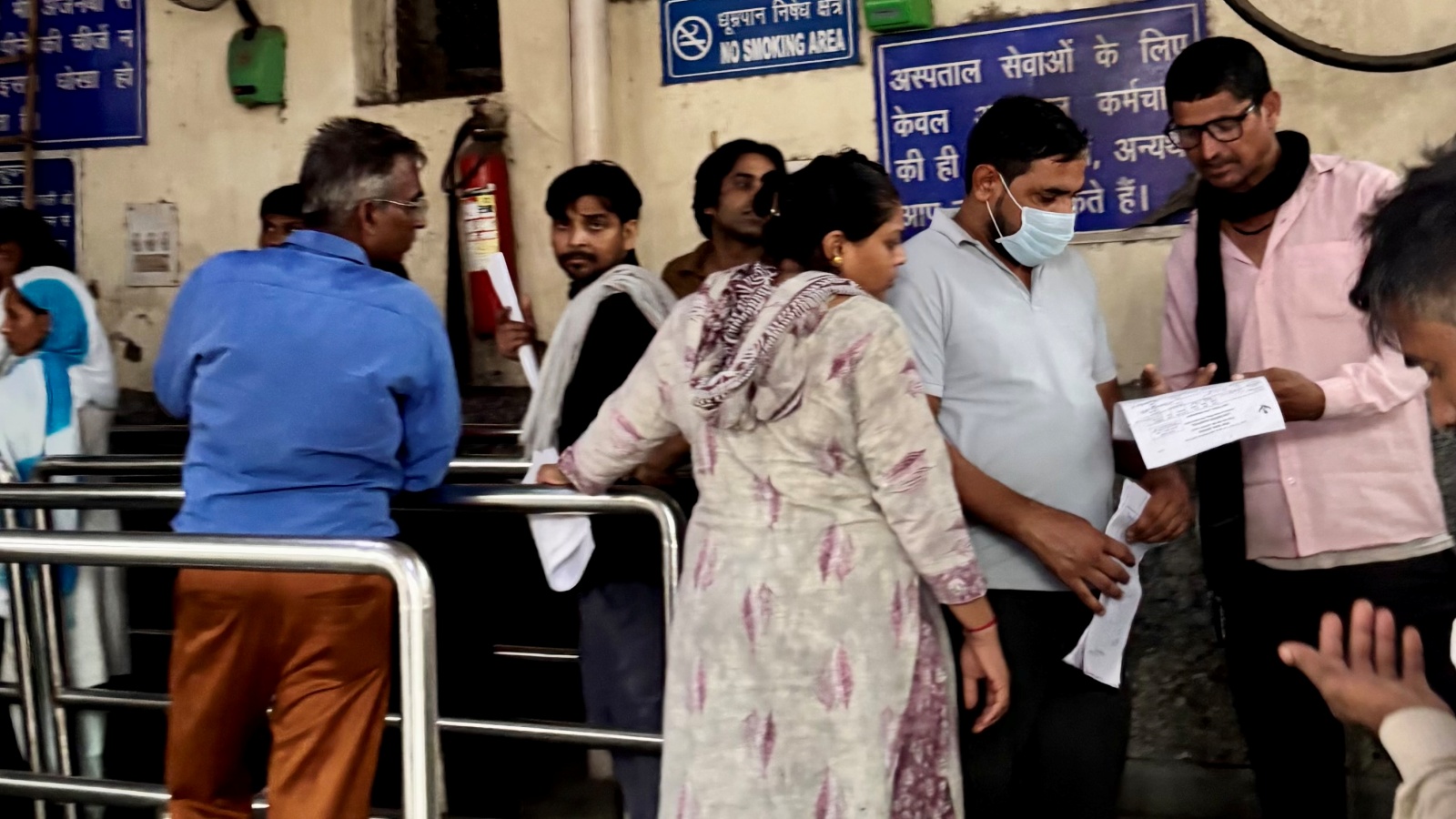
When Shahjad was handed the slip, he thought the date must be a mistake. Shahjad, 46, a car driver from Saharanpur, had come to Lok Nayak Hospital, Delhi’s biggest government hospital, for an MRI of his head.
He had undergone surgery at the hospital in November 2025 to remove a pituitary adenoma, a tumour on the pituitary gland. Doctors had since found that some of the tumour remained, pressing against the surrounding tissue, and had asked him to undergo a follow-up MRI.
“Mera sarr jhanjhanata hai (I get tingling sensations in my head). It hurts a lot. I get up at night from the pain,” he said. “I have not been able to work for the last one-and-a-half years.” He asked the man at the counter to check the date again.
“It’s correct,” he was told. Shahjad turned to the patients waiting around him and showed them the slip. They leaned in to see the date for themselves. “My son, who works in a shop, is now the family’s breadwinner,” he told them.
It was around 2 pm in Room 128, where more than a hundred patients sat waiting for their names to be called. Five steel railings divided the room into four queues, each leading to a separate counter.
The room itself was enclosed in a steel cage, with seating built along three of its edges. Over a hundred patients had come for dates — for a CT scan, an ultrasound, an MRI, an X-ray or a mammogram.
Only a handful would walk away with a test date that day. “Some have been given appointments in September; many have got dates for December,” an official said. The reason is stark: LNJP currently has just one functional MRI machine and one functional CT scanner, despite an outpatient department that sees more than 5,000 patients a day.
“Around 5,000 OPD patients visit us every day. There is a shortage in both staffing and machinery,” a hospital official said. Delhi government Health Minister Pankaj Singh said that, to reduce the waiting period for MRI scans at LNJP Hospital, a new machine has been procured through CSR and was installed last week.
“A new MRI machine was installed just last week, which is on trial. A CT scan machine is also under trial. The machines have been procured under a CSR initiative from Indian Oil Corporation Limited,” Singh said.
But specialists in the hospital’s Radiology Department said the new MRI machine would address only part of the problem. A single MRI machine operating for 12 hours a day can conduct roughly 10 scans, they said, while radiology staff are already stretched by the existing workload.
A right turn out of Room 128 leads to a passage covered by a curved plastic roof, its steel railings painted in the tricolour. One path leads towards the OPD block; the other towards Room 135, where the MRI is performed.
Inside, the MRI machine runs from 8 am to 8 pm. “Each patient must first be registered, prepared and screened for metal objects before being wheeled into the room. The scan itself takes between 40 and 60 minutes.
The images then have to be reviewed before the next patient can be called in,” the senior resident explained. “There are three doctors working around the machine, along with two to three nursing staff and lab technicians,” the resident said.
“For emergency patients, we try to expedite the MRI. But only about 10 successful MRIs are performed in a day due to a lack of machines. There is a shortage of radiologists also.” As LNJP is unable to meet its own diagnostic demand, sources said a significant burden is being shifted to private providers.
“Under the Delhi Arogya Kosh scheme, we refer patients to private testing centres,” a hospital official said. The Delhi Arogya Kosh (DAK) provides financial assistance of up to Rs 5 lakh to eligible patients for treatment and diagnostic tests.
According to sources, LNJP referred 420 patients for CT scans, MRI, PET and ultrasound tests under the DAK scheme in January; 432 in February; 392 in March; 439 in April; 350 in May; 347 in June; and 407 in July.
“It’s an arrangement that has become an unofficial pressure valve for an overburdened public system. Private providers are helping to reduce some of that pressure, but they are also making profits from the demand that the public system is unable to meet.
If we address the shortage of staff and improve the infrastructure, this should not happen at all,” another senior doctor said. Tabshir Shams covers health for The Indian Express. He holds a Master's degree in International Relations from South Asian University.
Before joining The Indian Express, he interned at The Hindu from December 2025 to June 2026, where he assisted in the research and editing of a book on delimitation published by The Hindu Group Publications.
During this time, he also wrote for The Hindu's Text & Context section, on subjects ranging from Pakistan's military establishment to Bangladesh's elections, and reported a Spotlight feature on a jute mill in Samastipur and its ripple effects on labour migration and the local economy.
In July 2025, he interned at The Indian Express, where he wrote several explainers on international relations alongside a health report. His Master's thesis examines civil-military relations in Pakistan, with a focus on the post-2019 period.
... Read More
Delhi NCR Civic & Governance
Published: 2 Sept 2026
SuchnaSetu provides verified structured reporting based on official public records and circulars. Primary publication and copyright remain with the issuing authority.