
Only fifth recorded sighting in 150 yrs: Rare Siberian visitor spotted at Najafgarh lake
10858194 Najafgarh Lake
- ✓10858194 Najafgarh Lake
- ✓Primary Authority: Official communique verified from Delhi NCR Civic & Governance.
- ✓Civic Domain: Categorized under states public notices.
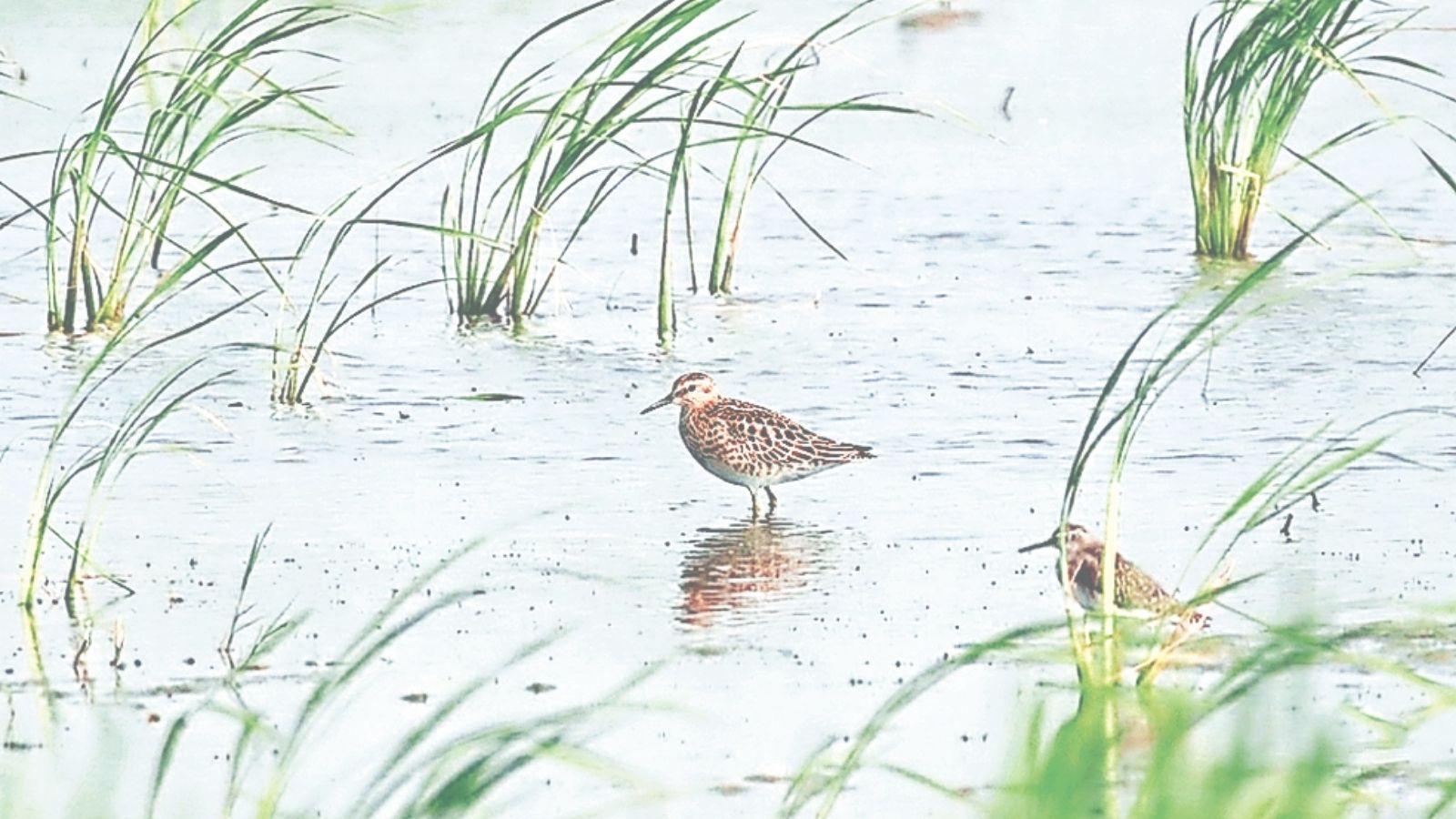
It was the bold white supercilium — the stripe above the eye — and rusty-brown scalloped feathers fading into the underbelly that helped identify the puffy-bodied wader at Najafgarh Jheel as a sharp-tailed sandpiper, rather than the similar-looking pectoral sandpiper.
The bird was spotted near Mankrola village on the Gurgaon side of the marshy lake on Sunday – a rare sighting that added to the very limited records of the species in Delhi-NCR and the country as a whole. Akshit Dua, an NCR-based conservationist and birder, documented the sharp-tailed sandpiper (Calidris acuminata) as it moved in the fields, actively foraging amid a flock of common sandpipers and wood sandpipers.
Crown features including the rufous-streaked cap, along with the distinctive eye-ring and rusty-brown scalloped feathers with diffused breast markings helped identify and distinguish the bird, Dua said. “It is hard to identify waders easily in the field, especially with the naked eye.
Many species have similar bills and calls, making short viewings difficult,” he said. Dua’s sighting of Calidris acuminata is significant because it was only the fifth recorded sighting of the species in India over a period of almost a century and a half.
A study published in Indian Birds, widely regarded as the bird journal of record in India, documents the sighting of a male in Gilgit in 1880, a female in Vandalur in Tamil Nadu in 1915, an unconfirmed record from Kurud Tank in Chhattisgarh in 2004, and a photographed individual at the Najafgarh marshland on September 24, 2019.
The sharp-tailed sandpiper breeds in northern Siberia, in an area that extends from the Lena river delta on the eastern Arctic Ocean southeastward to the Kolyma region, and migrates south over East Asia to its main non-breeding grounds in Australia and New Zealand.
Smaller numbers fly to Melanasia, a cluster of islands in the southwestern Pacific Ocean between New Guinea in the west to Fiji in the east. The species is, therefore, an exceptionally uncommon visitor to India. “The species never flies south over Kashmir, which makes it a very rare bird in India,” naturalist Ramkumar, who has previously worked with the Bombay Natural History Society, said.
Ecologist Sohail Madan said, “The sighting of the sharp-tailed sandpiper at Najafgarh Lake is remarkable not just because it is an uncommon visitor to the Delhi-NCR region, but because it highlights the extraordinary biodiversity that persists in wetlands around our cities.” “These places”, Madan said, “are often seen as wastelands or vacant land, but they are incredibly important habitats for migratory birds and a whole range of other species”.
Overall, sharp-tailed sandpiper populations are in decline. A conservation assessment by the Australian government has estimated that population has declined by about 45 per cent over three generations, or roughly 15 years, and listed habitat loss and degradation among the major threats to the species, which is classified as ‘Vulnerable’ in the IUCN Red List.
The sharp-tailed sandpiper forages in both coastal and inland wetlands, in freshwater and hypersaline habitats. It feeds on seeds, worms, molluscs, crustaceans, and insects after rainfall, and often forages in agricultural pastures and in the shallow-water edges of wetlands.
Around the Yellow Sea between China and the Korean peninsula, an important stopover region on the annual migration route of the bird, coastal habitats have been lost to residential, industrial and aquaculture development.
Pollution, altered sediment flows, and rise in sea levels have added to the pressure. In Australia, drought and reduced areas of inland wetlands are major concerns. The sharp-tailed sandpiper reported by Dua is not the only unusual migrant recorded at Najafgarh.
A rustic bunting was spotted at the wetland a few days earlier, another rare sighting in the region, NCR birder Yatin Verma said.
- •Aspirants and citizens are advised to monitor official notices and circulars issued by Delhi NCR Civic & Governance.
- •Verify all prescribed eligibility criteria, cutoff dates, and authenticated document requirements prior to formal submissions.
- •Track connected examination timetables, vacancy advisories, and administrative gazettes on SuchnaSetu.
| Issuing Authority | Delhi NCR Civic & Governance |
|---|---|
| Topic Category | STATES |
| Jurisdiction | DL State |
| Publication Date | 1 September 2026 |