
Richest Indians 62% less likely to die young, Muslim men defy the trend, study finds
10977808 Untitled design - 2026-11-25T141437.453
- ✓10977808 Untitled design - 2026-11-25T141437.453
- ✓A man from India's richest households is 62 per cent less likely to die during his working years than a man from the poorest households.
- ✓Among women, it was 157 per 1,000 in the poorest households and 87 in the richest.
- ✓Even after these adjustments, men in the richest 20 per cent of households had a 62 per cent lower risk of death than those in the poorest 20 per cent.
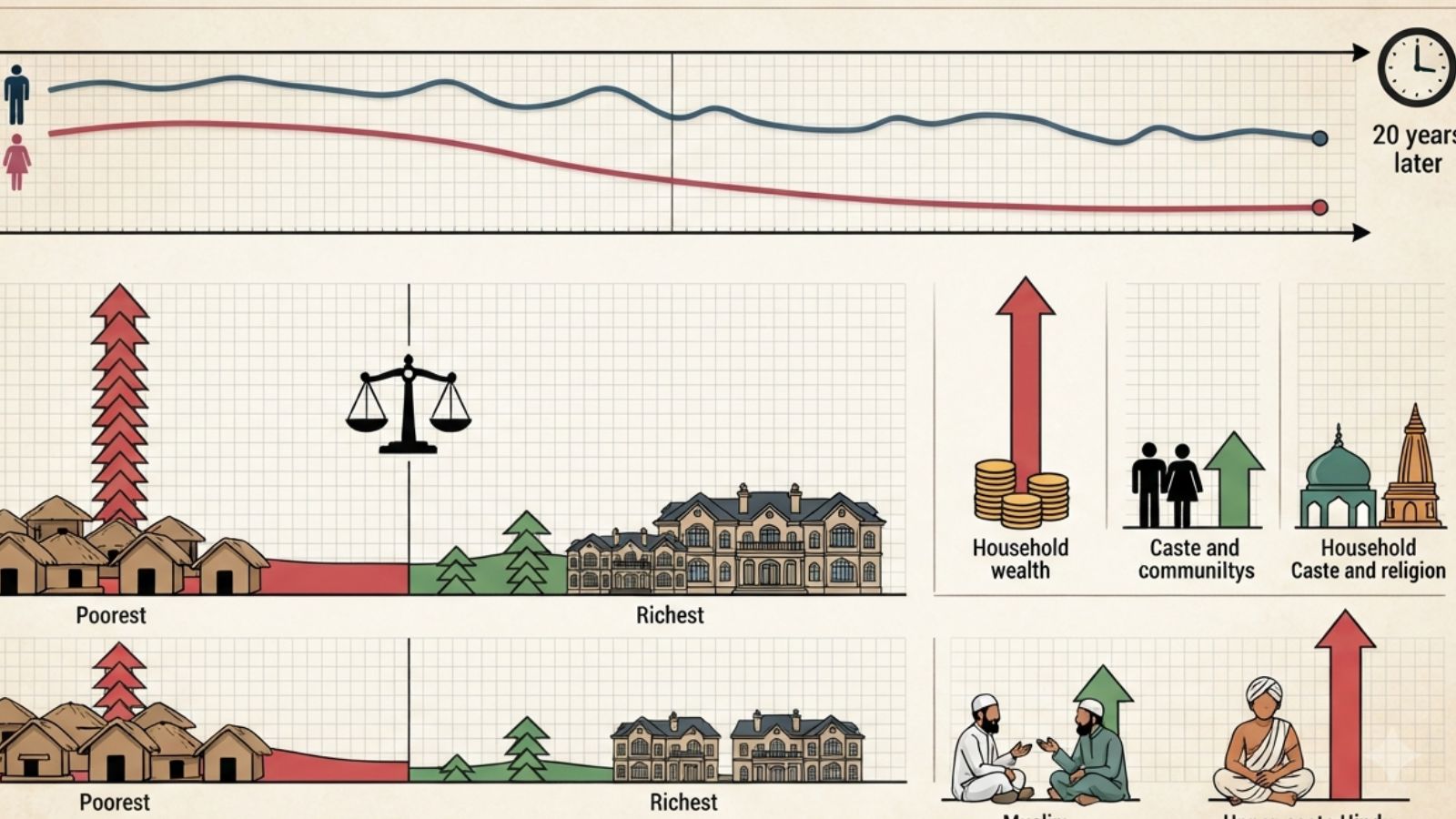
A man from India's richest households is 62 per cent less likely to die during his working years than a man from the poorest households. The difference is almost as stark for women, with those from the richest households facing a 42 per cent lower risk of death than their counterparts in the poorest households.
A study tracking adult mortality in India over two decades has found that household wealth is a stronger determinant of survival between the ages of 15 and 59 than caste or religion. Scheduled Caste women continue to face a higher risk of death, while Muslim men have a lower risk than upper-caste Hindu men.
For every 1,000 men in the 15-59 age group, the probability of death was 280 among those in the poorest households, compared with 158 among those in the richest. Among women, it was 157 per 1,000 in the poorest households and 87 in the richest.
The researchers also examined the differences after accounting for caste, religion, rural or urban residence and state-level variations. Even after these adjustments, men in the richest 20 per cent of households had a 62 per cent lower risk of death than those in the poorest 20 per cent.
For women, the risk was 42 per cent lower. The study found that the higher mortality recorded among Scheduled Caste (SC) and Scheduled Tribe (ST) men is largely linked to their economic and geographical circumstances. In 2019-21, the probability of death among SC men was 256 per 1,000 and among ST men 254 per 1,000.
Among upper-caste Hindu men, it was 197 per 1,000. SC women had a 19 per cent higher risk of adult death than upper-caste Hindu women even after adjustments for wealth and geography. The researchers also found that Muslim men had a consistently lower risk of adult death than upper-caste Hindu men across all three survey rounds.
In 2019-21, Muslim men had a 21 per cent lower risk of death even after accounting for household wealth, place of residence and state-level differences. The pattern was also seen in the earlier rounds of the survey. The authors point to lower alcohol consumption among Muslim adults and higher levels of urbanisation among Muslim populations in several states as possible reasons for this difference.
Greater urban concentration, they suggest, may also mean better access to healthcare facilities. The same advantage was not evident among Muslim women. Their adjusted mortality risk in the latest survey was not significantly different from that of upper-caste Hindu women.
The study also found that mortality has declined much faster among women than men over the two decades. The probability of dying between the ages of 15 and 59 among women fell from 208 per 1,000 in 1998-99 to 125 in 2019-21, a decline of around 40 per cent.
Among men, it fell from 268 to 221 per 1,000, a decline of 17 per cent. Male adult mortality, in fact, rose between the 2015-16 and 2019-21 survey rounds, from 209 to 221 per 1,000. The researchers attribute this largely to excess male deaths during the Covid-19 pandemic, along with occupational vulnerabilities.
"Enhancing economic stability and reducing poverty could substantially improve adult mortality rates across all social groups. While social group-specific interventions are essential, they should be complemented by broader economic and health policies to maximize their effectiveness," the study says.
Zeeshan Shaikh is the Associate Editor who heads The Indian Express' Mumbai reporting team. He is re... Read More
- •Aspirants and citizens are advised to monitor official notices and circulars issued by Maharashtra State Bureau (Mumbai).
- •Verify all prescribed eligibility criteria, cutoff dates, and authenticated document requirements prior to formal submissions.
- •Track connected examination timetables, vacancy advisories, and administrative gazettes on SuchnaSetu.
| Issuing Authority | Maharashtra State Bureau (Mumbai) |
|---|---|
| Topic Category | STATES |
| Jurisdiction | MH State |
| Publication Date | 25 November 2026 |