
Serial killer’s preferred poison revealed: How Chhattisgarh man left trail of bodies
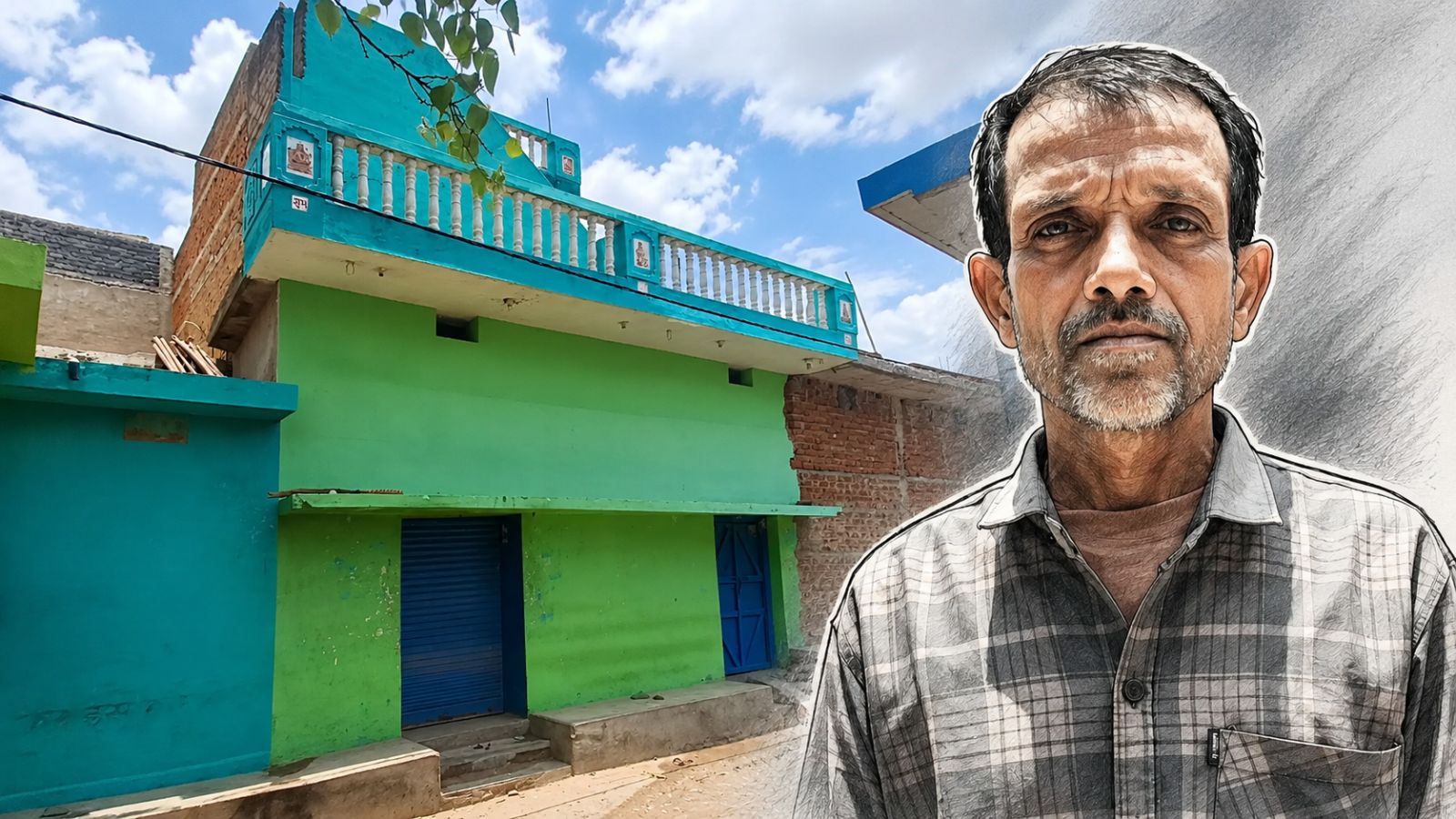
10877866 Ramsahay Jaiswal, his house.jpg
- ✓10877866 Ramsahay Jaiswal, his house.jpg
- ✓The first death took place on February 7, when Badri Patel (58), a mason, was found dead at his home by his daughter.
- ✓The last to die, on May 14, was Mahetru Sahu (40).
- ✓It soon emerged that a 23-year-old labourer, Kartik Kumhar, had started vomiting immediately after consuming such a drink.
Two and a half months after 46-year-old Ramsahay Jaiswal was arrested for allegedly murdering eight men from Kharve village in Chhattisgarh’s Baloda Bazar district, a report by the forensic science laboratory (FSL) has confirmed at least five victims were poisoned.
Two reports are pending, while forensic samples could not be collected in one case where the victim was cremated. The village, with a population of over a thousand people, noticed something was off when men started dying one after another.
The only common link: They had shared a drink with the accused or consumed liquor provided by him. The first death took place on February 7, when Badri Patel (58), a mason, was found dead at his home by his daughter. The last to die, on May 14, was Mahetru Sahu (40).
Unable to grasp what was happening, villagers had called priests and conducted prayers, but Mahetru’s death finally made them suspicious of the accused, Jaiswal. They started discussing how each victim had consumed liquor provided by him.
It soon emerged that a 23-year-old labourer, Kartik Kumhar, had started vomiting immediately after consuming such a drink. On June 6, the villagers submitted a written complaint to the police, and a probe led to his arrest on June 22.
The probe revealed that the accused held a grudge against each victim. “He had different reasons, accusing them of abusing him, eyeing his wife, owing him money, or performing black magic on him,” said an official. “He also felt he never got the respect he deserved from the village.” As the probe progressed, seven bodies buried by family members were exhumed.
A post-mortem was conducted, and viscera samples were sent to the FSL lab in Raipur. At the time, police suspected that Jaiswal used suhaga, a toxic substance used to kill rats, to lace the drinks. The FSL report was recently sent to the Baloda Bazar police, which confirmed that the samples tested positive for borax and cyanide, Superintendent of Police Gaurav Rai told The Indian Express.
Deputy SP Kasdol, Kaushal Wasnik, who is the Investigating Officer in the case, said, “The FSL report confirmed Suhaga was used, which contains borax. The ingredients found in cyanide and the toxic substance found in Suhaga have similarities.” Police sources said Jaiswal bought the Suhaga from someone, claiming he wanted to kill rats in his shop.
This person has been made a witness in the case. “We have sufficient evidence in the case, which includes 32 witnesses. We will soon file a chargesheet in the case,” added Wasnik. Jayprakash S Naidu is a Principal Correspondent for The Indian Express, currently serving as the state correspondent for Chhattisgarh.
With an extensive career in frontline journalism, he reports on the political, security, and humanitarian landscape of Central India. Expertise and Experience Specialized Conflict Reporting: Jayprakash is a leading voice on the Maoist/Naxalite conflict in the Bastar region.
His reporting provides a critical, ground-level view of: Internal Security: Tracking high-stakes encounters, surrender programs for senior Maoist leaders, and the establishment of security camps in formerly inaccessible "heartland" villages.
Tribal Rights & Displacement: Investigative reporting on the identity and land struggles of thousands of displaced tribals fleeing conflict zones for neighboring states. Governance & Bureaucratic Analysis: He consistently monitors the evolution of Chhattisgarh as it marks 25 years of statehood, covering: Electoral Politics: Analyzing the shift in power between the BJP and Congress and the impact of regional tribal movements.
Public Policy: Reporting on landmark infrastructure projects (e.g., mobile connectivity in remote zones) and judicial interventions, such as High Court rulings on civil and family law. Diverse Investigative Background: Prior to his current focus on Chhattisgarh, Jayprakash held reported from Maharashtra, where he specialized in: Crisis & Disaster Management: Notable for his extensive coverage of the Cyclone Tauktae barge tragedy (P-305) and the COVID-19 pandemic’s impact on frontline personnel.
Legal & Human Rights: Investigative pieces for platforms like Article-14, focusing on police accountability and custodial deaths across India. Environmental & Social Justice: Authoritative reporting on the Hasdeo Aranya forest protests and the approval of major tiger reserves, highlighting the tension between industrial mining and environmental preservation.
... Read More
- •Aspirants and citizens are advised to monitor official notices and circulars issued by The Indian Express National.
- •Verify all prescribed eligibility criteria, cutoff dates, and authenticated document requirements prior to formal submissions.
- •Track connected examination timetables, vacancy advisories, and administrative gazettes on SuchnaSetu.
| Issuing Authority | The Indian Express National |
|---|---|
| Topic Category | INDIA |
| Jurisdiction | All India / National |
| Publication Date | 14 September 2026 |