
Shedding ‘naught boy’ tag, GSLV carries India’s first geo-imaging satellite
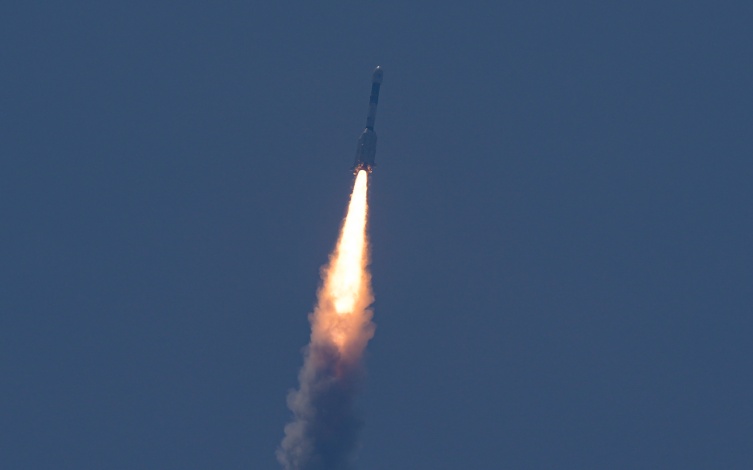
10863440 PTI05_29_2023_000061A_20260904125159.jpg
- ✓10863440 PTI05_29_2023_000061A_20260904125159.jpg
- ✓The GSLV-F17 rocket deposited the EOS-05 satellite in a transfer orbit, at an altitude of more than 190 km from Earth, about 18 minutes after the launch.
- ✓Three of its six missions launched in 2025 and 2026 were unsuccessful, with the satellites unable to reach their intended orbits.
- ✓After a successful launch in 2024, ISRO scientists, including the then chairman S Somanath, had said ‘naughty boy’ had become ‘disciplined’ and a ‘smart boy’.
In its first launch since January, the Indian Space Research Organisation sent an Earth observation satellite, EOS-05, to space early Friday morning, using a GSLV rocket. The EOS-05 is India’s first dedicated imaging satellite to be placed in the geosynchronous orbit, about 36,000 km from Earth, from where it can keep constant watch over the country and provide real-time imaging service.
With a 10-year mission life, the satellite is designed to image large areas of interest at frequent intervals for purposes such as monitoring natural disasters or keeping track of agriculture or forestry. It will also have defence uses.
India has several other active earth observation satellites in the lower-earth orbits which circle Earth and periodically capture imagery over India. In the geosynchronous orbit, the satellite remains stationary relative to Earth, and is able to watch the same region continuously, without gaps.
The GSLV-F17 rocket deposited the EOS-05 satellite in a transfer orbit, at an altitude of more than 190 km from Earth, about 18 minutes after the launch. From there, the satellite will perform a series of orbit-raising manoeuvres over the next few days to travel to the geosynchronous orbit, its final destination.
In a message congratulating ISRO, Prime Minister Narendra Modi said, “Yet another outstanding achievement by ISRO and a proud moment for our nation. The successful launch of GSLV-F17 carrying EOS-05, India’s first-ever imaging satellite from geosynchronous orbit is a reflection of the excellence, innovation and growing capabilities that define India’s space sector.
The growing partnership between ISRO and Indian industry is adding new strength and scale to our space programme and expanding India’s capabilities across the entire space ecosystem.” Weighing more than 2,360-kg, the EOS-05 was the heaviest satellite to be carried by the GSLV rocket until now.
The successful launch is a big relief for ISRO which has gone through one of its most difficult phases in the last two years. Three of the six missions launched in 2025 and 2026 turned out to be unsuccessful with the satellites unable to reach their intended orbits due to anomalies in the launch vehicle or the spacecraft engine.
Because of this, subsequent missions went through extended reviews and checks to avoid another failure. The launch that took place Friday was ready in February itself, but had been put on hold to enable additional rounds of checks and tests.
The GSLV rocket has had its own share of problems in the past, mainly with the cryogenic engine that powers the third and final stage of the flight. For ISRO, the successful launch comes after one of its most difficult phases in the last two years.
Three of its six missions launched in 2025 and 2026 were unsuccessful, with the satellites unable to reach their intended orbits. It had suffered four failures and was called ‘naughty boy’ because of the difficulties it posed to scientists in mastering the cryogenic technology.
But that description no longer holds valid. After a successful launch in 2024, ISRO scientists, including the then chairman S Somanath, had said ‘naughty boy’ had become ‘disciplined’ and a ‘smart boy’. After the satellite was deposited in orbit Friday, ISRO chairman V Narayanan said, “This is a great achievement in our country’s space programme, because this is the first earth observation satellite to be placed in geo-platform for national activities.
This success is the culmination of team work of ISRO, its industrial partners and also the academia which has provided a lot of support.” “Also, this success is because of the open work culture and vibrant review mechanism of ISRO,” he said.
“All the satellite systems are working fine and are normal. The solar panel has been deployed. The health of the satellite is perfectly alright. In the coming days we will raise the orbit of the satellite and place it in the geosynchronous orbit,” Narayanan said.
Lt General A K Bhatt (retd), Director General of Indian Space Association (ISpA), an industry body, said, “The geosynchronous imaging capabilities of EOS-05 satellite will enable persistent, high-frequency observation of large regions rather than relying only on periodic satellite revisits, which is increasingly critical for India.
This can be strategically valuable for tracking rapidly evolving weather systems, floods and forest fires, monitoring agriculture and natural resources, and strengthening situational awareness across India’s land and maritime domains.
The real opportunity now lies in translating this rich, frequent satellite data into actionable intelligence through India’s private space and geospatial ecosystem.” “This mission also reaffirms the deepening partnership between ISRO and India’s private space industry, whose components and expertise increasingly power such national systems.
As India’s ecosystem matures under robust policy frameworks and with support from ISRO, milestones like this will build the confidence needed to scale commercial participation further,” he said.
- •Aspirants and citizens are advised to monitor official notices and circulars issued by The Indian Express National.
- •Verify all prescribed eligibility criteria, cutoff dates, and authenticated document requirements prior to formal submissions.
- •Track connected examination timetables, vacancy advisories, and administrative gazettes on SuchnaSetu.
| Issuing Authority | The Indian Express National |
|---|---|
| Topic Category | INDIA |
| Jurisdiction | All India / National |
| Publication Date | 4 September 2026 |