
Tamil Nadu Speaker joins Catholic anti-abortion rally — ‘Life begins at conception’
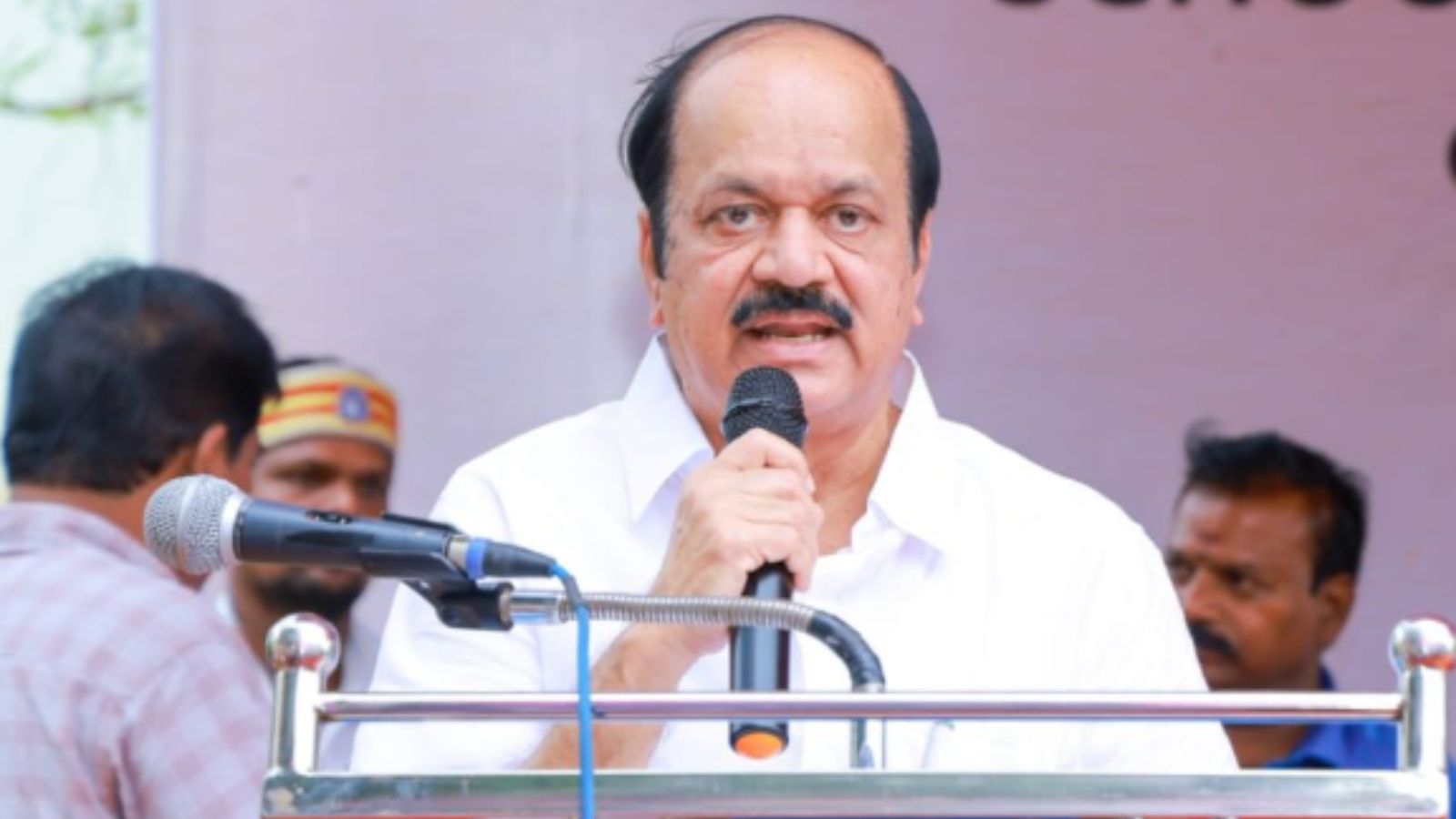
10826965 TN Speaker
- ✓10826965 TN Speaker
- ✓More than 5,000 people attended, according to organisers.
- ✓In its 2022 abortion judgment, it said the decision whether to continue a pregnancy or terminate it was firmly rooted in the pregnant woman’s bodily autonomy.
The Speaker of the Tamil Nadu Legislative Assembly, JCD Prabhakar, joined a Catholic anti-abortion gathering in Chennai Sunday and declared that “life begins at conception”, placing one of the state’s highest constitutional office-holders alongside a movement seeking to persuade Indians to reconsider abortion through the moral theology of the Catholic Church.
Prabhakar, 73, a ruling Tamilaga Vettri Kazhagam (TVK) MLA from Thousand Lights, was addressing the fifth National March for Life, organised at Stella Maris College by CHARIS India under the Catholic Bishops’ Conference of India.
More than 5,000 people attended, according to organisers. According to Prabhakar, the gathering was deliberately held around August 10, the date on which India’s Medical Termination of Pregnancy Act was enacted in 1971– a law that established a legal framework for abortion and was significantly liberalised by amendments in 2021.
“Life begins at conception,” Prabhakar said. “The deep belief of this movement is that the value of a child’s life should not be counted only from the day it is born, but that it should be valued as a life beginning in the womb itself.” That proposition is central to Catholic doctrine.
The Vatican teaches that human life must receive absolute protection from conception and opposes direct abortion; Catholic teaching also rejects artificial methods of contraception. But it encounters a very different conception of pregnancy in contemporary public-health ethics and Indian constitutional law: not simply as the existence of developing biological life, but as an experience occurring within the body, circumstances and future of a woman.
The World Health Organization defines reproductive health partly through the freedom to decide whether, when and how often to reproduce. India’s Supreme Court has similarly located reproductive choice in bodily and decisional autonomy.
In its 2022 abortion judgment, it said the decision whether to continue a pregnancy or terminate it was firmly rooted in the pregnant woman’s bodily autonomy. The distinction is consequential. An embryo can be made the moral centre of an anti-abortion argument.
Public health must simultaneously contend with the embodied person carrying it – her health, desire, economic circumstances, relationships, education and capacity to determine the course of her own life. The Supreme Court specifically recognised that unwanted pregnancies carried to term can affect education, careers and mental well-being.
Prabhakar’s speech repeatedly approached abortion from the opposite direction, presenting childbirth as a sacred gift and declining family size as part of the social history from which abortion emerged. “Life is a sacred gift given by God.
Every human life is a sacred gift from God,” he said. “The value of a child does not diminish merely because it has not yet been born.” He recalled an era of families with 10-12 children before social and economic pressures produced the slogans ‘We two, ours two’ and eventually ‘We two, ours one”.
“In a society that kept changing in this way,” he said, “we all know very well that the thought, ‘Why should we have a child at all?’ is the fundamental reason behind this abortion.” In perhaps the most striking part of his speech, Prabhakar turned to his own marriage.
He described his wife as an “ardent Catholic” and recounted how, after their two sons were born, she became pregnant again. “I was a fool,” he said. “I then told my wife that ‘It is difficult for you to maintain all these children.’ What did she say?
‘No, no. What God has given, I must accept.’” Prabhakar said he took her to a doctor and asked whether the pregnancy, then around three months old, could be terminated. He said his wife resisted his insistence and later underwent an injection, but the pregnancy continued.
“The reason I am saying this is that, whether they are Catholic Christians or Christian people with faith in God, they should keep this in their minds,” he said. “Because children are a gift of grace given by God.” Yet Prabhakar’s speech did not advocate punishment or public shaming of women who undergo abortions.
He repeatedly argued that pregnant women required material and emotional support. “We should neither shame nor blame a woman for a decision she takes in an extremely difficult situation,” he said. “What she needs is not judgment, she needs support.
What she needs is not condemnation, she needs compassion. What she needs is not isolation, she needs a community.”
- •Aspirants and citizens are advised to monitor official notices and circulars issued by Tamil Nadu State Bureau (Chennai).
- •Verify all prescribed eligibility criteria, cutoff dates, and authenticated document requirements prior to formal submissions.
- •Track connected examination timetables, vacancy advisories, and administrative gazettes on SuchnaSetu.
| Issuing Authority | Tamil Nadu State Bureau (Chennai) |
|---|---|
| Topic Category | STATES |
| Jurisdiction | TN State |
| Publication Date | 10 August 2026 |