
Ted Sarandos at Express Adda: ‘Netflix is both classy and massy’
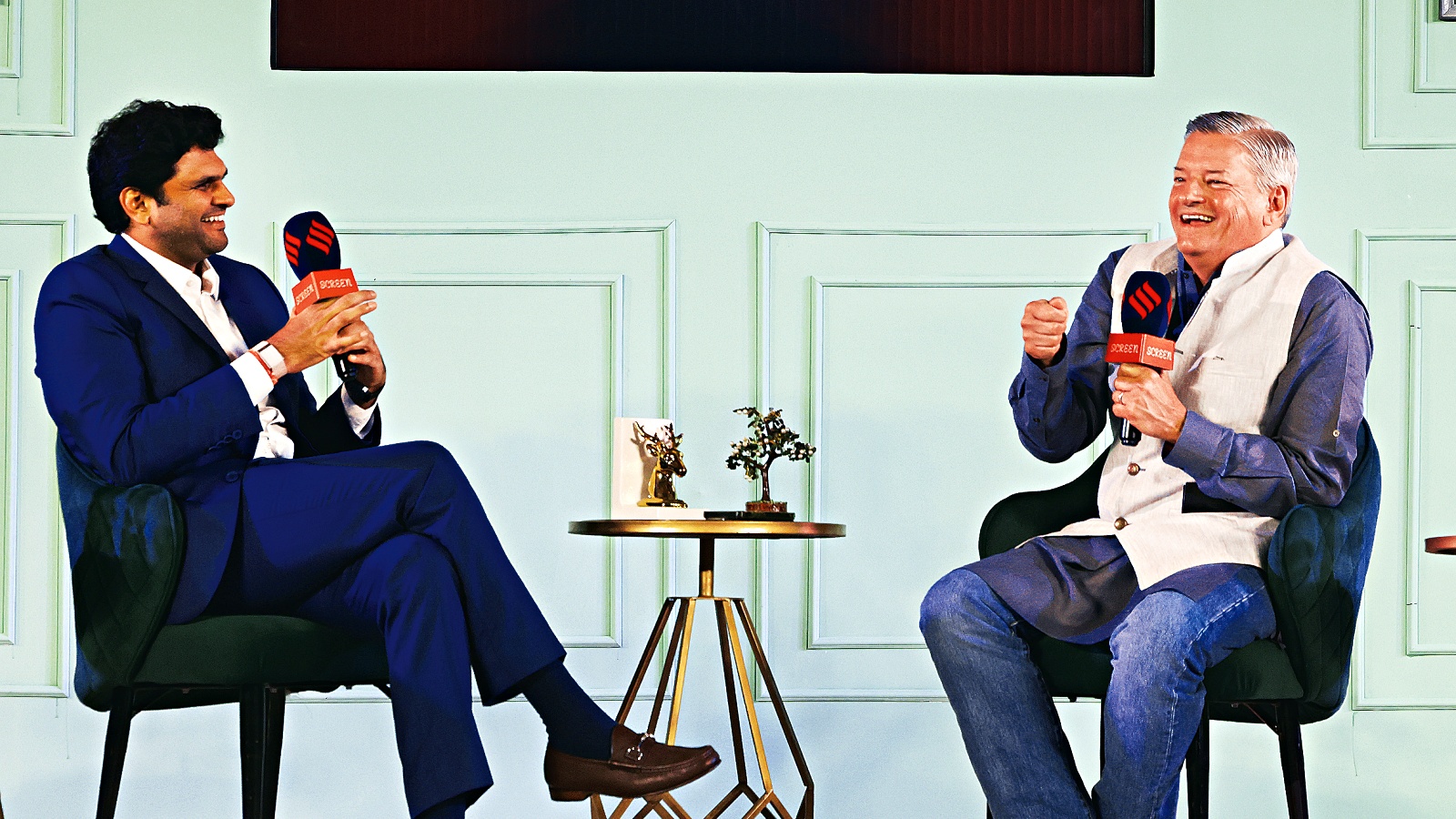
10863827 Stage
- ✓Ten years ago, globally Netflix had $6.3 billion in revenue, $120 million in profit and a $50 billion valuation.
- ✓Today, it’s $45 billion in revenue, $1 billion in profit and a $400 billion valuation.
- ✓When I met Reed in 1999, he said all entertainment was going to come into the home on the internet at a time when the internet was too slow, too expensive.
- ✓We’ve had an Indian movie or series in the global Top 10 every week since 2024.
Ten years ago, globally Netflix had $6.3 billion in revenue, $120 million in profit and a $50 billion valuation. Today, it’s $45 billion in revenue, $1 billion in profit and a $400 billion valuation. It has been a tremendous decade.
The fact that this happened in entertainment is special. You never had a right to win. You started with DVDs, had no production, no distribution. Amazon and Apple had distribution. Disney had production. But Reed Hastings had a conviction and got you to buy into it.
When I met Reed in 1999, he said all entertainment was going to come into the home on the internet at a time when the internet was too slow, too expensive. We were talking about downloading movies because streaming didn’t even exist.
But it was clear that’s where this was going. Mailing DVDs and managing people’s queues was all about customer relationships, credit cards and taste preferences, so that you could use the power of the internet to help people find things in a world of almost infinite choices.
We’re not in the theatrical movie business. Whenever I’ve had anything to say about the theatrical movie business, it’s mostly an observation of stats and behaviour. What has been great is that people on Netflix love movies.
They love to go to the movies or watch them at home. Our average member watches seven movies a month on Netflix globally, and sees one or two every year in the theatre. I’m not saying one is better than the other. It’s a rich ecosystem.
I want our members, when they want to go out at night, to go to a movie because it strengthens their relationship with movies. Not at all. We compete for time. When you sit down, pick up the remote and push a button, we want it to be Netflix.
We make sure every time you do that, you watch something you love. We want to become the first place you check for something to watch and the last thing you’d ever cancel. We don’t necessarily compete with YouTube on phones because what people are watching on phones tends to be much shorter, vertical and free.
When you get onto the screen in your living room, that’s the screen time I’m talking about. We’re trying to find a movie you’re going to love; not trying to trick you into pushing play. That’s actually quite bad for our business.
We’re trying to match something with you that you may not have thought you were going to love, and it turns out you did. That gives us an opportunity to tell stories from around the world. The biggest barrier to someone in Iowa watching a Bollywood movie is that they’ve never seen one before.
If we can get them over that hump, and they watch it and love it, it opens the door. We’ve had an Indian movie or series in the global Top 10 every week since 2024. We have three-and-a-half billion hours of Indian content being watched on Netflix around the world this year.
When I travel around the world, particularly in India, I get asked — because of what happened with Squid Game or La Casa de Papel — that when India is going to have that moment. India has that moment all the time, and it’s much more likely to be in cinema.
When we made Sacred Games, it was a different kind of television. But most of the history and what’s coming through is likely to come through in cinema. We’re thrilled with our success in India to date. We’ve been at it for 10 years and we’re still growing every year, month, quarter.
With a population this size and an enormous appetite for entertainment, it’s dramatically underscreened. There are fewer movie theatre screens per person than in almost any country in the world. But we can solve that problem with all kinds of screens that can tell those stories.
We brought India its first Academy Award for The Elephant Whisperers, and also won the International Emmy, had nominations for Vir Das and Delhi Crime, and won Best Hindi Film at the National Awards. Why many American companies have failed in India is because they think they understand India after making one movie that worked.
But there are multiple Indias. Even to be successful locally, you have to travel across the country. We don’t do that from California. We do that from Mumbai. It’s an intense desire to be ingrained in the entertainment community, ecosystem and economy of India, but most importantly, with Indian fans.
Our people here love Indian movies and television more than anyone in the world. I always refer to it as very informed intuition. There’s no data in the world that could tell you to make this and don’t make that. You’ll be wrong all the time.
Data only tells you what worked before, and audiences are always looking for something they haven’t seen. They’re always looking to be surprised. There are things where you can spend some time because it’s comfortable. But what really moves the needle for a fan is, ‘I’ve never felt this way before.’ Those things don’t come in some rhythm or formula.
You can’t reverse-engineer them. They come from a great idea, a visionary storyteller, the resources to bring that story to the screen, and a little bit of kismet. At the end of the day, it’s all in execution. You can get false security by looking at the data.
Where we always win is when we have creative executives with such keen instincts and courage that they say, ‘I know what the data says. I’m telling you that’s wrong. This is going to work.’ Look at Squid Game. No data would have said to make it, certainly not for a global audience.
In hindsight, everyone says, “Of course it was amazing.” But it was twice as expensive as any hour of Korean television ever produced. So yes, we have data, but if anybody made big creative decisions based only on data, that would be a fool’s errand.
Absolutely. The star is important, more than in other markets. But it’s the star and the vehicle. You can’t just put the star into a role people don’t necessarily want to see them in. Then, you’re starting from scratch. What I loved about that trip was how quickly it taught us there’s not one India.
You go to sleep in one part...
- •Aspirants and citizens are advised to monitor official notices and circulars issued by The Indian Express National.
- •Verify all prescribed eligibility criteria, cutoff dates, and authenticated document requirements prior to formal submissions.
- •Track connected examination timetables, vacancy advisories, and administrative gazettes on SuchnaSetu.
| Issuing Authority | The Indian Express National |
|---|---|
| Topic Category | INDIA |
| Jurisdiction | All India / National |
| Publication Date | 4 September 2026 |