
US proposes 25% tariff on India, 17% after trade deal
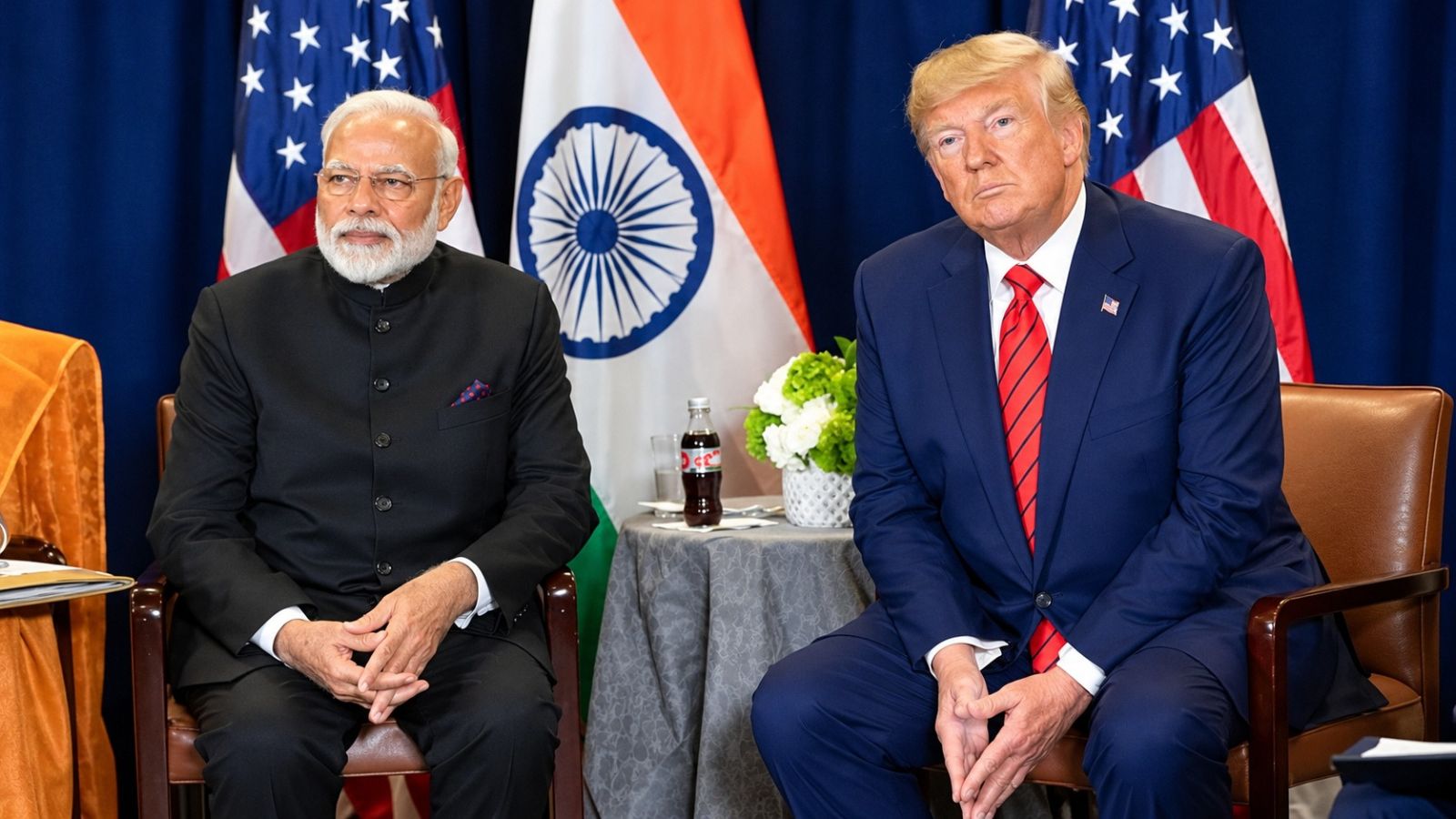
10978398 narendra modi donald trump.jpg
- ✓10978398 narendra modi donald trump.jpg
- ✓This would drop to 17% once a formal trade deal is signed, the United States Trade Representative (USTR) said Wednesday.
- ✓commerce and are therefore actionable under Section 301 of the Trade Act of 1974, as amended (Trade Act)”.
- ✓These Section 301 tariffs on India would replace the reciprocal tariffs which were earlier supposed to act as the legal basis for the trade deal.
The US has proposed a final tariff rate of 25% on India after concluding two Section 301 investigations on imports of goods produced through “forced labour” and “industrial capacity”. This would drop to 17% once a formal trade deal is signed, the United States Trade Representative (USTR) said Wednesday.
Under the proposal, a 17% tariff offers a calculated 1% edge over Bangladesh, Cambodia, Indonesia, Malaysia, and Thailand (18% deal rate) and a 3% edge over Vietnam and China (20% deal rate)—while rising up to 25% without a deal, alongside the risk that an adverse USTR ruling could bring further duties or import quotas, think tank Global Trade Research Institute said.
“The Trade Representative proposes that appropriate action to obtain the elimination of the acts, policies, and practices would include applying tariffs of up to 25% on all goods of India, net of existing Section 301 tariffs, with exemptions for certain goods.
The Trade Representative further proposes to consider whether the additional duties applied should be adjusted to account for, among others, duties applied under other, existing Section 301 actions; duties applied under other, existing Section 232 actions; or, were India to reach an Agreement on Reciprocal Trade with the United States that is responsive to the determinations in this investigation into the acts, policies, and practices of India, a tariff rate of 17%,” the USTR said in a report.
The USTR said that it has determined that India’s acts, policies, and practices relating to structural excess capacity and production in manufacturing sectors are “unreasonable and burden or restrict U.S. commerce and are therefore actionable under Section 301 of the Trade Act of 1974, as amended (Trade Act)”.
“As a result of these findings, the Trade Representative proposes that appropriate action include additional duties up to all products of India, except as provided in this notice (Notice). USTR seeks public comment on the proposed action in the investigation and will hold a public hearing in connection with the proposal,” USTR said.
India had sought comparative advantage over countries such as China and countries in the Association of Southeast Asian Nations (ASEAN) region such as Vietnam, Malaysia and Indonesia as a pre-condition to sign the trade agreement.
Government officials had said that the US has assured them of the same. These Section 301 tariffs on India would replace the reciprocal tariffs which were earlier supposed to act as the legal basis for the trade deal. The USTR on Wednesday announced duties after completing an eight-month Section 301 unfair trade practices probe into 16 trading partners, including close allies Japan, the European Union and South Korea.
The US had, in June, imposed 10% tariffs on India, lower than the 12.5% rate proposed in March after the Directorate General of Foreign Trade (DGFT) announced a prohibition of the import of goods produced using forced labour in the backdrop of the first Section 301 investigation on importation of goods produced through forced labour.
The US has been pushing for exports of GM products under the trade deal with India and has cited Indian regulations blocking imports of certain dairy products as non-tariff barriers. The USTR, in its report on non-tariff barriers released in March 2025, had said that the country imposes “onerous requirements” on dairy imports.
Commerce and Industry Minister Piyush Goyal had on November 3 said India will not allow imports of genetically modified (GM) products or dairy products produced using calf meat. “We are very sensitive to the opening of the dairy sector.
Till date, we have never opened the dairy sector for anybody. We are sensitive about not allowing any GM products to come to India. We have never allowed it, and we will never allow it in the future. We are sensitive to our religious sensitivities,” Goyal had said while interacting with students at the Kirori Mal College.
Ravi Dutta Mishra is a Principal Correspondent with The Indian Express, specializing in economic pol... Read More
- •Aspirants and citizens are advised to monitor official notices and circulars issued by Indian Express Economy & Markets.
- •Verify all prescribed eligibility criteria, cutoff dates, and authenticated document requirements prior to formal submissions.
- •Track connected examination timetables, vacancy advisories, and administrative gazettes on SuchnaSetu.
| Issuing Authority | Indian Express Economy & Markets |
|---|---|
| Topic Category | BUSINESS |
| Jurisdiction | All India / National |
| Publication Date | 25 November 2026 |