
When British frowned upon Maharaja of Patiala for wearing a General’s rank uniform
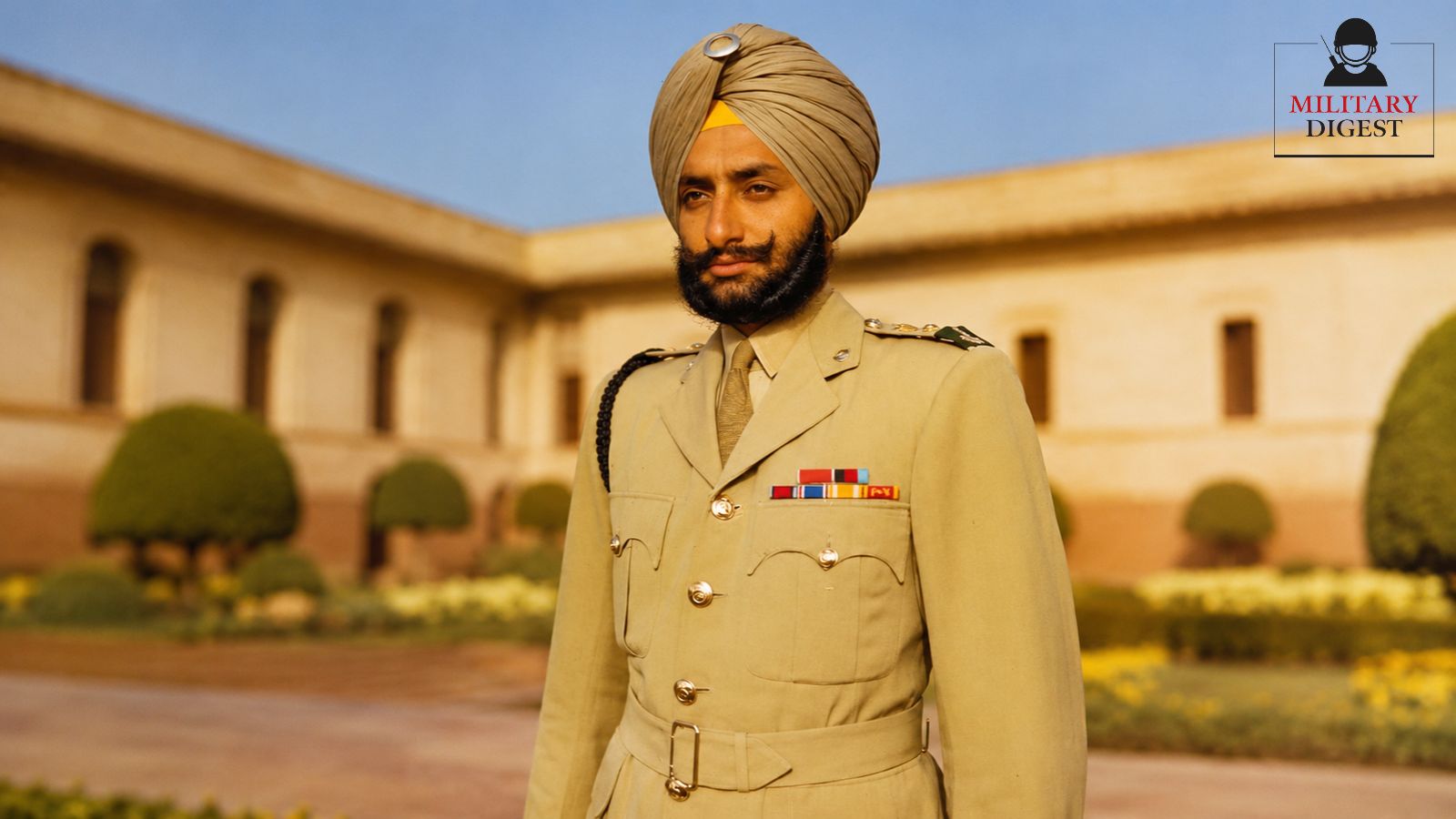
10973745 Military Digest Maharaja of Patiala Army uniform
- ✓10973745 Military Digest Maharaja of Patiala Army uniform
- ✓Recently, the Army decided to return to its old uniform pattern for Brigadiers and above, which had been changed in 2023 to remove all regimental affiliations.
- ✓The file contains scores of pages of observations, objections and, finally, recommendations arising from the actions of the then Maharaja of Patiala in 1941.
- ✓“They will wear the uniform and badges of any honorary King's Commission they may hold.
Uniforms are taken very seriously in the Indian Army. Recently, the Army decided to return to its old uniform pattern for Brigadiers and above, which had been changed in 2023 to remove all regimental affiliations. Now, Brigadiers and Generals will once again be able to sport their diverse regimental accoutrements, ending the uniformity imposed by the uniform change three years earlier.
The National Archives of India has one file which shows how concerned the British were about uniforms and, especially, ranks. The file contains scores of pages of observations, objections and, finally, recommendations arising from the actions of the then Maharaja of Patiala in 1941.
Even though the British Generals were embroiled in the Second World War at the time with stunning reverses suffered at the hands of the Germans at that stage of the war, there was still enough time to hold lengthy discussions on uniform.
The alarm was founded by the Public Relations Officer (PRO) of the Indian Army, an officer of the rank of Lt Colonel who shot off a letter to the Military Advisor-in-Chief of the Indian State Forces (ISF) attaching photographs received from the Malay Command of “His Highness Captain the Maharaja of Patiala in full regalia as at least a Major General if not more”.
“If it is considered desirable that these should not be published anywhere, I will have to take urgent steps to prevent their further issue from Malaya, although I am afraid it will be already too late,” the PRO wrote. Major General (later Lt General) Frederick Gwatkin, Military Advisor-in-Chief, Indian State Forces, was not too pleased to learn what the Maharaja of Patiala had done.
A stickler for norms, Maj Gen Gwatkin was a cavalry officer who went on to command the Deccan Horse and served as Colonel of the Regiment of Deccan Horse until 1950. “My attention is drawn to the fact that during his recent visit to Malaya, Maharaja of Patiala wore the badges of rank of a General.
In visits to troops in north west frontier of India, ruling princes have been required to dress in uniforms containing badges of their Army rank. If this is the rule on the north west frontier of India it is all the more essential for it to be followed outside India when visits to His Majesty’s forces are made by any ruling prince,” he wrote in a note on the subject.
He further noted that princely state rulers are, in the absence of other instructions, allowed to wear what they like when visiting troops, but the honours will only be paid to them according to their Army rank. “Such a ruling will only lead to trouble, for it is obvious that any officer or NCO in charge of a guard can give due military honours to the inspecting or visiting officers if the latter are wearing badges of rank to which they are entitled.
The Maharaja of Patiala holds the honourary rank of Captain. The highest rank which he can be awarded by the King is Lt General. Their highnesses of Bhopal and Bahawalpur in their visits to mid east and Iraq wore the badges of rank to which they are entitled and not any state rank which they have chosen to adopt,” wrote Maj Gen Gwatkin.
The General was concerned that the rulers of Bikaner, Hyderabad and Kashmir, who all hold General’s rank may be annoyed that a ruler much younger than themselves is accorded the same military honours as has been the case of the Maharaja of Patiala during his visit to Malaya.
“I have already on another file made it clear why I consider that honourary rank should be awarded in strict order of merit and not be given for political or other reasons. I therefore recommend that publicity not be given to any photograph of His Highness in uniform during his visit in Malaya.
The fact that the star and crown on his shoulders are probable not of the authorised size or regulation pattern is possible irrelevant. Their existence is sufficient to mislead troops who are required to pay honours,” he wrote.
The political department of the Government of India endorsed the view of the MA-in-Chief. A subsequent policy note on the subject identified three aims of having a proper policy on the wearing of ranks for princely state rulers.
“(a) To maintain and preserve the value of various ranks conferred by the King, and to ensure that the ranks conferred or assumed by Rulers bear some relation to ranks in His Majesty's Forces. (b) To do what we can to ensure that States Forces ranks do not become a matter of ridicule, and as a result detract from the value and reputation of the state forces.
(c) to do all that is within our power to remove possible embarrassment and to avoid embarrassing situations arising between persons holding States Forces commissions and persons holding His Majesty’s Commission”. Certain principles were suggested to regulate the wearing of uniforms by Rulers and state subjects outside their States, or outside State territory.
“They will wear the uniform and badges of any honorary King's Commission they may hold. If they hold no such commission, they should wear mufti (civilian clothes). I suggest that pride in the honour conferred on them and natural loyalty demand that Rulers should wear the King's uniform to which they may be entitled,” the policy states.
It added that when a ruler visits one of his own Units outside his state, the state subjects serving in that unit know the ruler to be their ruler, and what he is dressed in makes little or no difference to the respect they have for him or their relationship to him.
The policy also states that state officers not forming part of the complement of State Units in British India, when visiting British India or over-seas on duty should only wear uniform in the station in which the particular duty is to be performed, and they shall not wear uniform when on journeys to and from that station or area, nor when moving about that station unless performing the specific duty, except when they are in attendance on the ruler.
“In no case should the rank badges worn be higher than...
- •Aspirants and citizens are advised to monitor official notices and circulars issued by Punjab & Haryana Regional Bureau (Chandigarh).
- •Verify all prescribed eligibility criteria, cutoff dates, and authenticated document requirements prior to formal submissions.
- •Track connected examination timetables, vacancy advisories, and administrative gazettes on SuchnaSetu.
| Issuing Authority | Punjab & Haryana Regional Bureau (Chandigarh) |
|---|---|
| Topic Category | POLITICS |
| Jurisdiction | PB State |
| Publication Date | 22 November 2026 |