
When schoolchildren go viral — to get roads fixed
10875610 12mum-tracks-3col
- ✓10875610 12mum-tracks-3col
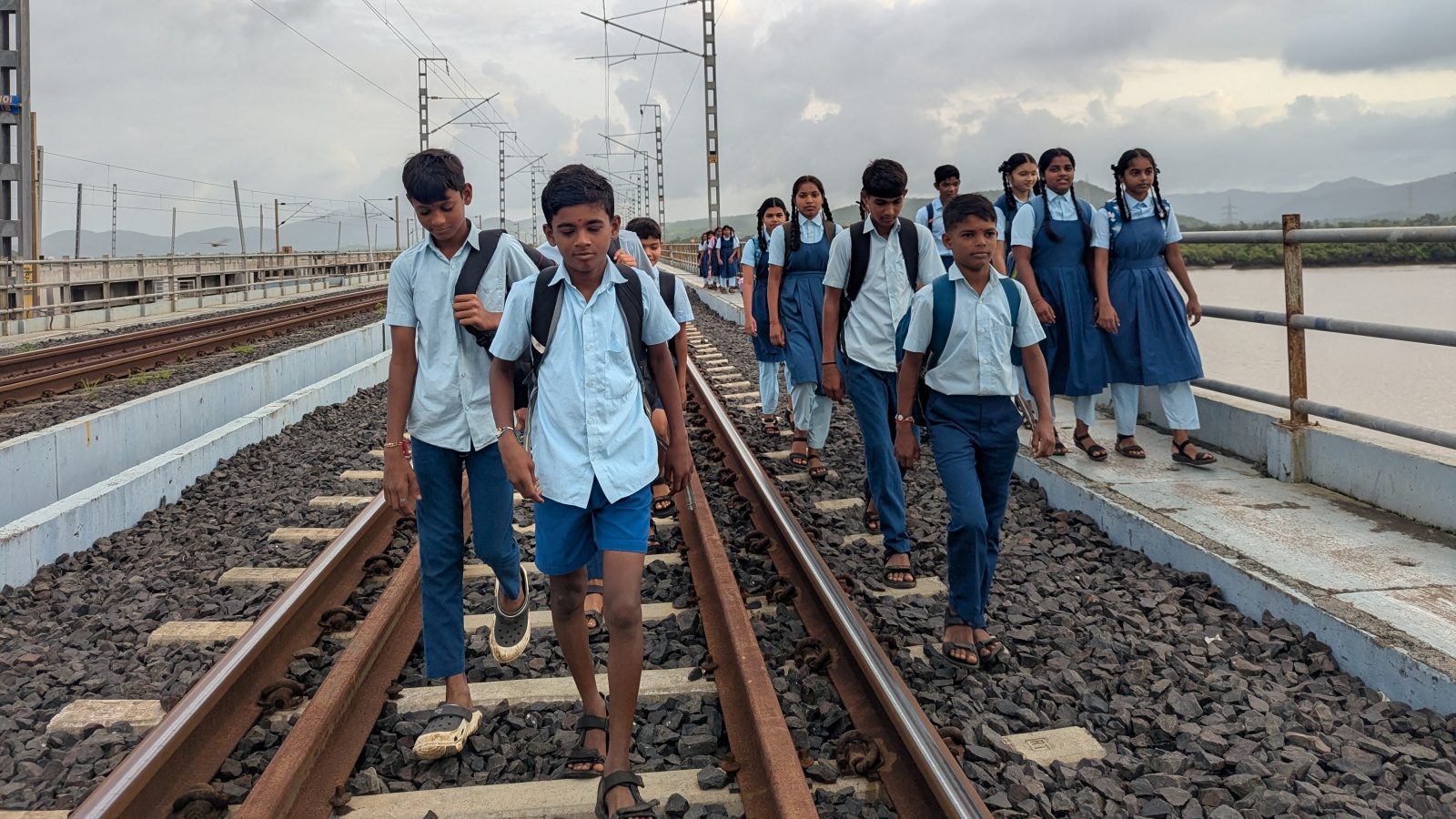
- ✓Villagers say they have approached authorities repeatedly and protested at Azad Maidan in Mumbai in 2019.
- ✓The Saraswati Vidyalaya in nearby Phanaspada has also been highlighting the issue of children crossing railway tracks for nearly 25 years.
- ✓On September 1, the district administration proposed a roughly 700-metre permanent bridge between Wadhiv and Vaiti at an estimated cost of Rs 25.95 crore.
For some schoolchildren in Maharashtra, the journey to school has become a lesson in navigating potholes, railway tracks and muddy trails. But in recent months, a new route has emerged to get their problems noticed — social media.
From mock news reports filmed on mobile phones to direct appeals to political leaders, students have taken to Instagram and other platforms to document everyday civic failures and in some cases, have managed to get authorities to respond within days.
But going viral has not always translated into a solution. While some demands have resulted in repairs or official intervention, others remain stuck at the stage of proposals and assurances. Sixteen-year-old Sohil Sunil Chaudhary made that appeal in an Instagram video posted on August 22, showing schoolchildren in Wadhiv walking along railway tracks to get to school.
Addressing Prime Minister Narendra Modi and Maharashtra Chief Minister Devendra Fadnavis, he questioned why children in the village continued to depend on such a hazardous route for their daily commute. The video brought attention to a problem residents say has persisted for decades.
Wadhiv, an island in Palghar, does not have a permanent, all-weather road bridge connecting it to the mainland. Children use pathways along railway bridges and the tracks to reach school. Adults use the same route to travel to work, markets and healthcare facilities.
Railway authorities have clarified that these pathways are intended for authorised railway personnel and are not meant for regular public movement. The risks are not theoretical. Recently, eight-year-old Prince Kishore Bhagat fell while walking along the tracks to school after his foot got caught in straps.
Residents also recall patients and pregnant women having to be carried on makeshift stretchers to reach medical facilities. The demand for a road connection predates Sohil’s video. Villagers say they have approached authorities repeatedly and protested at Azad Maidan in Mumbai in 2019.
The Saraswati Vidyalaya in nearby Phanaspada has also been highlighting the issue of children crossing railway tracks for nearly 25 years. There is now a proposal on paper. On September 1, the district administration proposed a roughly 700-metre permanent bridge between Wadhiv and Vaiti at an estimated cost of Rs 25.95 crore.
The proposal has been sent to the state government and is awaiting administrative and financial approvals. A ferry promised to residents around three years ago has also not started. For now, villagers remain dependent on privately operated boats when available.
“It is difficult to figure out whether there are potholes on the road or the road is in potholes.” Eleven-year-old Smita Shid delivers the line as the reporter in a video she made with 10-year-old Aditya Gohire. The two staged a mock ground report on the route children from Gohirewadi take to school in Pegalwadi.
Smita speaks into a mobile phone, describing a muddy trail running alongside fields. The video was later shared on social media and circulated widely, drawing political attention to the hamlet in Trimbakeshwar taluka. Opposition leader Aaditya Thackeray also visited the area.
The problem becomes particularly acute during the monsoon. The trail turns slippery and waterlogged. Some children walk barefoot because their slippers make it difficult to cross the mud. Others fall, soil their clothes and reach school.
During heavy rain, parents say, children sometimes stay home. The alternative is not much better. The main route is along a highway, while the shorter trail has its own hazards, including slippery ground, thorns and snakes.
Residents say other basic problems have compounded the difficulties. Until recently, the school did not have a proper toilet, while a shortage of classrooms meant two classes were being held in a nearby temple. The gram panchayat says land for an alternative road has been identified and farmers have agreed to part with small portions of their land.
The proposal, however, remains under administrative consideration. In Khandpe village in Karjat taluka, three Class 10 students made their own news report to highlight potholes on a road used by schoolchildren. Neha Ghare played the reporter, holding an umbrella as a makeshift microphone.
Jyotsna Mukne played a resident complaining about the road, while Mansi Pawar filmed the report on a mobile phone.
- •Aspirants and citizens are advised to monitor official notices and circulars issued by Maharashtra State Bureau (Mumbai).
- •Verify all prescribed eligibility criteria, cutoff dates, and authenticated document requirements prior to formal submissions.
- •Track connected examination timetables, vacancy advisories, and administrative gazettes on SuchnaSetu.
| Issuing Authority | Maharashtra State Bureau (Mumbai) |
|---|---|
| Topic Category | STATES |
| Jurisdiction | MH State |
| Publication Date | 13 September 2026 |