
Why AI can’t completely replace translators, for now least
10855246 newsline-AIaish-3col
- ✓10855246 newsline-AIaish-3col
- ✓Zaidi mentioned a Tamil author of her acquaintance, who now translates his own fiction with AI and is satisfied with the result.
- ✓Civic Domain: Categorized under states public notices.
First kiss on page18, first quarrel on cue, and so on. It has been a running joke among ardent readers that this is the recipe followed in Mills & Boon romance novels. Can artificial intelligence or AI reproduce them satisfactorily?
While that debate is still on, translation of the books has come across as an entirely different ball game. That is why, perhaps, the romance imprint of one of the world's biggest publishers, Harlequin, proposed earlier this year running its French translations through the technology and keeping human translators only to clean up later.
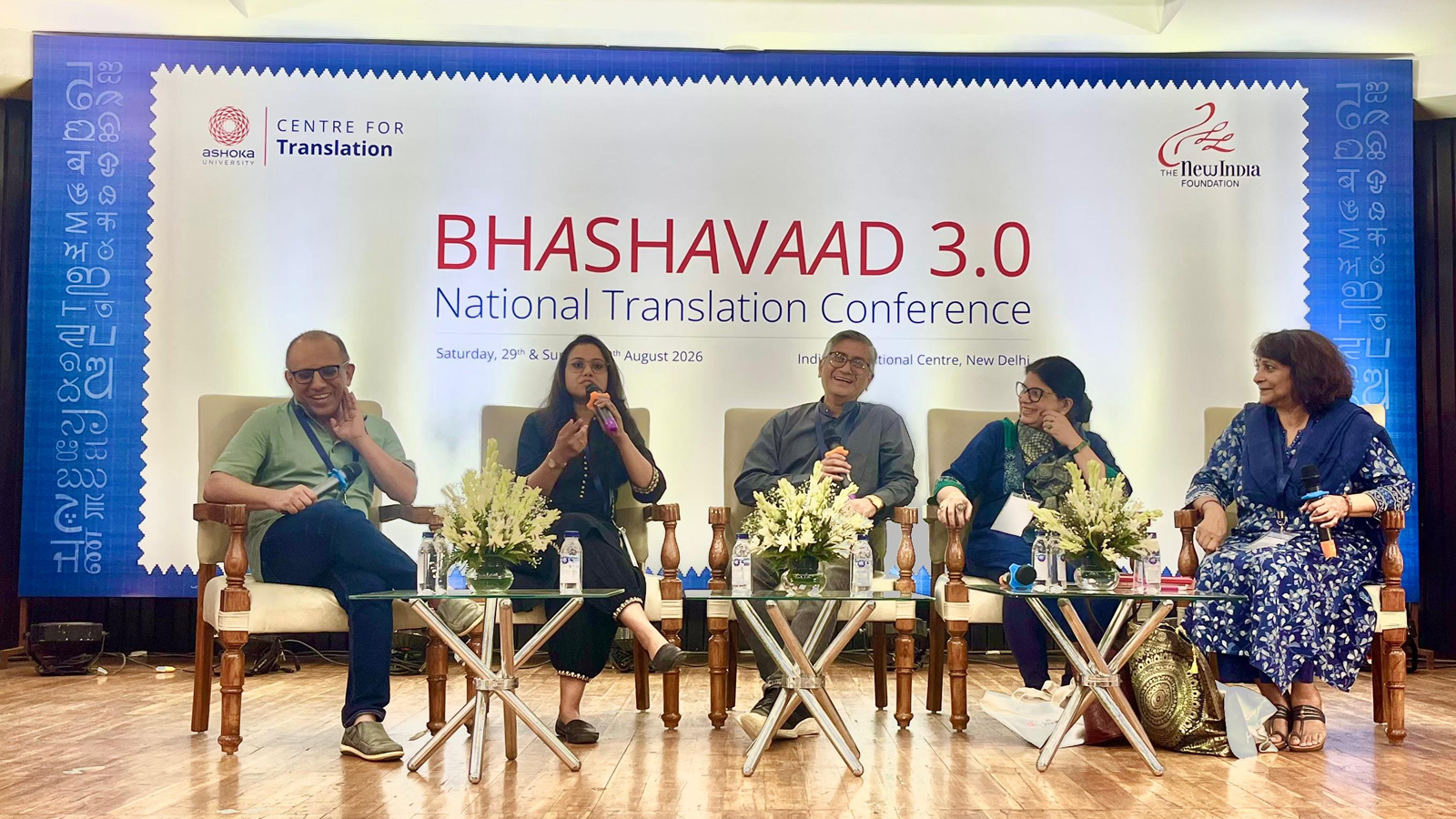
Even as writers, translators and artists continue to feel threatened by AI, Ashoka University's Centre for Translation on Saturday brought together journalist-translator Poonam Saxena; Nishat Zaidi, professor and former head of the Department of English at Jamia Millia Islamia; historian-translator Murali Ranganathan; and Moutushi Mukherjee, Senior Commissioning Editor, Penguin Random House India, for the third edition of its two-day Bhashavaad National Translation Conference at the India International Centre in New Delhi, to ask a question that may sound alarmist, but is no longer hyperbolic — "Are translators redundant?" As Arunava Sinha, who co-directs the Ashoka Centre for Translation, moderated the event, no panelist disputed that AI can already handle formula fiction.
Zaidi said translators, who take on that kind of work, are "wasting away their time”, since it is exactly what a machine can replicate. Where the panel drew a line was literary translation, essentially texts where meaning depends on context a model doesn't have.
In Munshi Premchand's classic ‘Gaban’, explained Saxena, a character faces a crisis, and the line would translate verbatim as: "Then there would be nothing left for him except Triveni." But in the world of the novel, set in Allahabad (now known as Prayagraj), the phrase implies drowning oneself at the Triveni Sangam.
It is about suicide. "No AI translator is going to know these things," she said, because it does not have the accrued human experience, adding that she has never used AI and does not plan to. Sinha, however, playing devil's advocate, argued that every time a human corrects an AI output, the correction trains the model.
Zaidi said the issue is not really about capability, but rather how the profession gets framed. She emphasised that translators produce knowledge, not just copies, and that a model trained only on existing text cannot generate anything genuinely new.
2025 Booker Prize-winning author David Szalay had made a similar point, saying that AI "will always be pretending" because "it does not know, will never know what it is like to be a living body." Mukherjee pointed to a bigger issue plaguing the publishing industry: if a translator leans on AI for a large share of a manuscript, who owns the copyright?
She said editors have started reading for "tells", or over-elaborate, jargon-heavy sentences, as a matter of course now. But the larger consensus was that AI can’t be simply written off, and the ethical boundaries have to be decided.
An audience member who identified herself as a professor at Indraprastha College for Women, Delhi University, spoke of a Spanish-to-Hindi project where Google Gemini, translating directly rather than through English, preserved more of the original voice than existing English translations had.
Zaidi mentioned a Tamil author of her acquaintance, who now translates his own fiction with AI and is satisfied with the result. Asked whether beginners should start out using AI, Saxena urged them to read widely first, and then translate.
Sinha then posed the question: if translators were to become redundant, who would be responsible? "Publishers, AI or translators themselves?" Saxena pointed to publishers, saying that translators can only do the work they are commissioned to do, and if publishers decide to use AI instead, there is little translators can do about it.
Zaidi’s response, however, was translators because the kind of reading, research, and deep interpretation that goes into literary translation is something no machine can replicate.
- •Aspirants and citizens are advised to monitor official notices and circulars issued by Delhi NCR Civic & Governance.
- •Verify all prescribed eligibility criteria, cutoff dates, and authenticated document requirements prior to formal submissions.
- •Track connected examination timetables, vacancy advisories, and administrative gazettes on SuchnaSetu.
| Issuing Authority | Delhi NCR Civic & Governance |
|---|---|
| Topic Category | STATES |
| Jurisdiction | DL State |
| Publication Date | 30 August 2026 |