
Why parents in Delhi are choosing to become ‘airpocalypse refugees’
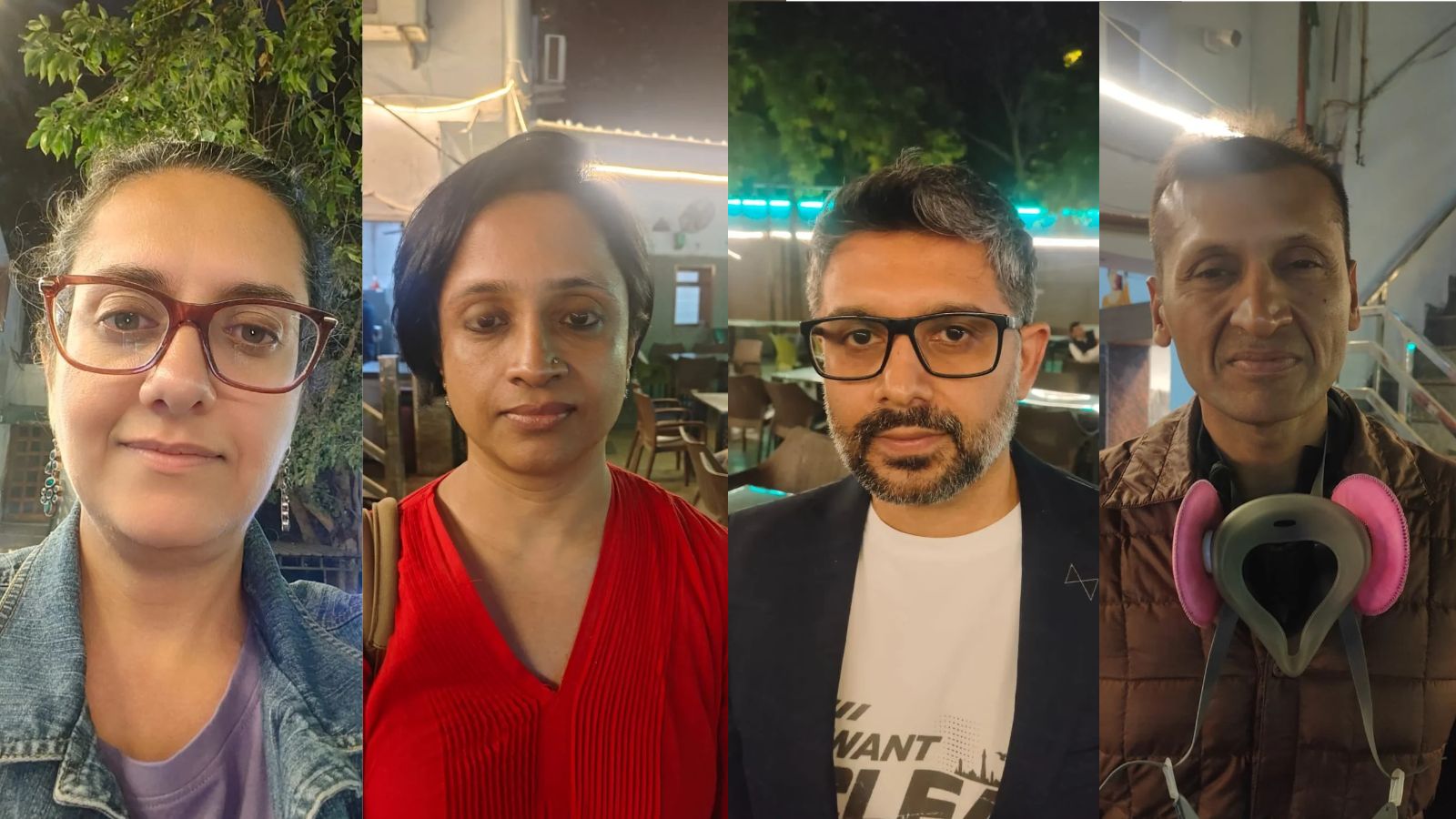
10982162 parents (2)
- ✓10982162 parents (2)
- ✓After spending 17 years in the United States, he returned to Delhi in August 2025, hoping his 11-year-old son would grow up close to his grandparents.
- ✓For Purnima Raghunath, her 11-year-old daughter's childhood in Delhi has been marked by restrictions that she herself did not experience growing up in the city.
- ✓In 2013, while training for a marathon, Gupta said his lungs collapsed, leaving him with a 40 per cent loss of lung function.
Madhur Panjwani, an advocate and mother of a seven-year-old boy, had to temporarily move to Bengaluru last year to "protect her son from disruptions caused by air pollution". The move, however, meant splitting the family, with some members staying back in Delhi.
Rajat Mahajan, a software engineer, took the opposite route. After spending 17 years in the United States, he returned to Delhi in August 2025, hoping his 11-year-old son would grow up close to his grandparents. A year later, he describes himself as an "airpocalypse refugee", someone who feels forced to leave the city because of its toxic air.
Their contrasting journeys reflect the difficult trade-offs parents are increasingly making to protect their children from Delhi's air pollution, a crisis that is reshaping family life, affecting health and childhood, and influencing decisions about where to live.
Speaking to reporters on Friday, members of a parent-led citizens' collective —Parents and People Against Pollution — spoke of the compromises, anxieties, and the toll of raising children in polluted air. The collective is seeking direct intervention from Prime Minister Narendra Modi, claiming that successive governments and agencies have failed to address the pollution crisis.
It has called for a permanent, year-round ban on firecrackers, including green crackers, covering bursting, sale, storage and manufacture. It has also demanded a halt in the use of the term ‘green crackers’. For Purnima Raghunath, her 11-year-old daughter's childhood in Delhi has been marked by restrictions that she herself did not experience growing up in the city.
Having lived in the Capital all her life, Raghunath said she had watched the freedom that children once enjoyed, to go outdoors, play and attend school without worrying about pollution, gradually disappear. "My concern has been there for the last ten to eleven years because I was watching my child's life," she said.
While aware parents try to minimise their children's exposure, she called the effort a losing battle. “Every year, it's a losing battle," she said. Raghunath also rejected the perception that air pollution was an elite concern, saying its effects cut across economic groups.
"We all have to breathe," she said. Warning about the long-term consequences of children growing up in polluted air, she said, “If we don't make this a priority, I think it's a very dark future for India." For Jai Dhar Gupta, an entrepreneur and clean air activist, the crisis has affected both his own health and that of his children.
In 2013, while training for a marathon, Gupta said his lungs collapsed, leaving him with a 40 per cent loss of lung function. He was diagnosed with acute bronchial asthma and chronic obstructive pulmonary disease (COPD).
A year later, in November 2014, his nine-year-old son suffered a severe asthma attack while playing soccer at The Shri Ram School. Gupta said the school was unable to manage the emergency and his son had turned blue by the time he reached a hospital in Vasant Vihar.
"They had to put an epinephrine injection into his heart to revive him. This is where we live, and this is what we are normalising," he said. Gupta said that even in 2026, schools lack basic emergency preparedness, including oxygen cylinders and nebulisers to manage an asthma attack.
Not just confined to physical health, Gupta said pollution had far-reaching consequences in children’s cognitive learning. He explained that school disruptions affect learning, while restrictions on outdoor activities keep children away from sports and social interactions.
"It's claustrophobic to be in Delhi. It's terrible for mental and emotional health," he said. His two sons are now 18 and 21. Gupta said he eventually decided to make an exit plan during the COVID pandemic and began spending the winter months in Uttarakhand to protect himself from the city's pollution.
"Eventually, during COVID, I planned my own exit, that I should flee to Uttarakhand and save myself," he said, adding that many others who could afford to leave Delhi were also doing so. "I know as a parent the kind of guilt I live with, you know, just being in Delhi.
It's tough to be a parent and a child," he said. On the other hand, for Mahajan, the decision to return to India was driven by a desire to bring his son closer to his grandparents and cultural roots. But he said the pollution had undermined much of what he had hoped to achieve.
- •Aspirants and citizens are advised to monitor official notices and circulars issued by Delhi NCR Civic & Governance.
- •Verify all prescribed eligibility criteria, cutoff dates, and authenticated document requirements prior to formal submissions.
- •Track connected examination timetables, vacancy advisories, and administrative gazettes on SuchnaSetu.
| Issuing Authority | Delhi NCR Civic & Governance |
|---|---|
| Topic Category | STATES |
| Jurisdiction | DL State |
| Publication Date | 28 November 2026 |