
Why some Punjab industries are facing uncertain future ahead of a deadline
10855934 MSME
- ✓What is September 30-deadline, why is it important?
- ✓The Congress government extended the deadline by another five years in 2018-19.
- ✓Later, the AAP government subsequently granted a further three-year extension in 2023-24.
- ✓That extension allowing industries in MLU areas to operate expires on September 30, 2026.
With the September 30, 2026-deadline for industries operating in Mixed Land Use (MLU) areas approaching, thousands of micro and small industrial units across Punjab face uncertainty over their future. The industrialists are arguing that relocating the units is not feasible without adequate alternative industrial space even as industry bodies are pressing the state government for a permanent policy.
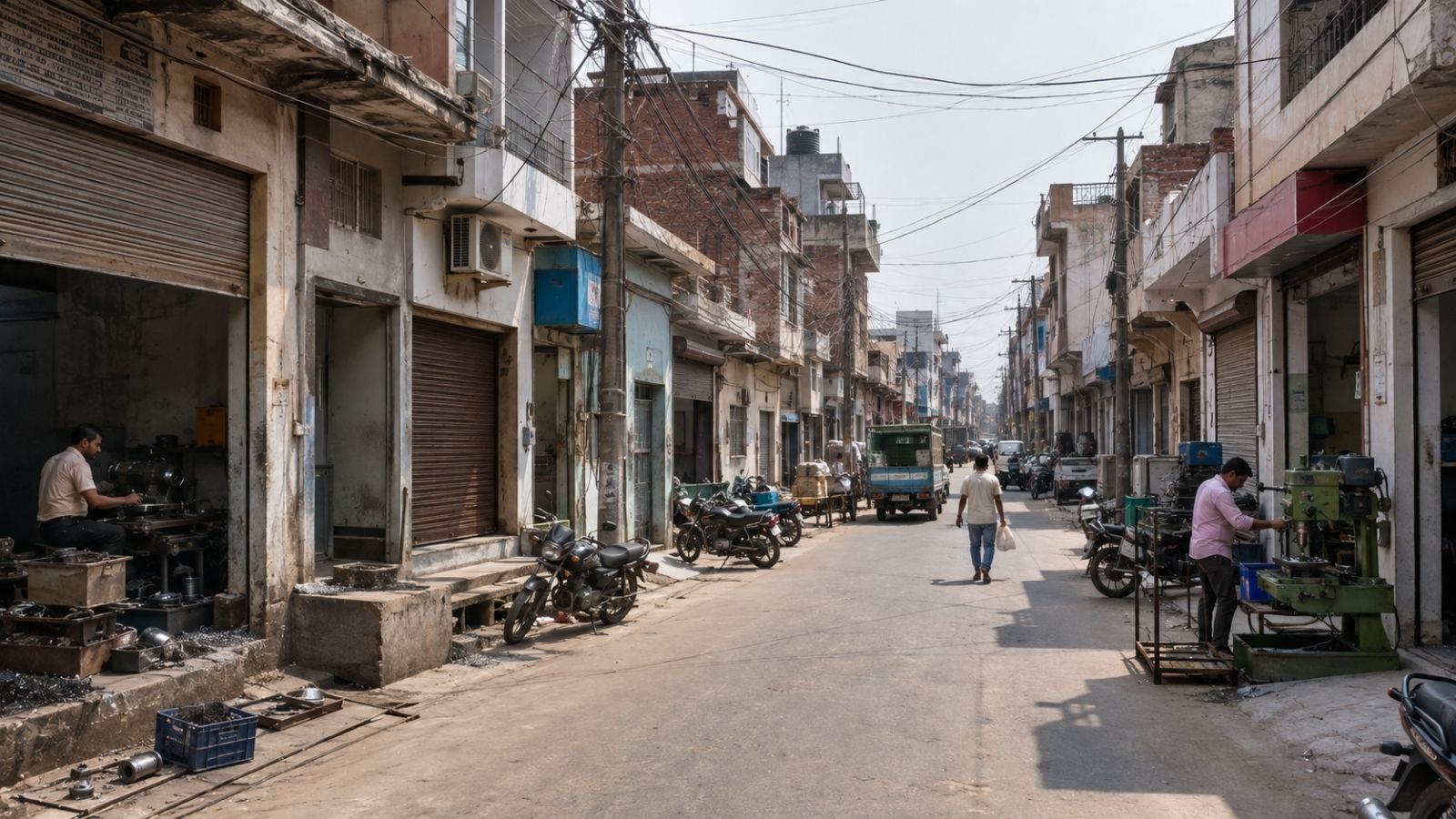
MLU areas are localities where residential, commercial and certain industrial activities coexist. In Punjab, many of these pockets developed as cities expanded, with small factories and workshops emerging alongside houses and shops. These are mostly micro and small-scale industries, with manufacturing units operating on the ground floors of buildings that have residential units on upper floors. Their proximity to residential areas has also enabled many workers, including women, to live close to their workplaces.
The presence of pollution-generating industries in densely populated localities has raised concerns over air and water pollution, industrial waste, noise and traffic. Industry associations, however, argue that the units provide employment to a large workforce and are closely linked to the supply chains of bigger industries.
What is September 30-deadline, why is it important?
The issue goes back to 2008-09, when the SAD-BJP government gave industries operating in such areas 10 years to relocate amid the preparation of master plans for various cities. The Congress government extended the deadline by another five years in 2018-19. Later, the AAP government subsequently granted a further three-year extension in 2023-24. That extension allowing industries in MLU areas to operate expires on September 30, 2026. After that, units that have not relocated could face difficulties in obtaining or renewing their Consent to Operate (CTO) from the Punjab Pollution Control Board (PPCB).
Industry organisations, including the Federation of Industrial and Commercial Organisation (FICO), are seeking a permanent policy for established industrial pockets in MLU areas. Recently, a FICO delegation led by president Gurmeet Singh Kular met Industries Minister Aman Arora and urged the government to formally designate areas with established industrial activity as industrial zones before the CTO deadline expires.
FICO and the United Cycles Parts and Manufacturers Association (UCPMA) claim that Ludhiana alone has more than 50,000 micro and small units employing around five to six lakh workers. The ecosystem includes cycle-parts, sewing-machine parts, auto-parts, fasteners and other small manufacturing units.
Industry representatives also argue that many women workers depend on these units because their proximity to residential neighbourhoods makes commuting easier.
Industrialists say the issue is not merely about relocation but about the availability of suitable land. They argue that several MLU pockets developed after 1957 and have since become economically integrated with the cities.
During the SAD-BJP government, a 360-acre Cycle Valley was announced at Dhanansu village near Ludhiana to facilitate the relocation of cycle-related units. The project was subsequently developed as the Hi-Tech Cycle Valley. Industry representatives, however, contend that much of the available space has been occupied by larger units, leaving limited room for micro and small enterprises.
Sources also point out that some small units were reluctant to move to a location considered too far from the city, particularly because their workforce and supply chains were already concentrated around existing industrial pockets.
PPCB chief engineer R.K. Ratra said the MLU issue concerns several districts, although Ludhiana is the most affected because of the density of industrial activity in its mixed-use areas.
Industry leaders maintain that they cannot be expected to relocate without suitable industrial land being made available. With the September 30 deadline approaching, the Punjab government now faces the challenge of balancing environmental concerns and planned urban development with the survival of thousands of small industrial units and the livelihoods dependent on them.
- •Aspirants and citizens are advised to monitor official notices and circulars issued by Punjab & Haryana Regional Bureau (Chandigarh).
- •Verify all prescribed eligibility criteria, cutoff dates, and authenticated document requirements prior to formal submissions.
- •Track connected examination timetables, vacancy advisories, and administrative gazettes on SuchnaSetu.
| Issuing Authority | Punjab & Haryana Regional Bureau (Chandigarh) |
|---|---|
| Topic Category | STATES |
| Jurisdiction | PB State |
| Publication Date | 30 August 2026 |