
Zero appeals against name deletion in 12 states where SIR is complete: CEC in Gujarat
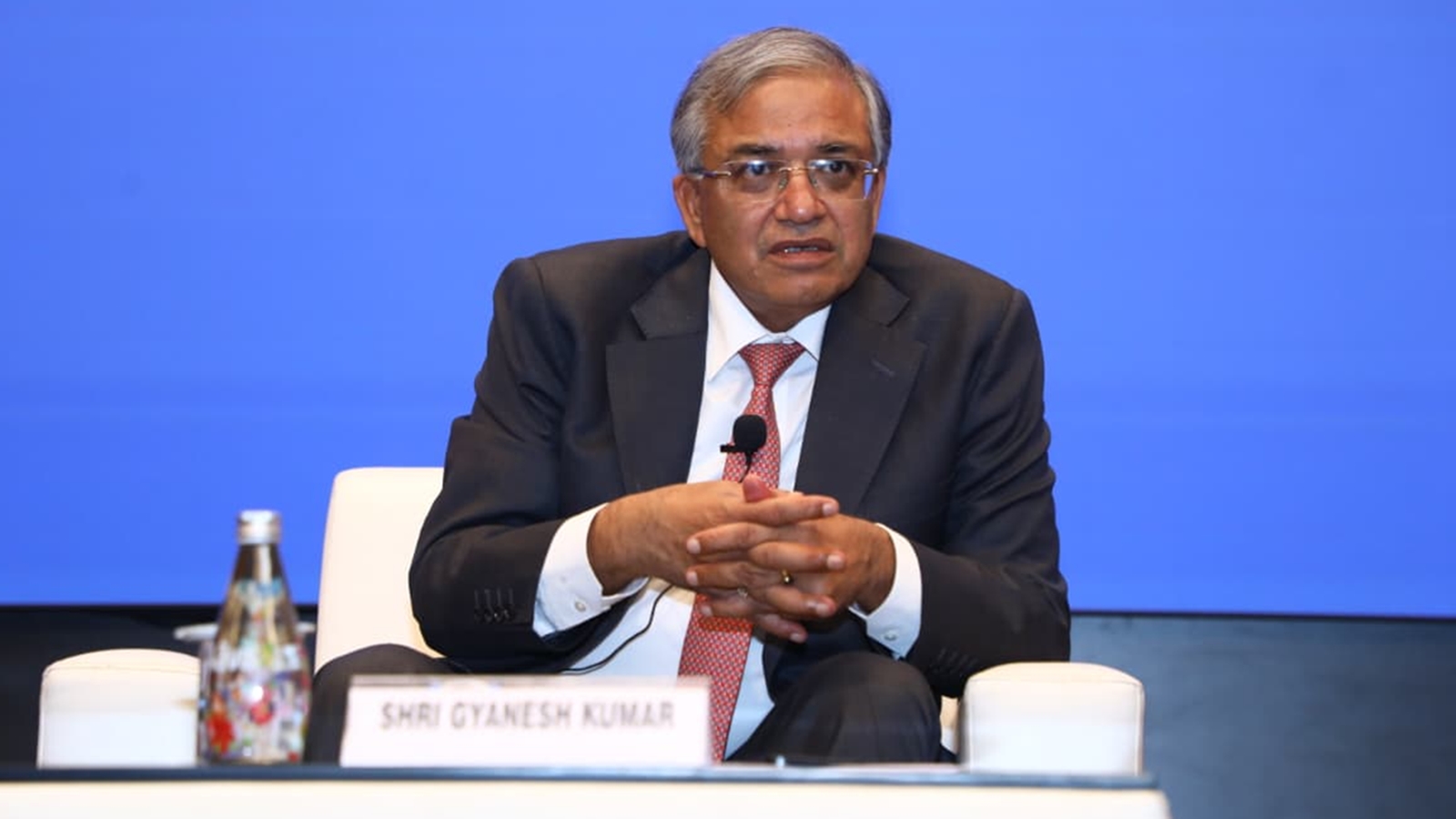
10872560 CEC Gyanesh Kumar at an event in Ahmedabad on Thursday. Express
- ✓10872560 CEC Gyanesh Kumar at an event in Ahmedabad on Thursday.
- ✓According to an Indian Express report last month, the SIR appellate tribunals in West Bengal have so far disposed of 82,782 appeals.
- ✓Out of which, 91 per cent (75,443) of names have been added back to the state’s electoral list, while 8.86 per cent (7,339) of names have been excluded.
- ✓The Election Commission (EC) revealed this in an RTI reply filed by Congress MP Isha Khan Chowdhury.
Chief Election Commissioner (CEC) Gyanesh Kumar on Thursday said that not a single appeal had been filed against name deletion before district collectors, who double up as election officers, in the 12 states where the Special Intensive Revision is complete.
Taking questions on the sidelines of his address at the Ahmedabad Management Association (AMA) on Thursday, Kumar said, "If your name is rejected, you can file an appeal before the Collector, and if it is rejected again, you can file a second appeal before the most important person sitting here, the Chief Electoral Officer (CEO) of the state (Sandip Sagale), after which you can move the courts.
The SIR has been done in 12 states, in some states it is set to be done in one-one-and-a-half months… And how many appeals have come to the Collectors till now? Zero." Pressing the point, Kumar asked Gujarat's CEO, Sandip Sagale, who was in the front row, how many appeals have been received against name deletion in the state, to which he replied, "Zero till now." Kumar said, "The number (of appeals) has not gone beyond zero in any state." Kumar said that it was possible that people were not aware, and so the appeals module had been added to the ECINET and yet no appeals had been filed till date.
According to an Indian Express report last month, the SIR appellate tribunals in West Bengal have so far disposed of 82,782 appeals. Out of which, 91 per cent (75,443) of names have been added back to the state’s electoral list, while 8.86 per cent (7,339) of names have been excluded.
The Election Commission (EC) revealed this in an RTI reply filed by Congress MP Isha Khan Chowdhury. During his hour-long speech on ‘Conducting Elections in India – The Largest Democracy in the World’, Kumar reiterated the sanctity of the Electronic Voting Machines (EVMs),saying that they had survived 41 challenges in the Supreme Court.
He called EVMs "simple calculators" that counted the votes and said the machines were not connected to the internet and therefore "cannot be hacked". "India is the only democracy to be concurrently audited by political parties at every stage of the electoral process," the CEC said.
He went on to outline the role of political agents beginning with the drafting of electoral rolls, to the mock polls before the voting, supervision of the process during the voting period as well as during the counting process.
Asked whether India would ever deliberate on voting-by-mobile phones, the CEC said, "If you vote by phone, it goes to the cloud on some server which is owned by some companies… That's why transparent democracies don't even think about it." To a question by a young member of the audience at AMA seeking his "opinion" on replacing the Chief Justice of India with a Union Cabinet minister in the selection panel for ECs, the CEC asked the youth to recall the process before his appointment.
"What was the appointment procedure before that? It was on the recommendation of the government. There was no committee, no law. Article 324 says that until a law is made, the President will make appointments based on recommendations of the government.
I am the 26th CEC. The other 25 were appointed how? So which is better? Committee or direct? The committee is better, no?", the CEC said. Article 324(2) of the Constitution states that Election Commissioners should be appointed in a manner “subject to the provisions of any law made in that behalf by Parliament.” Notably, Gyanesh Kumar became the first CEC to be appointed by this panel that has two votes by the government and one by the Leader of Opposition.
In 2024, petitioners such as the NGO Association for Democratic Reforms (ADR) challenged this law arguing that it restores the executive’s power and dominance over appointments and defeats the principle held in Anoop Baranwal case.
In a hearing on this petition on May 7, 2026, the Supreme Court bench of Justices Dipankar Datta and Satish Chandra Sharma described Parliament’s decades-long delay in enacting a law for appointments to the Election Commission, until it was directed to do so in 2023, as “tyranny of the elected".
Gyanesh Kumar began his two-day Gujarat tour with a visit to the Gandhi Ashram, and later to the Adalaj Stepwell, before heading to the AMA. On Friday, he will address over 500 Booth Level Officers (BLOs) from Gujarat. Brendan Dabhi works with The Indian Express, focusing his comprehensive reporting primarily on Gujarat.
He covers the region's most critical social, legal, and administrative sectors, notably specializing at the intersection of health, social justice, and disasters. Expertise Health and Public Policy: He has deep expertise in healthcare issues, including rare diseases, Antimicrobial Resistance (AMR), the complex logistics of organ transplants, and public health challenges like drug-resistant TB and heat health surveillance.
His on-ground reporting during the COVID-19 pandemic and Mucormycosis was critical in exposing healthcare challenges faced by marginalized communities in Gujarat. Social Justice and Legal Administration: He reports on the functioning of the legal and police system, including the impact of judicial philosophy, forensics and crucial administrative reforms (.
He covers major surveillance and crackdown exercises by the Gujarat police and security on the international border. Disaster and Crisis Management: His work closely tracks how government and civic bodies respond to large-scale crises, providing essential coverage on the human and administrative fallout of disasters including cyclones, floods, conflict, major fires and reported extensively on the AI 171 crash in Ahmedabad.
Civic Infrastructure and Governance: Provides timely reports on critical civic failures, including large scale infrastructure projects by the railways and civic bodies, as well as the enforcement of municipal regulations and their impact on residents and heritage.
... Read More
- •Aspirants and citizens are advised to monitor official notices and circulars issued by Gujarat State Bureau (Ahmedabad).
- •Verify all prescribed eligibility criteria, cutoff dates, and authenticated document requirements prior to formal submissions.
- •Track connected examination timetables, vacancy advisories, and administrative gazettes on SuchnaSetu.
| Issuing Authority | Gujarat State Bureau (Ahmedabad) |
|---|---|
| Topic Category | STATES |
| Jurisdiction | GJ State |
| Publication Date | 10 September 2026 |