
‘One more bite at the cherry’: Justice Nariman criticises reopening of Delhi Metro arbitration award
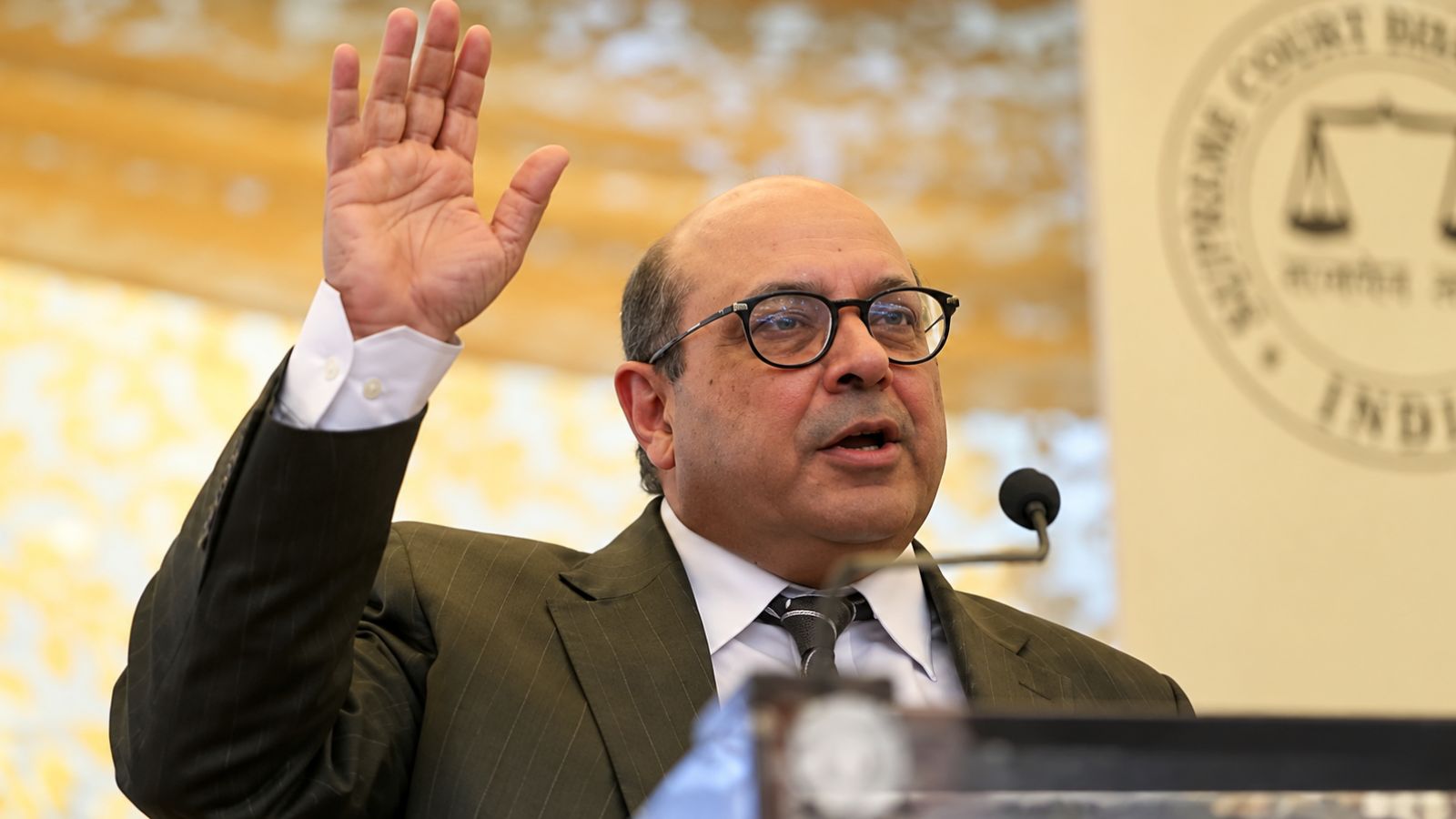
10864891 Justice Rohinton F Nariman
- ✓10864891 Justice Rohinton F Nariman
- ✓In May 2017, a three-member arbitral tribunal unanimously ruled in favour of DAMEPL, upholding the termination and awarding damages.
- ✓Civic Domain: Categorized under states public notices.
By the time the 2008 Delhi Metro arbitration dispute reached the Supreme Court through a curative petition, the arbitral award had already travelled through the tribunal, the Delhi High Court, the Supreme Court and review proceedings.
Yet the award was ultimately reopened and set aside in 2024 — an illustration, in former Supreme Court judge Justice Rohinton F Nariman's words, of how Indian litigation can offer “one more bite at the cherry after the cherry is eaten”.
For Justice Nariman, the extraordinary final intervention raises a larger question for Indian arbitration: when does an arbitral award actually become final? Speaking at GHAC Arbitration Week 2026, being organised by the Gujarat High Court Arbitration Centre (GHAC) in collaboration with the High Court of Gujarat, Justice Nariman said on Friday that the Supreme Court's curative intervention in the Delhi Metro dispute “led to very far-reaching consequences”.
“The bench, as a matter of law, has laid down something,” he said, adding that the court could instead have confined its ruling to the “peculiar circumstances” of the case and stated that it was not to be treated as a precedent.
Instead, he said, the judgment had laid down that “a miscarriage of justice, which is equal to an interference on facts in an arbitral award, can take place to set aside the award at the fag end after it has become completely final and everything is over”.
The dispute arose from a 2008 public-private partnership agreement between the Delhi Metro Rail Corporation (DMRC) and Delhi Airport Metro Express Pvt Ltd (DAMEPL), a consortium led by Reliance Infrastructure, for the operation of the Airport Express Metro line.
In 2012, DAMEPL terminated the agreement, alleging that DMRC had failed to correct structural defects, including cracks in girders, within the stipulated 90-day cure period. The DMRC contested the termination. In May 2017, a three-member arbitral tribunal unanimously ruled in favour of DAMEPL, upholding the termination and awarding damages.
The award was subsequently challenged through multiple judicial stages. A single judge of the Delhi High Court upheld it in 2018, while a Division Bench set it aside in 2019, holding that the tribunal had failed to consider crucial material, including a safety certificate concerning the resumption of operations.
In September 2021, the Supreme Court restored the award, emphasising the limited scope of judicial interference with arbitral awards, and dismissed DMRC's review petition in 2022. In April 2024, however, a three-judge Supreme Court Bench allowed DMRC's curative petition and set aside the award, which had, with accumulated interest, risen to more than Rs 7,600 crore.
The court held that the award suffered from "patent illegality" and that its restoration had resulted in a gross "miscarriage of justice". Justice Nariman traced his concern to the scope of curative jurisdiction. Referring to the principles governing such petitions, he said intervention was envisaged in exceptional cases of “egregious cases of irremediable injustice”, such as where a judge was biased, a party had been unable to properly present its case, natural justice had been breached or the Supreme Court had acted without jurisdiction.
The Delhi High Court's Division Bench had found patent illegality after concluding that the arbitral tribunal had failed to consider a certificate concerning the safety and operation of the Metro line. Justice Nariman noted that the certificate itself had permitted the trains to operate at only 50 kmph rather than their intended speed of 120 kmph because of the condition of the girders.
Justice Nariman said the consequence of the curative ruling was that a broader ground of intervention had emerged after the statutory avenues for challenging an arbitral award had been exhausted. “Even though the Division Bench of the Delhi High Court set aside the award on the ground of patent invalidity, another ground is created right at the fag end, after the cherry has been eaten,” he said.
He said the new ground was that “the most basic notions of justice” had been violated, even though, according to him, the issue had not been raised during the earlier stages of the proceedings. “And suddenly now at the curative stage you have a much broader ground of miscarriage of justice,” he said.
Justice Nariman described this as a “major problem” for arbitration. “So we have a major problem now with this case, because all arbitral awards now have this chance of hopefully being interfered with on fact at the fag end in a curative petition,” he said.
Justice Nariman cited four other recent Supreme Court rulings to argue that arbitration law had become increasingly uncertain. He said one five-judge ruling had clarified when companies that had not signed an arbitration agreement could nevertheless be bound by it, but a later seven-judge decision took a conflicting approach on a related issue involving unstamped agreements.
He also criticised a ruling that allowed courts, in limited circumstances, to alter arbitral awards instead of simply upholding or setting them aside, arguing that correcting an award should ordinarily remain the arbitrator's job.
Justice Nariman's proposed way forward for domestic arbitration was a single full appellate review before a Division Bench on both facts and law, combined with strict timelines. In his view, arbitration must now pursue accuracy alongside its traditional objectives of speed and cost-effectiveness.
- •Aspirants and citizens are advised to monitor official notices and circulars issued by Gujarat State Bureau (Ahmedabad).
- •Verify all prescribed eligibility criteria, cutoff dates, and authenticated document requirements prior to formal submissions.
- •Track connected examination timetables, vacancy advisories, and administrative gazettes on SuchnaSetu.
| Issuing Authority | Gujarat State Bureau (Ahmedabad) |
|---|---|
| Topic Category | STATES |
| Jurisdiction | GJ State |
| Publication Date | 5 September 2026 |