
Unsung Heroes | This Bengaluru rapper uses hip-hop to help children find their voice
10962876 Kali4
- ✓Akshay R, 29, better known as Kali, grew up in Bengaluru with little access to music.
- ✓At 17, he decided he wanted to do the same, but first he needed a way to listen more regularly.
- ✓He took up a job as a salesperson at a mall, saved his earnings, and bought a phone in 2014.
- ✓The disagreements at home eventually made it difficult for Kali to stay, so after Class 12, he moved out.
Akshay R, 29, better known as Kali, grew up in Bengaluru with little access to music. That struggle pushed him towards rap, and over a decade later, he is a familiar name in the city's Kannada hip-hop scene, with 12 to 15 solo tracks, seven collaborations, and an EP to his credit.
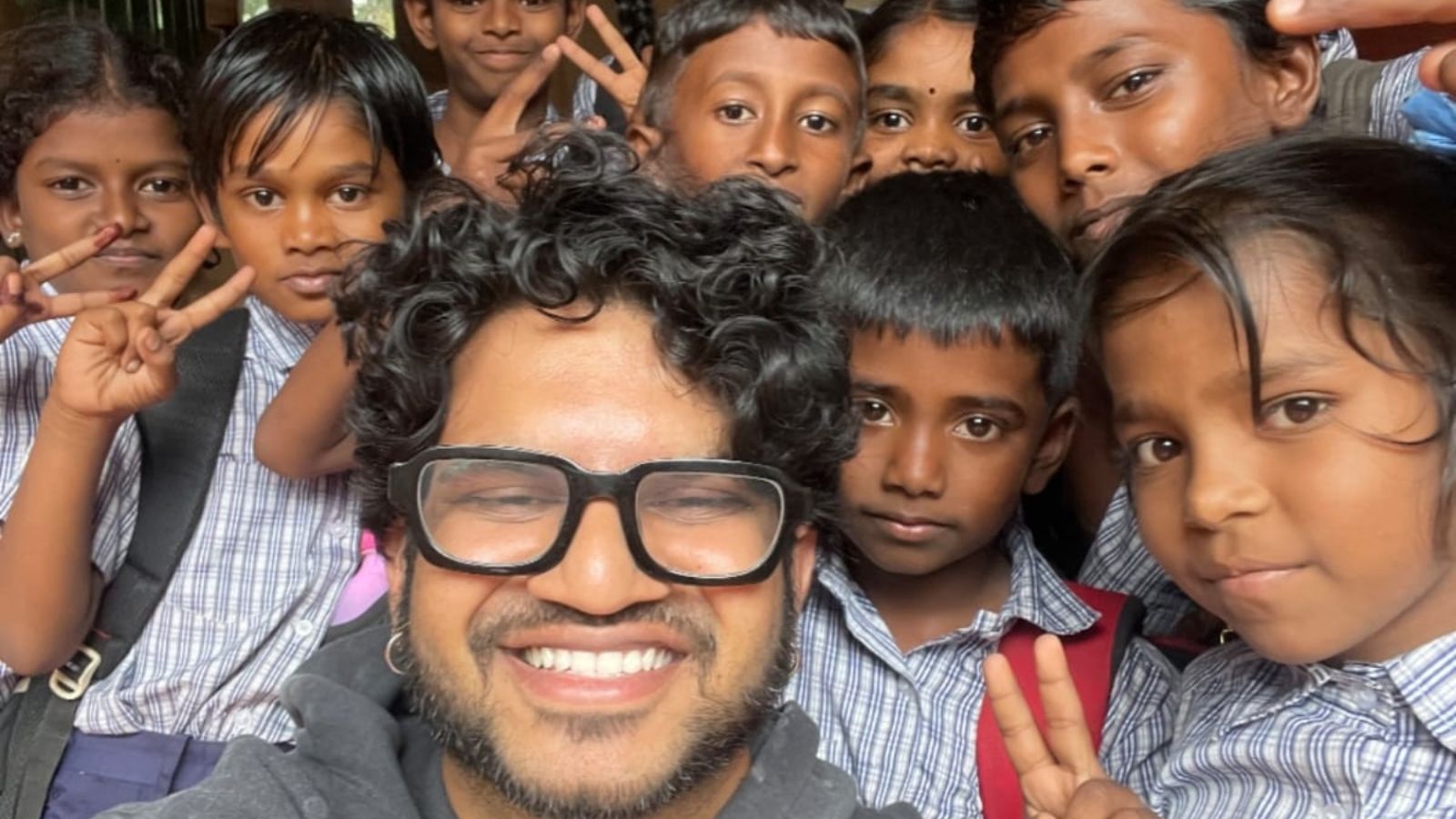
Today, this Bengaluru-based rapper is also one of the few artists in the city teaching rap to children who would otherwise never get to try it. Kali conducts regular Kannada sessions at Kalakrida, an after-school initiative run by Ahum Trust for children from government schools and underserved communities.
He also leads the rap component of Slam Out Loud's (SOL) arts-based learning programme, which takes him to Delhi, Mumbai and Pune. Kali's early years were far from the world of studios and streaming. Access to music was a luxury.
With little exposure to rap, he would watch music videos on channels such as VH1 and 9XM, borrow his cousins' iPods, and listen to songs on computers at cyber cafes. He wrote down the lyrics of the songs he heard, trying to understand how artists turned their experiences into music.
At 17, he decided he wanted to do the same, but first he needed a way to listen more regularly. He took up a job as a salesperson at a mall, saved his earnings, and bought a phone in 2014. Home was not an easy place to pursue this.
His father, a sculptor, had wanted him to take up a conventional career, believing an artistic profession would offer neither financial security nor social respect. His parents did not always understand his decision to pursue rap, although his mother supported him by giving him money for studio recordings and travel.
“My father wanted me to become an official, wear good clothes, and travel in a car because he felt people would respect me. But today, I have that respect through rap,” he said. The disagreements at home eventually made it difficult for Kali to stay, so after Class 12, he moved out.
Around this time, his writing began in earnest. On the phone he had saved for, he discovered artists and initially started copying them. “I discovered so many artists and initially started copying them. But then I thought, why shouldn't I write something of my own?
These artists were talking about their stories and experiences. I also had experiences that I could write about. That's how it began,” he said. He started by writing lyrics and making karaoke versions of songs. He came across Bengaluru's underground Kannada hip-hop scene through ReverbNation on Facebook.
Artists including MC Bijju and S.I.D introduced him to a community of rappers whose work inspired him to write and perform in Kannada. At 19, he recorded and released his first track, ‘Nadeyuve’, with the help of Bijju. His second, ‘Nand Ond Free Verse’, received a strong response from students at his college and went viral on campus.
The song was later nominated in the music category at the Karnataka Independent Music Awards (KIMA). Kali went on to join the Kannada rap collective Rap Kavigalu, performing at more than 150 shows over three to four years before the group went its separate ways around the Covid-19 pandemic.
The years in the underground scene also made him question it. As he interacted more closely with fellow artists, he noticed how caste, gender and class shaped their experiences and opportunities, and he grew uncomfortable with the misogyny and caste-based attitudes in sections of the community.
“When we started discussing misogyny and these issues, people would get offended. I realised that we cannot keep agreeing with such behaviour or say that nothing can change. We have to break the cycle,” he said. A visual arts student who had also worked as an art teacher, developing curricula and conducting classes in schools, Kali began to see teaching as another way to engage with hip-hop.
After the pandemic, he started conducting sessions that introduced young people to rap. One of his early experiences was with students from Dalit backgrounds, whose response to the music and ability to relate to its themes showed him that hip-hop could serve a purpose beyond performance.
The idea became more personal when children in his neighbourhood began gathering around him as he played music and freestyled outside his home. “Initially, I would just make them listen to songs. After they finished playing, they would come and listen to the beats.
Then I started showing them how to freestyle,” he said. Kali would weave the children's names and the things around them into improvised rhymes. It soon became a game, with the children trying to come up with lines of their own.
Whenever he visited his parents, the informal sessions continued, and several of the children eventually began recording their own songs. Some have now been making music for nearly five years. His work then grew through collaborations with Slam Out Loud (SOL) and Kalakrida.
At Kalakrida, children are introduced to rap through writing, rhythm, freestyle and creative-thinking exercises. His year-long programme includes writing, speech and breathing exercises, while shorter ones cover the history of hip-hop and Kannada rap, followed by clapping and beat-making activities.
He says nearly 90 per cent of the children return for subsequent sessions, and more girls tend to stay on than boys. “Boys come to the sessions, but they don't stick around… But these girls sit and write. They talk about their stories, their struggles and the fun activities they have done.
They are dedicated,” he said.
- •Aspirants and citizens are advised to monitor official notices and circulars issued by Karnataka State Bureau (Bengaluru).
- •Verify all prescribed eligibility criteria, cutoff dates, and authenticated document requirements prior to formal submissions.
- •Track connected examination timetables, vacancy advisories, and administrative gazettes on SuchnaSetu.
| Issuing Authority | Karnataka State Bureau (Bengaluru) |
|---|---|
| Topic Category | STATES |
| Jurisdiction | KA State |
| Publication Date | 14 November 2026 |